Tell us about your background.
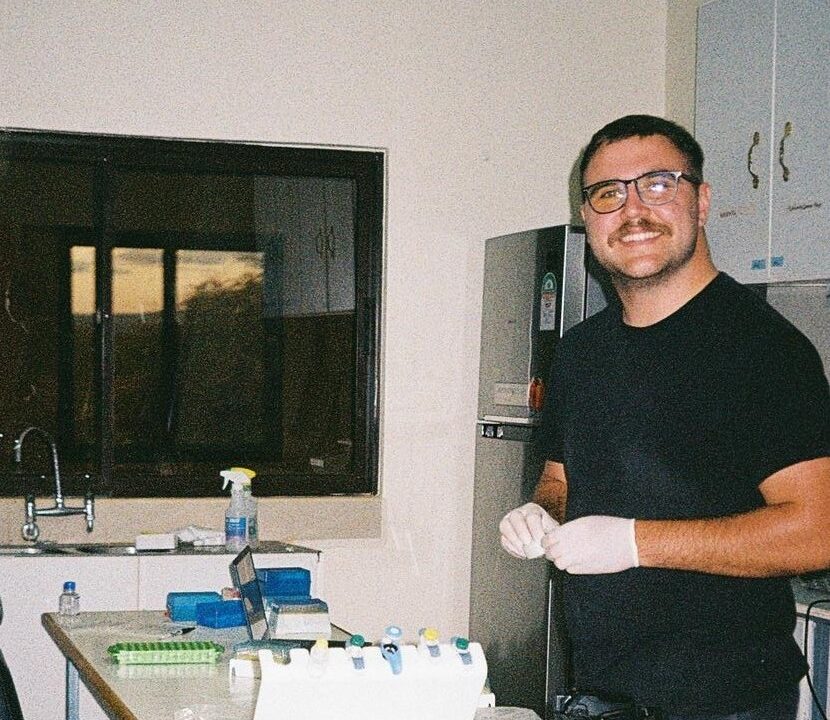
Growing up in the country side in Suffolk, England I’ve always been fascinated by the nature. Since a young age I was enamored by wildlife especially African mega fauna inspired by zoo visits and David Attenborough documentaries. As I grew up I was fortunate to visit sub Saharan Africa which further cemented my interest in conservation. This early curiosity led me to study Biology at the University of Manchester, where I developed a strong foundation in ecology and evolution. While I found the theory in my lectures very interesting, it wasn’t until my Master’s degree that I had the opportunity to apply what I’d learned in a real-world context. In 2022, under the supervision of Professor Susanne Shultz, I had the chance to travel to Mpala to carry out a small research project on the prevalence of Giardia in wild and domestic ungulates. It was my first real experience of fieldwork, and it left a lasting impression. Mpala struck me as a truly unique place—offering an incredible combination of access to free-ranging wildlife, on-site laboratory facilities, and a diverse community of researchers from Kenya and across the world. Being able to work in such an environment was hugely formative, and it helped solidify my interest in disease ecology, one health and conservation science. When the opportunity came up to continue this work as part of a PhD, I jumped at the opportunity. I’m now investigating the ecology of potentially zoonotic pathogens across the Laikipia landscape, with a focus on how wildlife, livestock, and human health intersect.
What projects are you currently working on at Mpala?
I’m currently undertaking my PhD, which explores spatial and temporal variations in faecal and waterborne pathogens across East Africa. While I’ve conducted some work in Kajiado and northern Tanzania, the majority of my research is based in Laikipia, with a particular focus on properties and communities surrounding Mpala. Over the past three years, I’ve collected an extensive set of faecal samples from a range of wild and domestic ungulate species. Although it doesn’t sound the most glamorous, faecal sampling is a powerful and non-invasive tool that provides vital insights into the health and disease status of animal populations. By analysing these samples, I’m working to identify patterns in the prevalence and diversity of key gastrointestinal pathogens—such as Giardia, Cryptosporidium and Eimeria—and to understand how these vary across seasons, species, land-use types, and management systems. One of my core research objectives is to better understand how environmental, ecological, and human-related factors shape pathogen transmission dynamics across shared landscapes. I’m particularly interested in how interactions between livestock and wildlife may facilitate or buffer disease spread, and how land-use change and climate variability influence the persistence and movement of infections. This knowledge is important not only for wildlife conservation, but also for improving livestock health and supporting the resilience of local pastoralist communities. My work sits within the broader Shared Landscapes project, led by Professor Susanne Shultz, which brings together ecological, biological, and social science approaches to explore the complex relationships between animal health, livelihoods, and conservation. A key part of our approach involves engaging with local communities to ensure that the research is both informed by and relevant to those living and working in the landscape. Ultimately, I hope that my research can contribute to practical, context-sensitive solutions for managing disease risks in multi-use systems—supporting healthier ecosystems and communities alike.
What is one of your favorite things about working at Mpala?
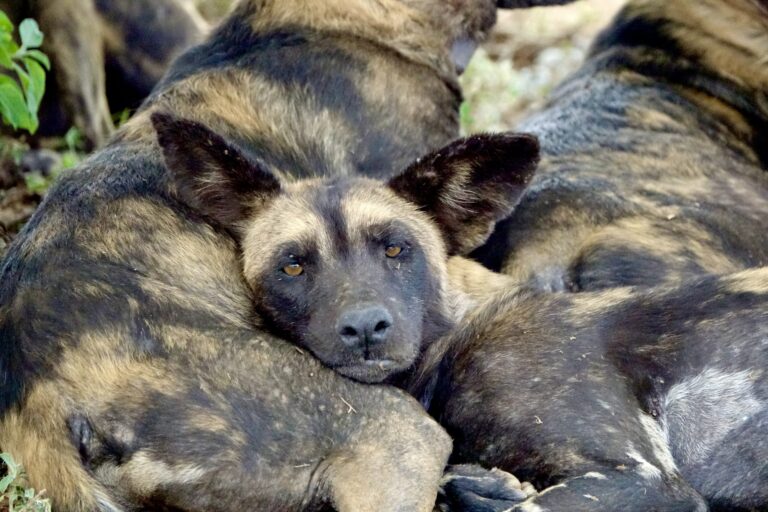
One of my favourite things about working at Mpala is the incredible wildlife. The sightings I’ve had during my time here have been nothing short of extraordinary. I’ve been lucky enough to see some truly special animals—most notably, two black leopards and regular encounters with the pack of wild dogs that often den on Mpala. Moments like these are genuinely unforgettable and serve as a constant reminder of how unique this landscape is. That said, while the wildlife never fails to amaze me, it’s the people that make Mpala truly special. There’s a strong sense of community here—whether it’s catching up with familiar faces like Sam and Chris, or meeting visiting researchers and students from all over the world. Sharing these experiences with such a diverse and supportive group of people has been one of the most rewarding parts of my time at Mpala, and something I always look forward to when I return.
What impact do you believe your time at Mpala will have on your professional career?
Mpala has given me my first (of hopefully many) opportunities to work in the field on the African continent, and it has played a formative role in shaping both my professional path and personal growth. It’s here that I’ve really begun to understand the realities of field-based research—the logistical challenges, the unexpected setbacks, and the resilience it takes to navigate them. Through these experiences, I’ve grown enormously as a researcher and as a person. Mpala has also introduced me to an inspiring network of scientists and principal investigators, many of whom I hope to stay in touch with—and perhaps even collaborate with—in the future. Being part of such a vibrant and supportive research community has reinforced my desire to pursue a career that not only focuses on meaningful scientific questions, but also keeps me grounded in fieldwork and connected to real-world landscapes and communities. Most of all, my time at Mpala has cemented my passion for working in remote, ecologically rich environments. It has confirmed for me that I want to continue a research career rooted in the field—one that contributes to both conservation science and the broader understanding of how people and wildlife share and shape the landscapes they inhabit.