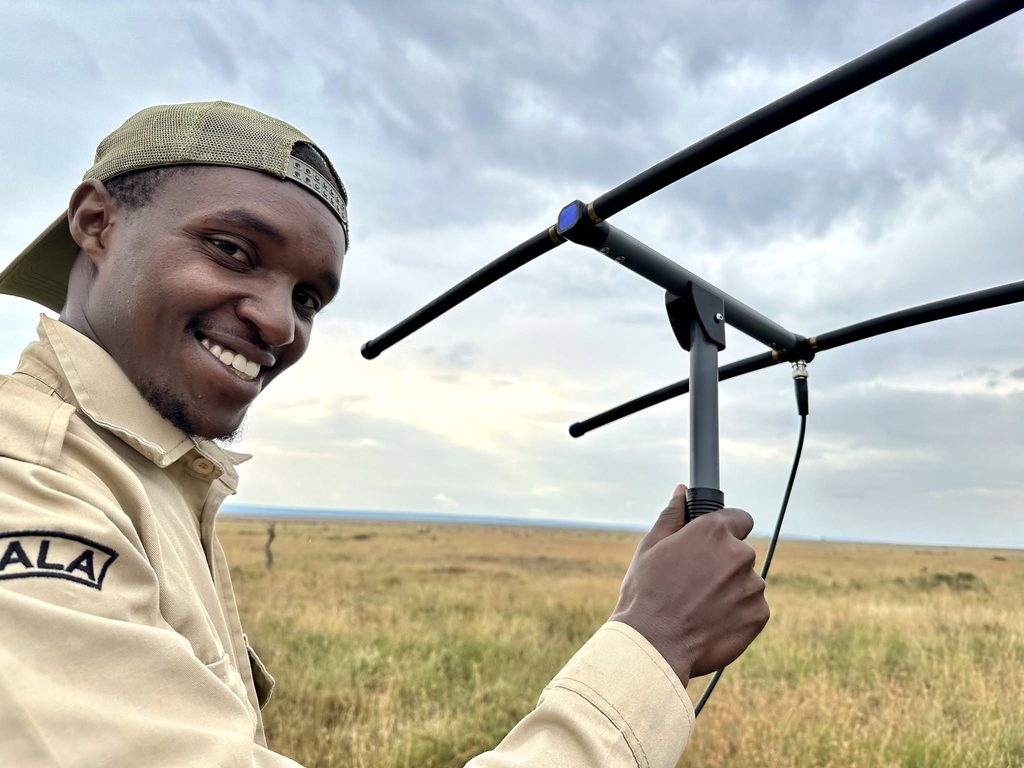
Story by Sam Kiuna, whose journey at Mpala has taken him from undergraduate fieldwork to the Mpala Graduate Scholarship Programme and now to PhD research at Iowa State University.
Some of the most important moments in my journey at Mpala have happened far away from a desk or classroom.
They have happened during evening volleyball games, over Friday tea, on game drives and at gatherings in the dining hall. Sometimes they have happened in the field, walking long distances alongside rangers. And sometimes in the middle of the night, when someone needed help with a vehicle.
Socialising is almost unavoidable at Mpala, and that’s a good thing.
Many of the opportunities I’ve seen people learn and grow from, myself included, started with a conversation. That’s one of the things I have come to appreciate most about this place.
My own journey here started while I was an undergraduate studying Natural Resource Management at Karatina University.
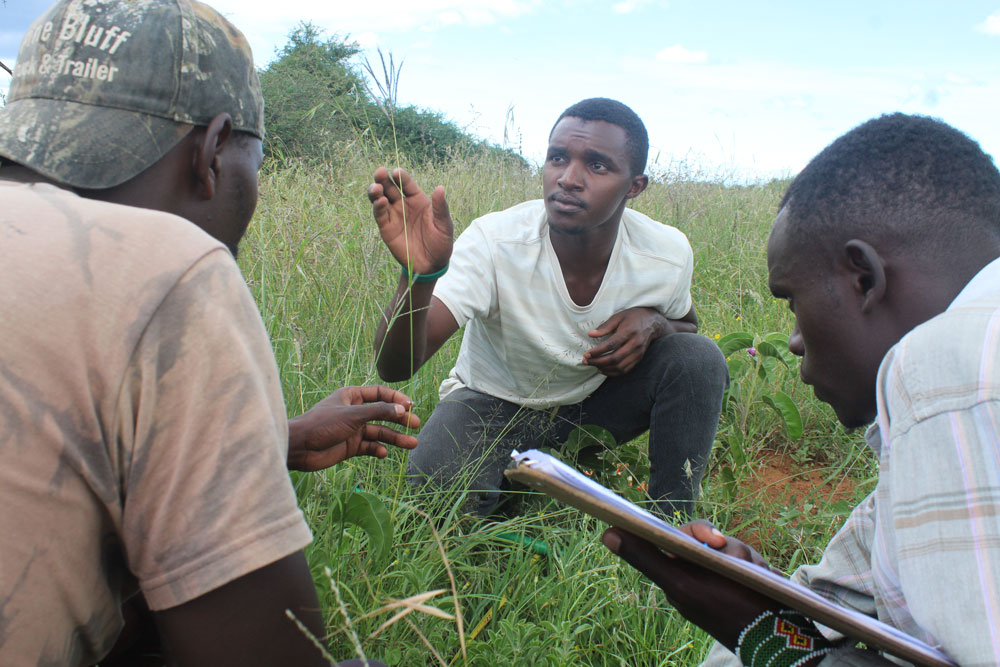
I was born and raised in Rugongo Farm, a village in Nyahururu. While at university, I volunteered with Dr. Dedan Ngatia’s Laikipia Rabies Vaccination Campaign. After completing my bachelor’s degree in July 2022, I came to Mpala for an attachment under Dr. Duncan Kimuyu.
For five months, I moved between different research projects. It gave me the chance to experience quite a bit of what was happening at Mpala and to work with different researchers and teams.
And then, somehow, I pretty much never left.
In January 2023, I joined Dr. Beth Mortimer’s Seismic Savannah Elephant project as a field technician.
One of the things I remember most from that project is the rangers.
Every ranger who went out with us did much more than keep us safe when elephants chased us. They joined in the work. We walked tens of kilometres and dug hundreds of holes to place seismic sensors, and they were right there helping us.
That willingness to help is something I have found again and again at Mpala.
After the elephant project, I worked with Lucrecia Aguilar on her PhD research on cats, cows and coexistence, mostly working with lions alongside Laikipia Lions Landscapes.
By then, I was beginning to figure out the kind of questions I wanted to pursue myself.

A couple of months later, I started my Master’s in Wildlife Management at Karatina University through the Mpala Graduate Scholarship Programme.
For my research, I studied temporary cattle bomas and how they can be used as a tool for rangeland restoration.
That was an important shift for me. I had spent a lot of time contributing to other people’s research. Now I was developing my own questions, collecting my own data and learning what it takes to carry a research project through.
Today, I’m a PhD student at Iowa State University under Dr. Jake Goheen.
And my fieldwork has brought me right back to Mpala.
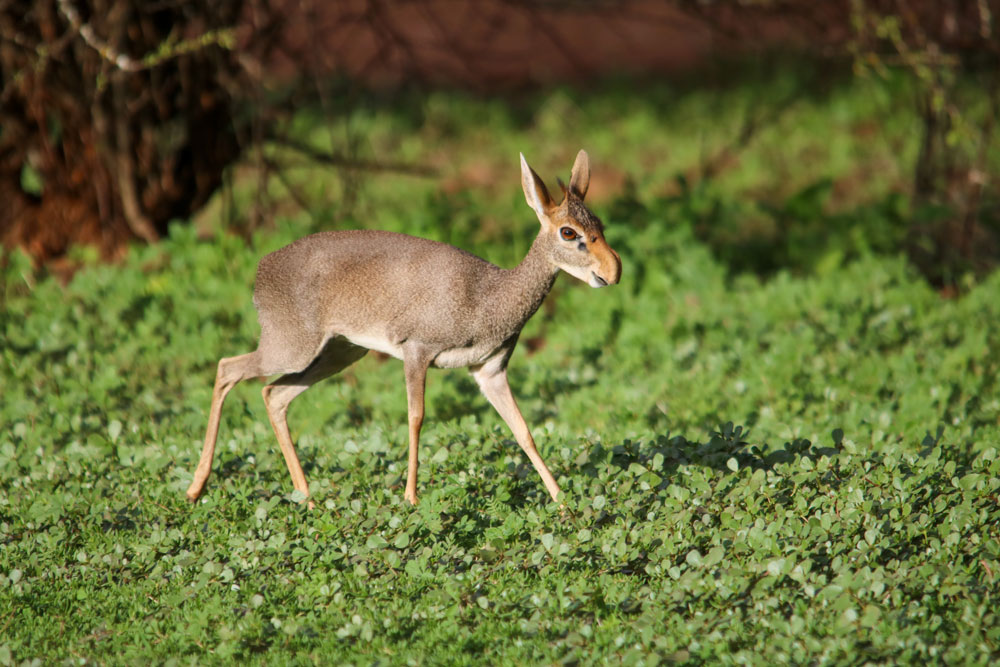
I’m starting a project looking at predator-prey interactions involving dik-dik, impala, African wild dogs and leopards. I want to understand some of the understudied costs and benefits of antipredator behaviour, particularly as climate change accelerates and reshapes semi-arid savannas.
In many ways, I’m still doing what I started doing when I first arrived here: asking questions, going into the field and learning.
I’ve also spent quite a lot of time going around in circles at Mpala. Literally.
While preparing for a marathon, I trained on Mpala’s Ring Road. One loop is only 1.4 kilometres, or about 0.87 miles. When you’re preparing to run 42.2 kilometres, that means seeing the same stretch of road many, many times.
It takes focus.
Maybe that’s exactly what a researcher needs.
Research also asks you to keep going. You repeat things. You collect data. Something doesn’t work, so you try again. Sometimes progress comes one small piece at a time.
Most people go to places like Mpala on vacation. We get to work here, surrounded by all this biodiversity.
But what I love most is the people.
I’ve never been anywhere people are so willing to help, at whatever capacity they can. I saw it with the rangers digging holes for our seismic sensors. I’ve seen it in the people who stop to help when something goes wrong in the field. And I’ve seen it in those ordinary conversations that end up opening unexpected doors.
Looking back, I arrived here as an undergraduate looking for experience. I became a field technician, worked on elephants and lions, joined the Mpala Graduate Scholarship Programme for my master’s, and now I’m back doing my PhD fieldwork.
A lot has changed.
But the volleyball is still there. So is Friday tea.
And, unfortunately for anyone training for a marathon, Ring Road is still only 1.4 kilometres long.