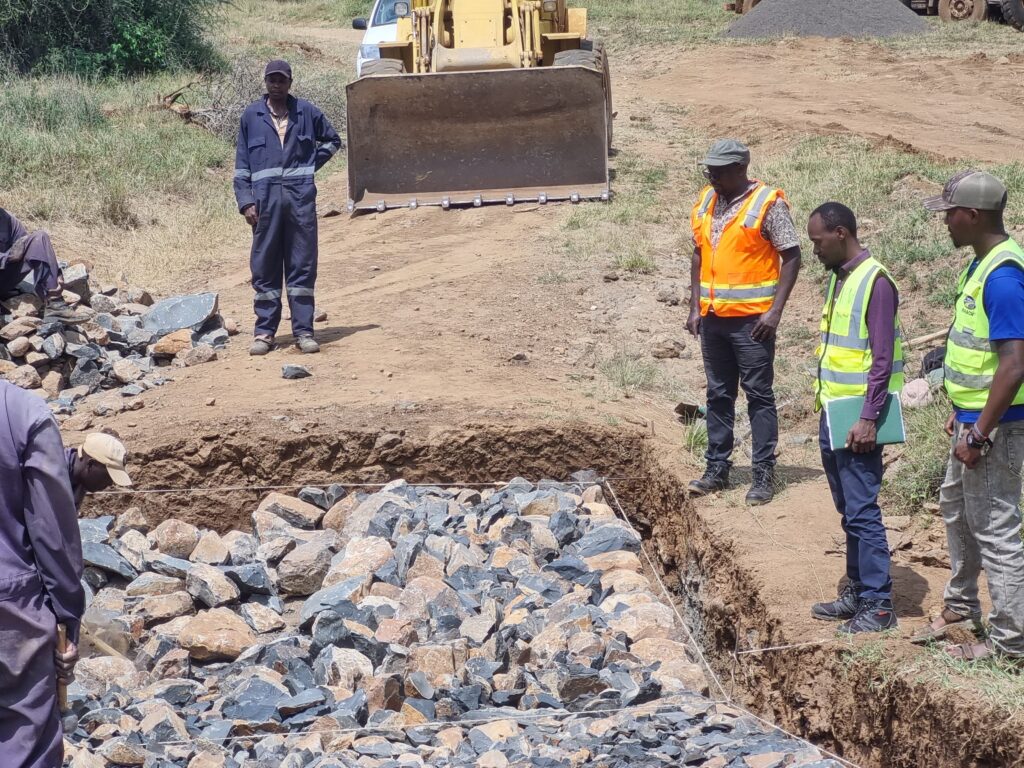

Every noble work of infrastructure project hath its beginning with those who possess a fervent heart to fashion lasting solutions. For me, infrastructure at Mpala isn’t just about design and construction, it is about enabling science while respecting nature, improving communities and leaving a legacy for future generations.
As infrastructure manager at Mpala, I have come to appreciate that the highest accord a man may afford my department is to have no cause to remember we exist. If no one is talking about leaking roofs, impassable roads, faulty generators, or broken water pipes, then we are quietly succeeding. Infrastructure is seldom appreciated until it disappears.
Managing infrastructure within a conservation landscape is unlike managing a conventional institution. Every decision must harmonize engineering with ecology. Roads must serve researchers without disrupting wildlife. Buildings should complement the landscape rather than dominate it. Even routine maintenance demands careful choreography around research schedules, weather patterns, and occasionally an elephant that has developed an inconvenient fascination with freshly repaired fences. This revelation has elevated my appreciation that nature is an exceptional project manager. She respects neither deadlines nor Gantt charts.
When I joined Mpala, it became evident that many of our facilities had faithfully supported generations of researchers but were beginning to reveal the inevitable effects of deferred maintenance. Rather than continually reacting to defects, I set out a works program that embraced a more strategic philosophy, grounded in preventive maintenance, asset lifecycle management, and long-term planning. Today, we oversee an extraordinarily diverse portfolio that includes roads, dams, laboratories, researcher accommodation, workshops, utilities, solar systems, communication infrastructure, airstrips, and environmental management programmes.
One initiative particularly close to my heart has been the Facilities Condition Assessment. We implemented the recommendations of the report in four phases prioritised interventions according to safety, research, value, and sanitation.
The first phase focused on critical improvements to laboratories, researcher accommodation, electrical systems, communication masts, fire safety infrastructure, and dining facilities, successfully restoring essential assets while maintaining prudent financial stewardship.
Subsequent phases expanded across the conservancy, revitalising roads, the engineering workshop, security facilities, staff quarters, ranch operation infrastructure, and numerous research and support buildings. Today, many of these spaces scarcely resemble the facilities we first encountered. The transformation has enhanced safety, operational efficiency, and the land use experience of all the guests, researchers, students and staff.
Where others observe merely repaired edifices, I see uninterrupted science, safe journeys into the field, fully equipped and functional laboratories, and researchers spared from wondering whether the roof might elect to join the discourse.
This philosophy extends into Mpala’s ten-year Masterplan, a project I have had the privilege of coordinating alongside an exceptional team of consultants. The Masterplan is far more than an architectural blueprint; it is a vision for how infrastructure can continue supporting world class research, conservation, education, and community engagement for decades to come.
Likewise, investments such as our centralized 150kWp solar power system demonstrate that resilient infrastructure and environmental stewardship need not stand at variance but rather serve only to fortify the other.
The Mpala infrastructure department journey over the past three years bears testament to an unyielding devotion to innovation, unity of purpose, integrity, and enduring stewardship. This nugget narrative illustrates that true engineering is forged not merely upon technical erudition, but equally upon steadfast dedication, shared endeavour, and a noble desire to advance the common good.
By Philip Momanyi, Head of Infrastructure, Mpala Research Centre