
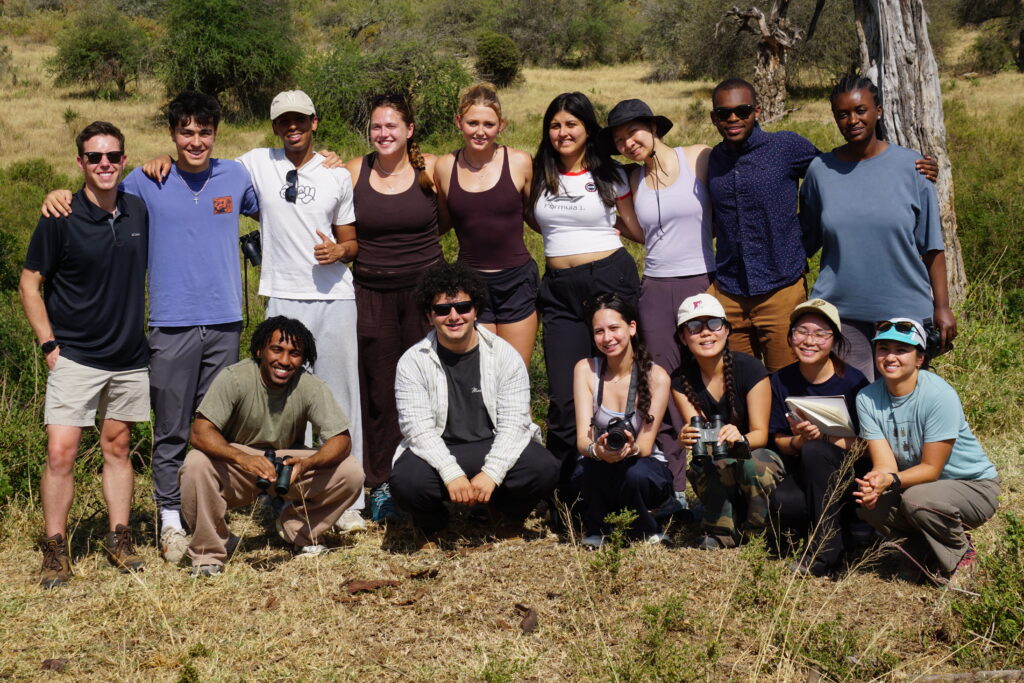
In July 2026, Princeton University completed the inaugural offering of STC/EEB/AFS 229 – Life on the Savanna: Natural History and Field Biology in East Africa at Mpala Research Centre. This four-week immersive field course brought together undergraduate students from a variety of academic backgrounds to explore the remarkable biodiversity of Kenya’s Laikipia Plateau while developing the observational, analytical, and research skills used by field biologists.
Led by Dr. Craig Marshall, Assistant Director of Princeton University’s Center on Science and Technology, with graduate teaching assistant Jocelyn Wang (Ecology and Evolutionary Biology), the course introduced students to natural history, scientific inquiry, savanna ecology, and conservation through hands-on field experiences. Students built foundational skills in species identification, ecological observation, and field research methods before designing and conducting research projects inspired by their own observations in the field. Working in small groups, they collected and analyzed ecological data, presented their findings, and produced formal research papers, experiencing every stage of the scientific process from asking questions to communicating results.
“Mpala Research Centre provides an extraordinary outdoor classroom where students can experience the process of scientific inquiry firsthand,” said Dr. Marshall. “Rather than simply learning about ecology and field biology in the classroom, students developed their own research questions from field observations, designed studies, collected and analyzed data, and communicated their findings as practicing scientists. At the same time, they gained an appreciation for Mpala’s incredible biodiversity and the important connections between conservation, research, and local communities. My hope is that students left not only with stronger scientific skills, but also with a deeper understanding of how natural history, culture, and conservation intersect.”
Beyond field research, students explored the cultural and human dimensions of conservation through interactions with the Mpala community and neighboring communities. They visited the Il Motiok community to learn about their traditions and relationship with the surrounding landscape, and they spent an afternoon with one of Mpala’s chefs preparing (and enjoying!) traditional chapati and mandazi. These experiences complemented discussions of field research ethics and responsible stewardship, reinforcing that understanding ecosystems also means understanding the people whose lives and cultures are deeply connected to them.
“One of the most meaningful aspects of the course was the opportunity for students to learn from the incredible people who make Mpala such a special place,” Dr. Marshall said. “From the researchers and staff to members of neighboring communities, every interaction deepened our students’ appreciation for the ecological and cultural richness of Mpala. Whether spending time with the drivers and askaris on game drives, making chapati and mandazi with the chefs, or visiting the Il Motiok community, these experiences helped students better understand the people and cultures that are an essential part of this ecosystem. Their kindness, generosity, expertise, and willingness to share their knowledge transformed this course into something far greater than a field biology class. They made it a truly immersive learning experience.”
The inaugural offering of Life on the Savanna expands Princeton University’s long-standing partnership with Mpala Research Centre by providing students with an immersive field experience that integrates natural history, scientific inquiry, cultural engagement, and interdisciplinary learning in one of the world’s most remarkable ecosystems.
