Field Guide
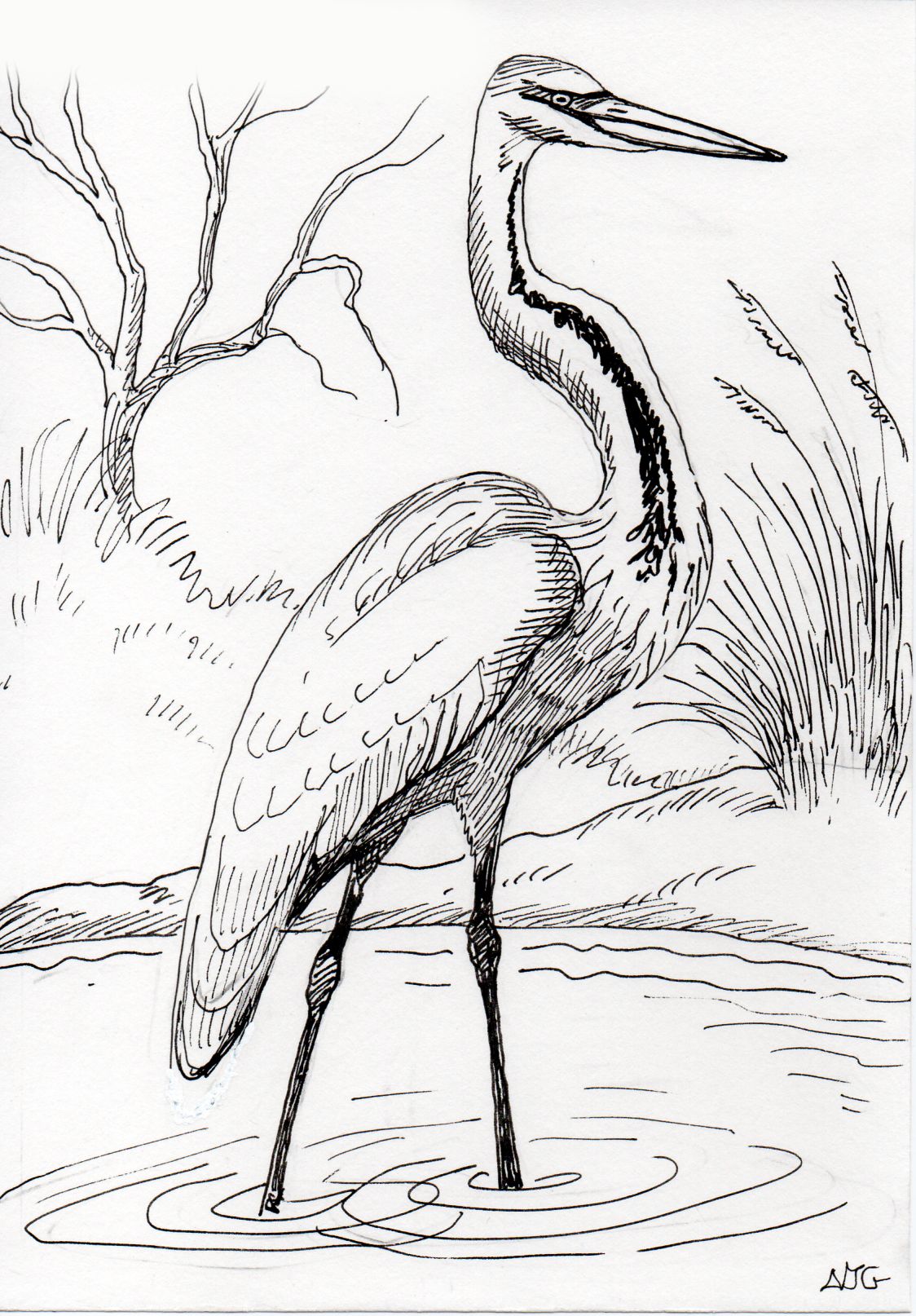
Ardea goliath
Goliath Heron
Swahili: pondagundi mkubwa


- Type
- Bird
- Daily Rhythm
- Diurnal
- Diet
- Carnivorous
- Conservation Status
- least concern
- Weight
- 4–5 kg
- Size
- Length: 130-150 cm Wingspan: 210-230 cm

The largest heron in the world, Goliath herons can spend up to 75 percent of their time standing still as they scan the water for the two or three large fish they eat every day.
Goliath herons are solitary creatures that occasionally are seen in pairs and sometimes in flocks of up to 20 birds.
The raucous “kowoorrk-kowoorrk-woorrk-work-worrk” call of Goliath herons can be heard as far as two kilometers away, and male and females sometimes have an early-morning duet.
A fierce defender of their hunting territory, Goliath herons feed most often during the early morning. They can spend more than half of daylight hours foraging in shallow water, floating vegetation, or grassy shorelines. They spear their prey with their bill, and can lose almost a third of their catch to other fish predators.
Least concern
Goliath herons prey almost exclusively on large fish, including river bream, mullet, tilapia, and barbell, but they will also eat prawns, small reptiles and amphibians, and small mammals.
Goliath heron pairs sometime share building their nest, a platform of sticks or reeds in a tree over the water, on the shore, or on a cliff, and may nest in a tree with several other nests. They prefer islands for breeding and will sometimes join colonies with other herons, cormorants, darters, ibis, and gulls. Both parents incubate their eggs, and chicks leave the nest around five weeks after they hatch.
Fish eagles, pelicans, and saddle-billed storks all harass Goliath herons and steal their prey, and white-tailed eagles prey on chicks.
Goliath herons are seen frequently in east Africa.
It is found throughout sub-Saharan Africa, as well as some parts of the Middle East and south Asia.