Field Guide
Struthio camelus
Ostrich
Swahili: Mbuni


- Type
- Bird
- Daily Rhythm
- Diurnal
- Diet
- Omnivorous
- Life Span
- In the wild: 30 to 40 years
- Conservation Status
- Lower risk
- Weight
- 220 to 350 lb (100 to 160 kg)
- Size
- 7 to 9 ft ( 2.1 to 2.7 m) high

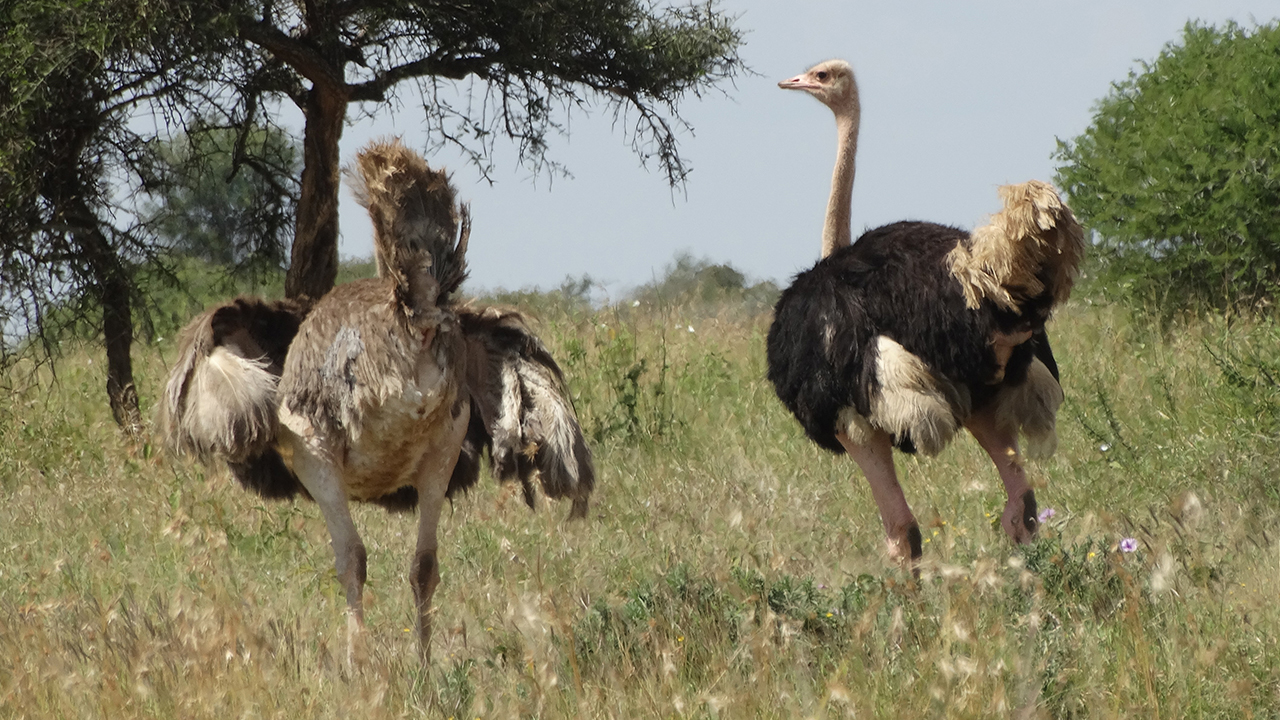
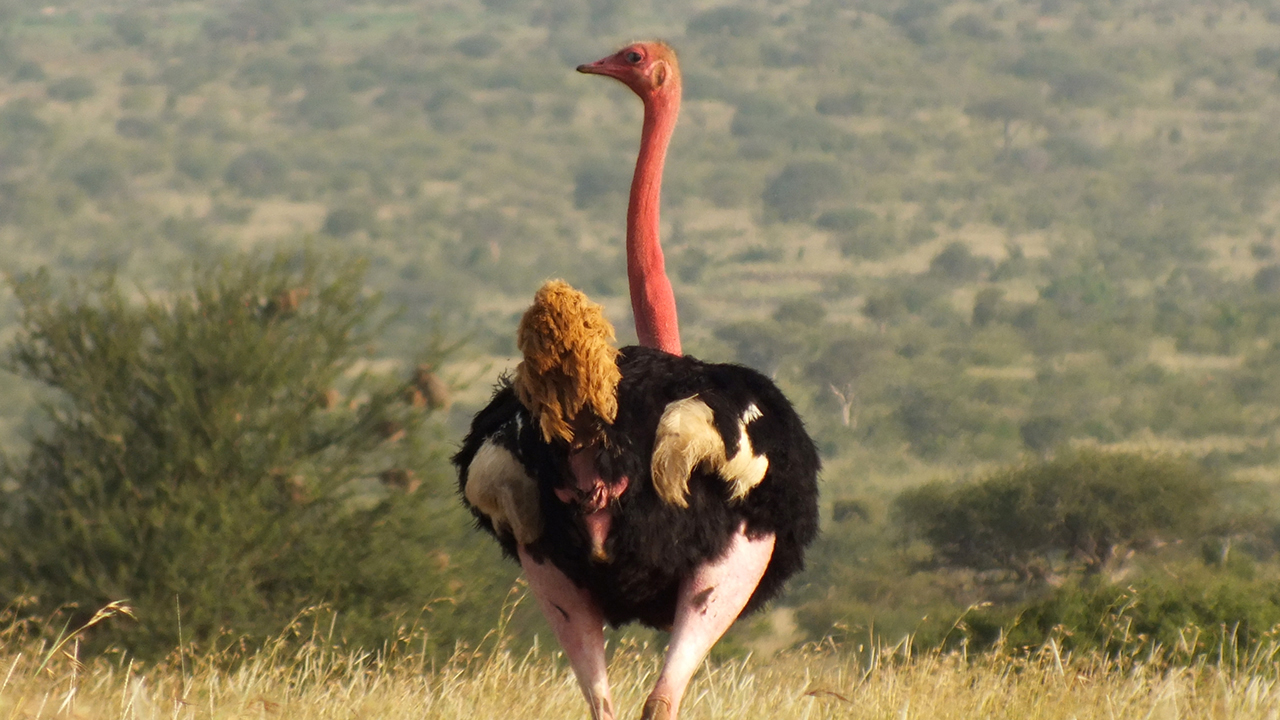
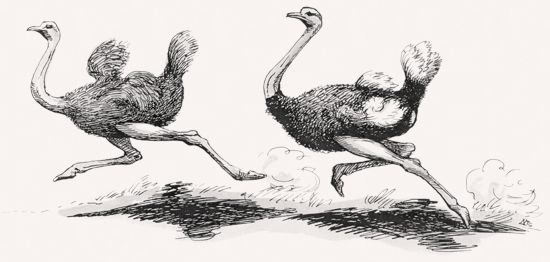
With 16-foot (5-m) strides, an ostrich can run as fast as 43 miles an hour (70 kph), changing direction by using its seemingly useless wings as rudders. The long claws on this flightless bird’s feet turn its legs into weapons that can kick and stab a lion to death.
Ostriches live in herds of no more than 12 birds. Each herd has a dominant male and female.
Ostriches often congregate with herbivores to the mutual benefit of both groups: The grazing herbivores stir up insects, and the long-necked ostriches warn of approaching predators.
Ostriches are omnivorous. They eat plants, roots, seeds, insects, lizards, and whatever else they can find in their harsh, dry habitat. The toothless birds swallow pebbles with their food to help the gizzard—a muscular part of the stomach—grind up the food so it can be digested.
An alpha male maintains his herd and mates with the herd’s dominant hen. But sometimes the alpha male mates with lesser hens, as may some other males. All the hens put their eggs in the nest of the dominant hen. She and the alpha male take turns incubating the eggs, each of which can weigh as much as three pounds (1.4 kg). The eggs incubate for 35 to 45 days. The chicks can run as soon as they hatch.
Ostriches are preyed upon by cheetahs, lions, leopards, spotted hyenas, and humans.
Ostriches inhabit much of Kenya in savanna, bush, and scrub.
Ostriches live throughout Africa on semiarid plains and woodlands.