Field Guide
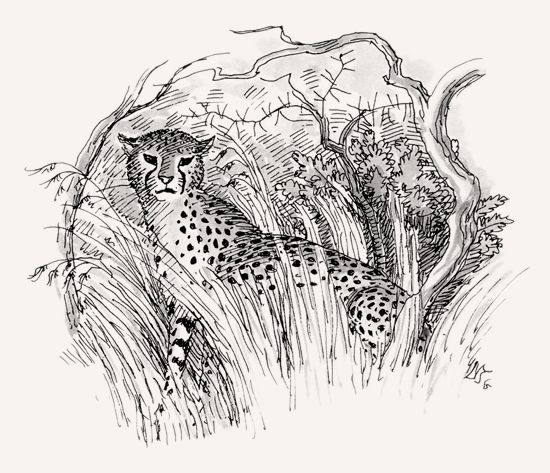
Acinonyx jubatus
Cheetah
Swahili: Duma


- Type
- Mammal
- Daily Rhythm
- Diurnal
- Diet
- Carnivorous
- Life Span
- In the wild: 7.8 to 13.6 years In captivity: 17 to 21 years
- Conservation Status
- Vulnerable
- Weight
- Male: 63 to 141 lb (28.5 to 64 kg) Female: 46 to 112 lb (21 to 51 kg)
- Size
- Male: 42.5 to 60 in (108 to 152 cm) long, excluding tail Female: 41 to 55 in (105 to 140 cm) long, excluding tail

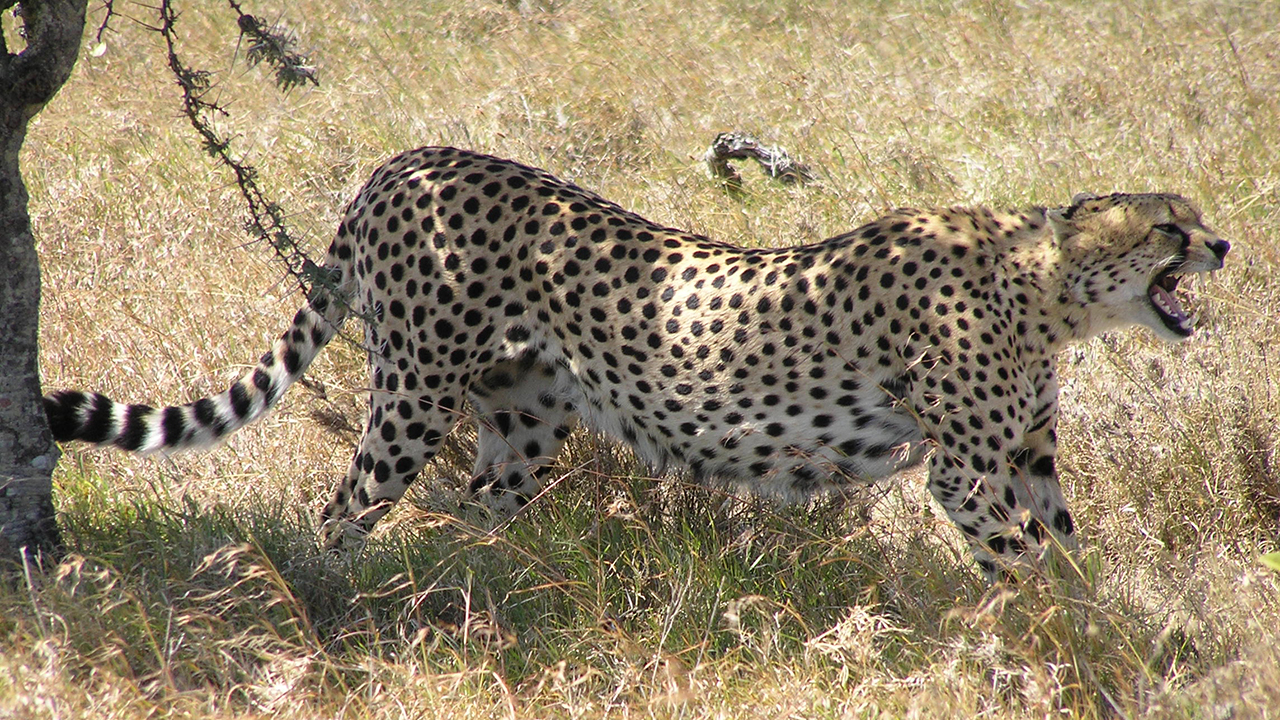
The fastest mammal on land, the cheetah is built for speed. Their elongated lower leg bones and long, flexible spines increase the length of their strides to enable short, explosive sprints. Long, muscular tails help keep them balanced at top speeds, and short but can go as fast as 65 miles per hour (105 kph)!
Female cheetahs are solitary unless they are mothers living with young cubs. Males are more social and tend to live in groups called coalitions, made up of two to three related individuals. Living in coalitions helps dominant males acquire territories. Males may also live alone, though solitary males are less successful at reproducing and tend to be in poor health. When males follow a female to mate, cheetahs occasionally will gather in large groups.
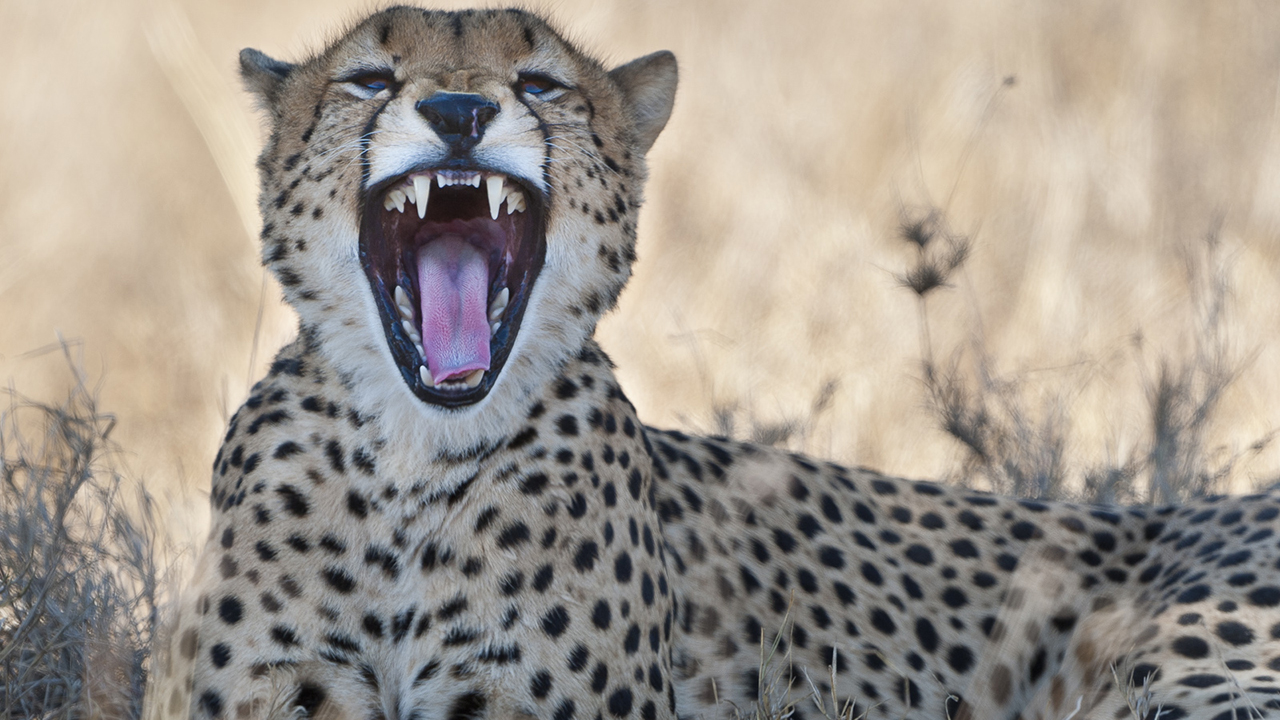
Cheetahs do not have a complex communication system and depend only on a few vocalizations. During fights or when males approach females too closely, cheetahs will growl or hiss. When separated, mothers and cubs use a high-pitched bleat to find each other.
Cheetahs are sophisticated hunters that hunt for food during the day. Their sharp eyesight helps them spot prey, which they aggressively pursue for short distances. Following a hunt and kill, a cheetah must recover for up to an hour before it can eat. This means that cheetahs must consume large quantities of meat quickly before another predator—most commonly a lion or a pack of hyenas—can steal their meal.
The international fur trade that once threatened cheetahs was at its height in the 1960s. Now the biggest threats cheetahs face are habitat encroachment by humans and declining numbers of their preferred prey—especially the Thomson’s gazelle and other ungulates. Cheetahs also suffer from strong competition with larger carnivores, such as lions and leopards.
Cheetahs, which on average weigh 88 pounds (40 kg), prey on small- to medium-size ungulates that weigh slightly less than they do. Their prey includes blesboks, impalas, Thomson’s gazelles, Grant’s gazelles, springboks, calves of African buffalo, young giraffes, ground birds, hares, porcupines, and rats.
Female cheetahs start to reproduce when they are 2.4 years old on average and can breed throughout the year. All the males in a coalition will mate with a single female. Cubs are born in lairs made of tall or thick vegetation, bush, or rocks. As many as eight cubs are born after a 93-day gestation period; usually only a maximum of six survive. Between six and eight weeks after birth, the mother will return frequently to the lair. At three to four months, cubs will begin to learn hunting techniques and accompany their mother on hunts. After 13 to 20 months, the cubs become independent. Males disperse beyond their mother’s range, while females tend to remain close to their mother or overlap with her territory.
Lions and hyenas compete for the same resources as cheetahs and also pose a serious threat to cheetah cub survival. Cub survival depends on the skill of the mother cheetah, either in fending off predators or in choosing good hiding places for her offspring.
Ten thousand years ago, cheetahs roamed throughout Asia, Africa, and North America. Today, they mainly live in sub-Saharan Africa, on less than a quarter of their historical range, and in a very small population in Iran. Cheetahs are rare in West Africa, but do live in the mountain ranges of southern Algeria, Mali, and Niger. Groups of the cats are scattered more broadly from East Africa to southern Africa, while more sizable populations can be found in Botswana, Namibia, and South Africa.
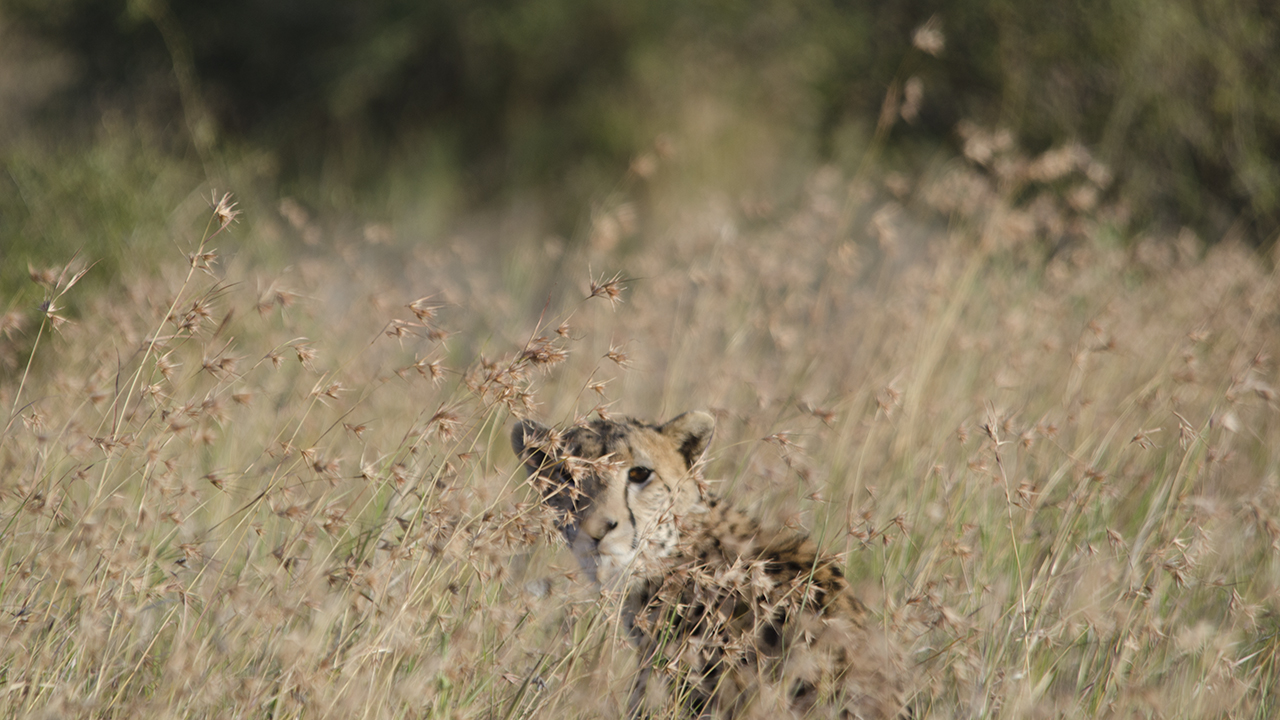
Cheetahs prefer open plains, savanna woodlands, and open grasslands, but can also be found in semi-desert and mountainous areas. Female cheetahs prefer denser woodland habitat because more ungulates live there. Depending on the season and food supply, as many as 40 cheetahs can live on 256 acres (1 km2) of land.
In 1998, Kenya’s cheetah population was estimated at 793 individuals. However, recent estimates are closer to 2,750 adults in 15 populations in eastern Africa, with the most significant numbers in Serengeti National Park, Maasai Mara National Reserve, and Tsavo National Parks. In southern Africa, 6,250 adults are estimated to live in unfenced areas.