
Lessons Within This Unit
Print this Page
Sign up for our Interactive Classroom – Coming Soon!
Additional Resources
How Grasslands Work
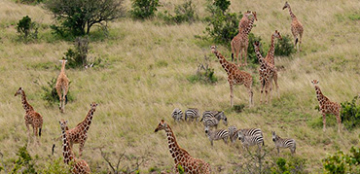
Earth is comprised of many ecosystems—tropical rainforests, grasslands and savannas, and tundra to name just a few. In the dry lands of Africa, the most common ecosystem is the savanna, or tropical grassland. Grasses are sustained by rainfall, and they support many species of herbivores, such as zebras, antelope, buffalo, rhinos, elephants, and many domesticated livestock species. The wildlife, in turn, supports predators, such as lions, hyenas, cheetahs, and leopards. In this unit, we will explore
- how grasses are constructed and how animals use the different parts.
- how grasses grow and what environmental factors affect their growth.
- who eats the grasses and how the cycle of life is organized into food chains and food webs.
- how wildlife and domesticated grazers who eat the same foods can coexist with sustainable management and conservation.
Lessons Within This Unit
Unit 5: How Grasslands Work
Lesson 1 of 5
Lesson 1: Grass Parts
Students will learn about each grass part and what each one does.
Unit 5: How Grasslands Work
Lesson 2 of 5
Lesson 2: Grass Growth
Students will learn what helps grasses grow, and what prevents grasses from growing.
Unit 5: How Grasslands Work
Lesson 3 of 5
Lesson 3: Who Eats Grasses?
Students will learn how different animals adapt to their environments.
Unit 5: How Grasslands Work
Lesson 4 of 5
Lesson 4: Food Chains
Student will learn about food chains and how all nature is connected.
Unit 5: How Grasslands Work
Lesson 5 of 5
Lesson 5: Wildlife and Livestock Can Co-exist
Student will learn how livestock and wildlife compete for the same resources.