From understanding how populations have changed over thousands of years to identifying the genetic clues that help species adapt and survive, genomics is opening new possibilities for conservation. In August, Mpala Research Centre became a classroom for exploring some of those possibilities.
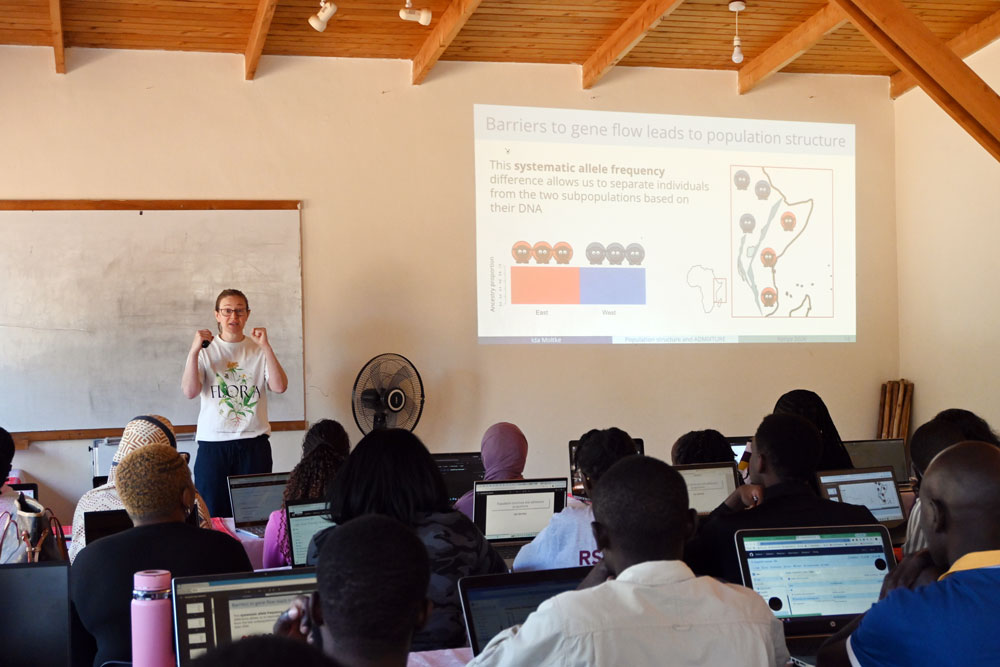
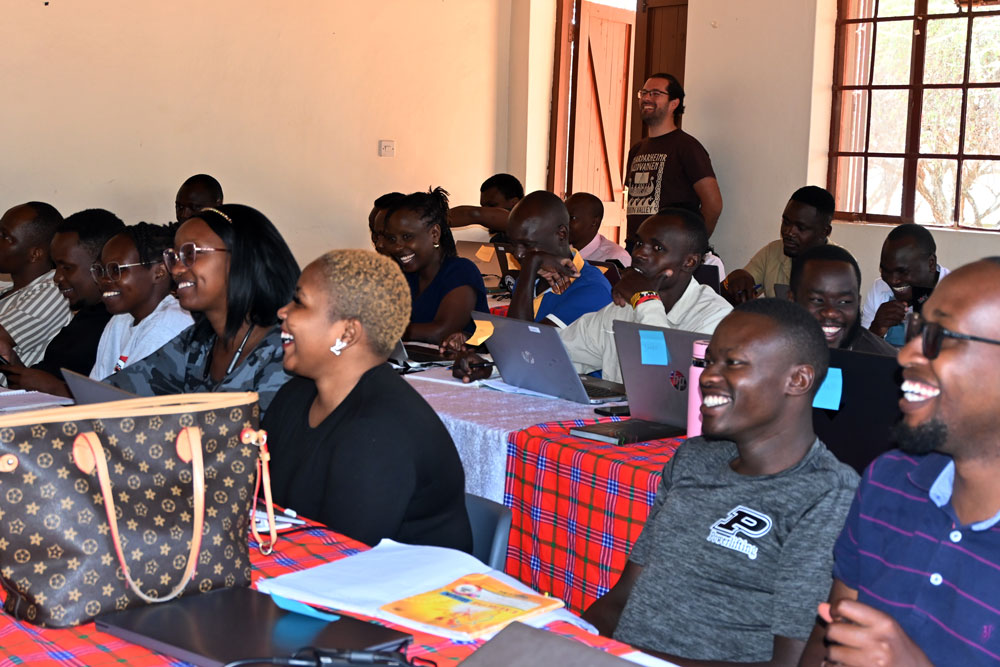
From 19–23 August 2026, Mpala hosted a Conservation Genomics Workshop, bringing together researchers and students for five days of practical training in the use of genomic tools for biodiversity conservation and evolutionary research.
The workshop was organised through a collaboration between the University of Copenhagen and the Africa BioGenome Project (AfricaBP) and led by Prof. Rasmus Heller, Dr Nuno Martins, Dr Anders Albrechtsen and Dr Harvi from the University of Copenhagen.
At the heart of the training was the question: What can DNA tell us about the past, present and future of populations?
Quite a lot, it turns out.
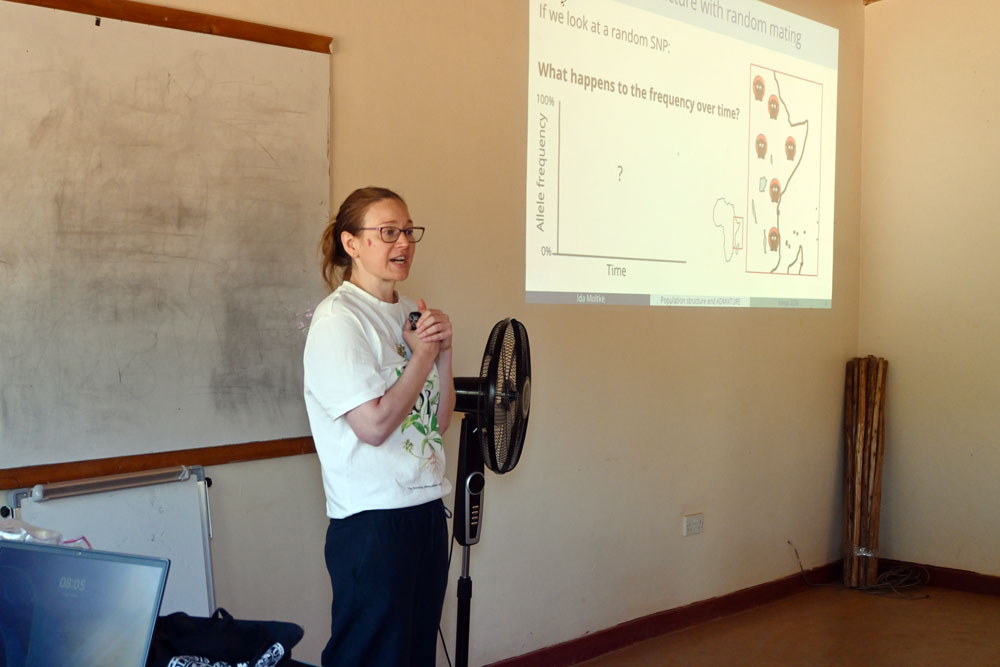
Working with the Kenya2026 genomic dataset, participants learned how genetic information can reveal relationships between populations, historical movements and mixing, changes in population size and even evidence of adaptation to changing environments.
The workshop moved from the fundamentals of working with genomic data to hands-on analysis using computational tools. Participants began with command-line skills and data management before exploring techniques such as Principal Component Analysis (PCA), admixture analysis, demographic reconstruction, nucleotide diversity, relatedness, F-statistics, D-statistics and selection scans.
Behind the technical names were some very practical conservation questions.
How genetically diverse is a population? How closely related are different populations? Have they exchanged genes in the past? Has a population experienced a major decline or expansion? And are there parts of the genome that reveal how a species has adapted to particular environmental pressures?
Participants also explored the LCT region associated with lactase persistence, demonstrating how genomic data can uncover the relationship between genetics, environment, diet and adaptation.
Another technique, Pairwise Sequentially Markovian Coalescent analysis, or PSMC, allowed participants to look much further back in time, using patterns within a genome to reconstruct historical changes in population size across thousands of generations.
For conservation science, these tools are increasingly important. Protecting biodiversity is not only about knowing how many individuals remain. Genetic diversity can tell us something about a population’s resilience, its evolutionary history and its capacity to respond to future environmental change.
By hosting training such as the Conservation Genomics Workshop, Mpala continues to provide a space where scientists and students can develop the skills needed to ask deeper questions about African biodiversity and, importantly, turn those answers into better-informed conservation.