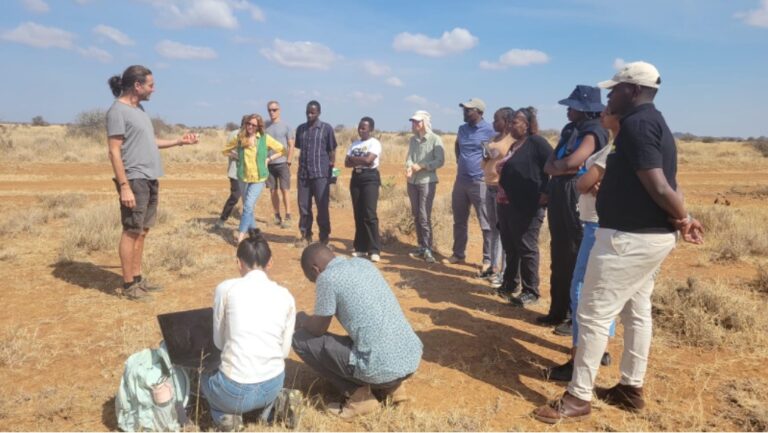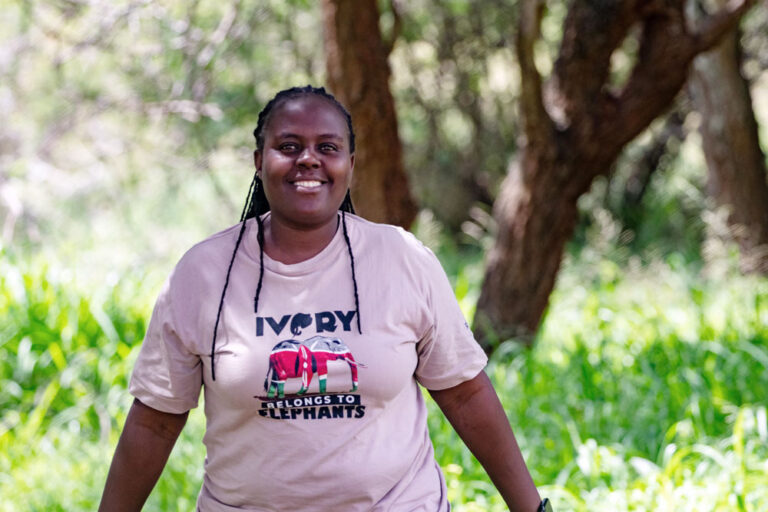
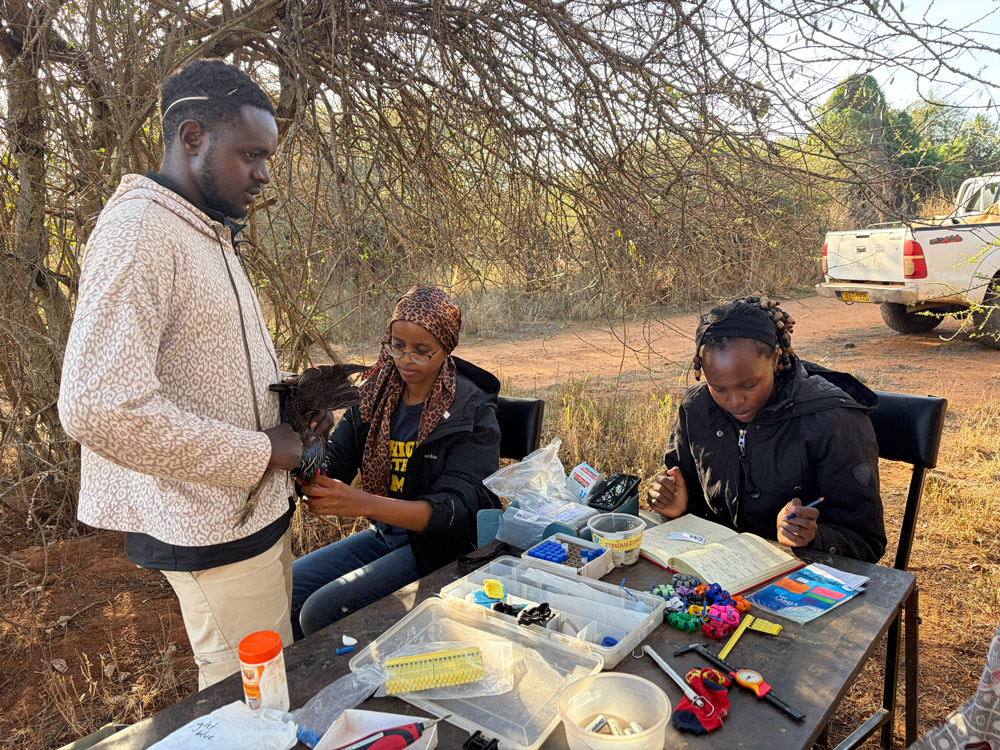
A month into their internships at Mpala, Diana Mumbua and Halima Hassan Oda are discovering how their conservation backgrounds translate into the daily work of research. During a recent field trip with the Vulturine Guineafowl Project, they assisted with activities as the team captured birds, tagged them, collected data and fitted GPS trackers.
The work is giving them experience within a long-term research project under Dr Charlotte Christensen and the field team. As the first beneficiaries of Mpala’s Kenya Students Fund, they receive three-month placements that offer practical training, mentorship and time to explore where their interests might lead.
Both arrived with a commitment to conservation. Their first weeks at Mpala have brought new interests and a clearer understanding of what research requires.
A new way of seeing birds
For Halima, the placement is a first step towards a career in wildlife research. She studied environmental conservation and natural resource management at the University of Nairobi, a course she chose knowing that she wanted to work in conservation.
At Mpala, that ambition is taking shape through participation in the Vulturine Guineafowl Project. Assisting the team gives her opportunities to learn how field activities and careful record-keeping contribute to an ongoing study.
One of her strongest memories from the first month, however, came from October Big Day.
Before the event, Halima would notice birds without necessarily knowing their names or much about their lives. Spending the day with experienced birders changed the way she looked at them. She could ask questions, learn about different species and discover how details such as nests offer clues to the birds around her.
The experience sparked an interest she hopes to continue after leaving Mpala. Birdwatching has become a way to keep learning independently, beyond the activities of the internship.
Halima came to Mpala knowing she wanted to pursue wildlife research. Her first month has given her another interest to carry into that journey—and a reason to look more closely at familiar surroundings.
Connecting education with experience
Diana has a background in wildlife conservation and management from the University of Eldoret. Her experience with conservation organisations has focused largely on education. At Mpala, she values the opportunity to connect that work with practical research.
The placement is helping her bridge classroom learning and fieldwork. Taking part in a working project brings her closer to the decisions, adjustments and shared responsibilities involved in collecting research data.
Patience has been one of her most important lessons.
Fieldwork does not always unfold as expected, she explained. Learning to respond when plans change is part of the experience, as is recognising the risks of working in the field and paying attention to the guidance of the team.
Teamwork has also stood out. Research activities depend on people coordinating their efforts, communicating clearly and understanding how their tasks contribute to the work around them. Diana is developing that understanding through participation.
She hopes to continue her education, including pursuing a master’s degree. Her time at Mpala is giving her practical experience to draw on as she considers further study and future opportunities.
Learning the work behind the data
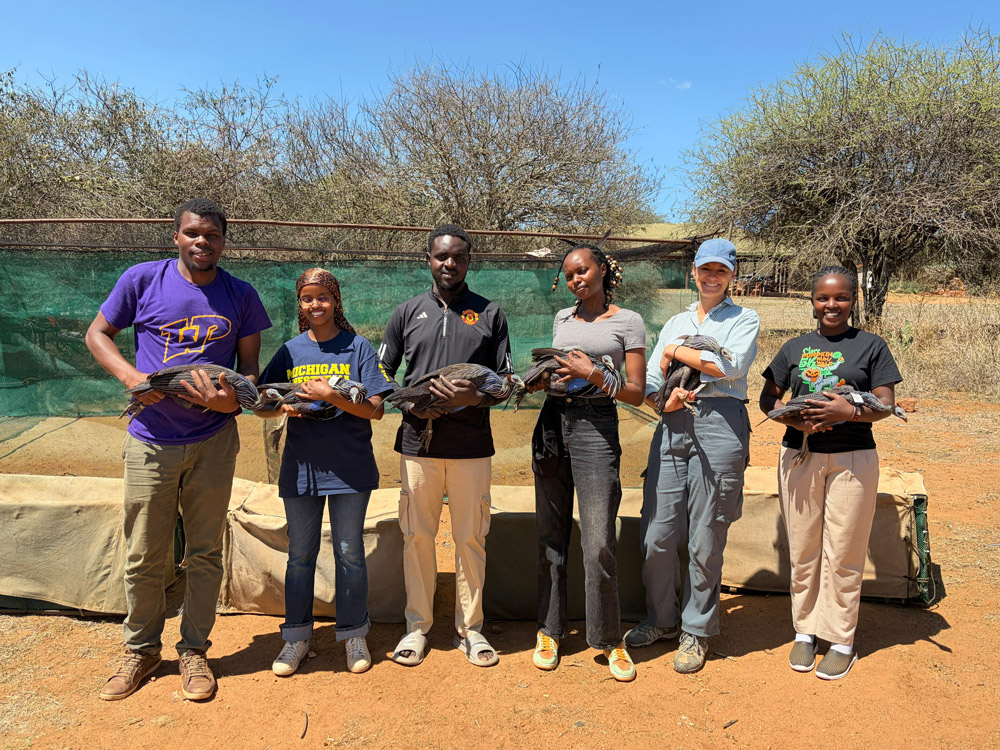
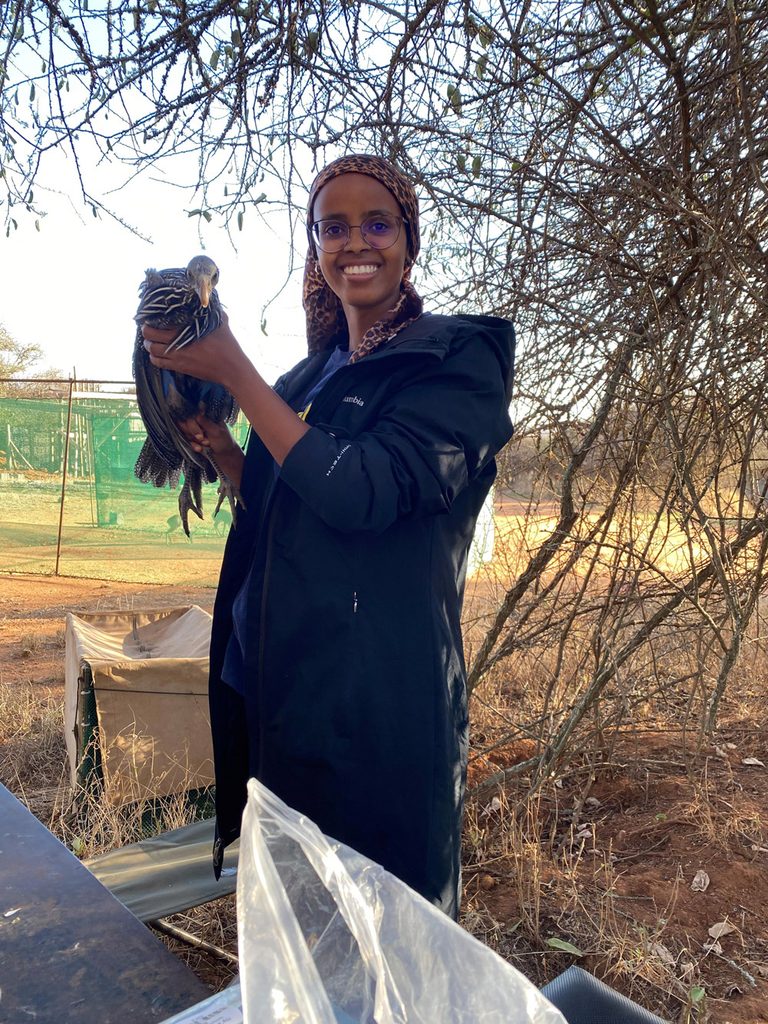
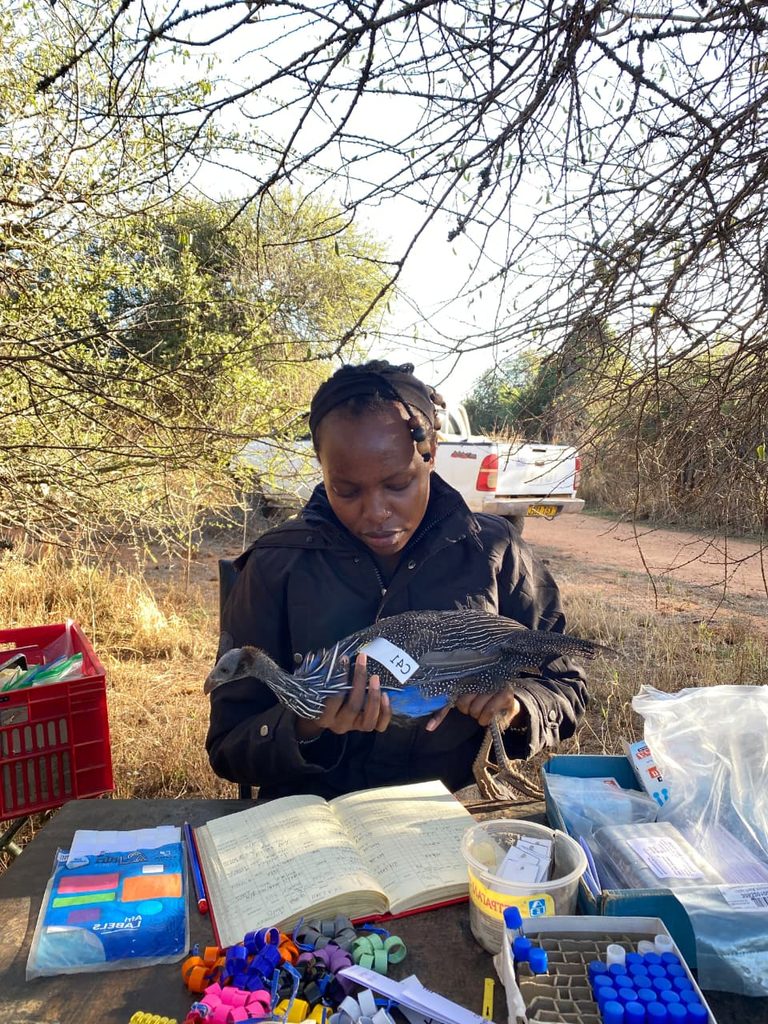
For both interns, the Vulturine Guineafowl Project offers a view of research as a sequence of connected activities. Capturing birds, tagging them and fitting trackers are visible parts of the process. Recording and organising the accompanying information require care of their own.
Their assistance with data entry places them within that process. Information gathered in the field must remain accurate and useful when researchers return to it later. Learning how to handle those records is part of understanding the consistency on which long-term research depends.
Working with an established field team also gives Diana and Halima opportunities to ask questions and learn from experience accumulated over many seasons. Their placements allow them to see how methods are put into practice and how a team responds to the conditions of a particular day.
These experiences are helping them build on what they already know while identifying skills they want to develop further.
Looking ahead
The Kenya Students Fund supports Kenyan students through research participation, technical training and mentorship at Mpala. For Diana and Halima, that support has opened a period in which they can contribute to a project while exploring their own direction in conservation.
Their first month has already left each with something distinct. Halima has discovered an enthusiasm for birdwatching and an ambition to pursue wildlife research. Diana is gaining field experience that complements her background in conservation education and informs her plans for further study.
Both still have more of the placement ahead of them. For now, they are learning through the daily work of the project: assisting, observing, asking questions and becoming more familiar with the demands of field research. Those experiences will help shape what they choose to do next.