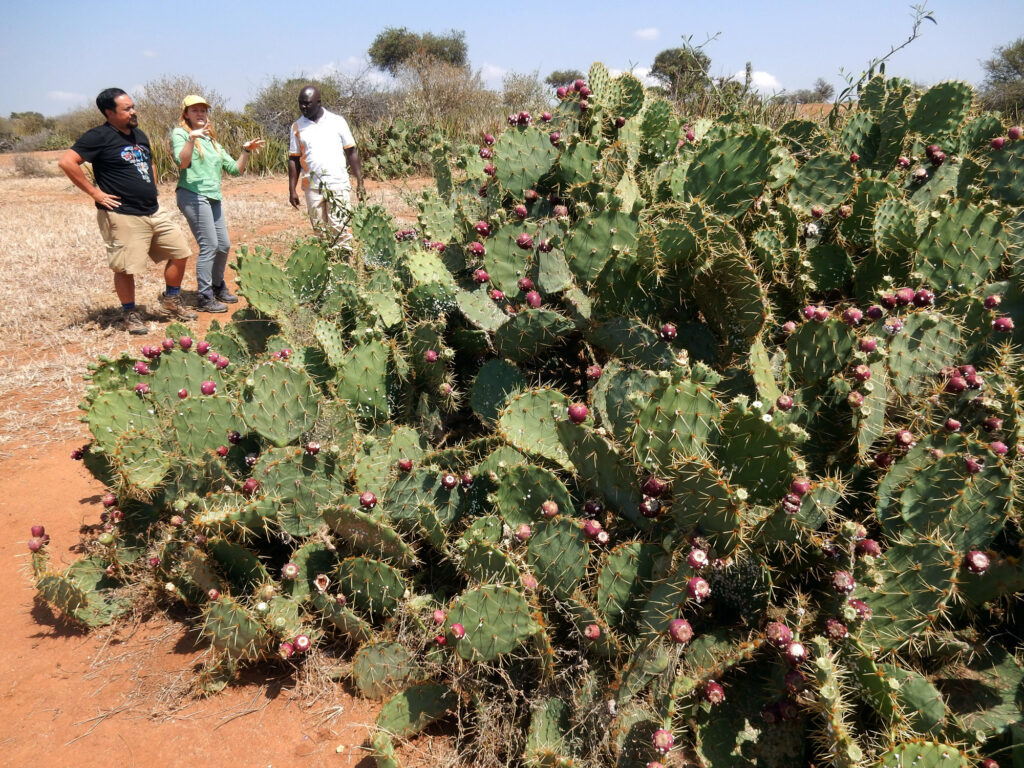
Across Laikipia, Opuntia has become an increasingly familiar and unwelcome part of the landscape.
It wasn’t always seen that way. Opuntia was originally introduced as an ornamental plant, valued for its distinctive appearance and ability to thrive in dry conditions. But over time, what was once planted deliberately has escaped into the wider landscape and become one of the region’s most serious invasive species.
Today, the cactus has spread across large areas of rangeland, displacing native vegetation, reducing the land available for livestock and wildlife, and creating significant challenges for pastoral communities whose livelihoods depend on healthy, productive landscapes.
At Mpala, the scale of the problem has made one thing increasingly clear: containing Opuntia requires more than removing cactus from the landscape. It requires research, collaboration and solutions that work ecologically, economically and at scale.
Mpala is now embarking on an ambitious initiative aimed at doing exactly that.
As an international research centre rooted in the Laikipia landscape, Mpala intends to take a leading role in understanding the Opuntia challenge and developing practical solutions that can benefit both biodiversity and the communities living alongside it.
The first phase of the initiative will run for 18 months and has already begun with scoping and planning. A working team has been established, priority areas for intervention are being identified, and benchmarking has been undertaken to learn from approaches already being used to manage Opuntia elsewhere.
The immediate challenge is also close to home. Mpala is taking steps to prevent further spread of Opuntia across its own landscape while using the research centre as a place to test, evaluate and demonstrate different approaches to management.
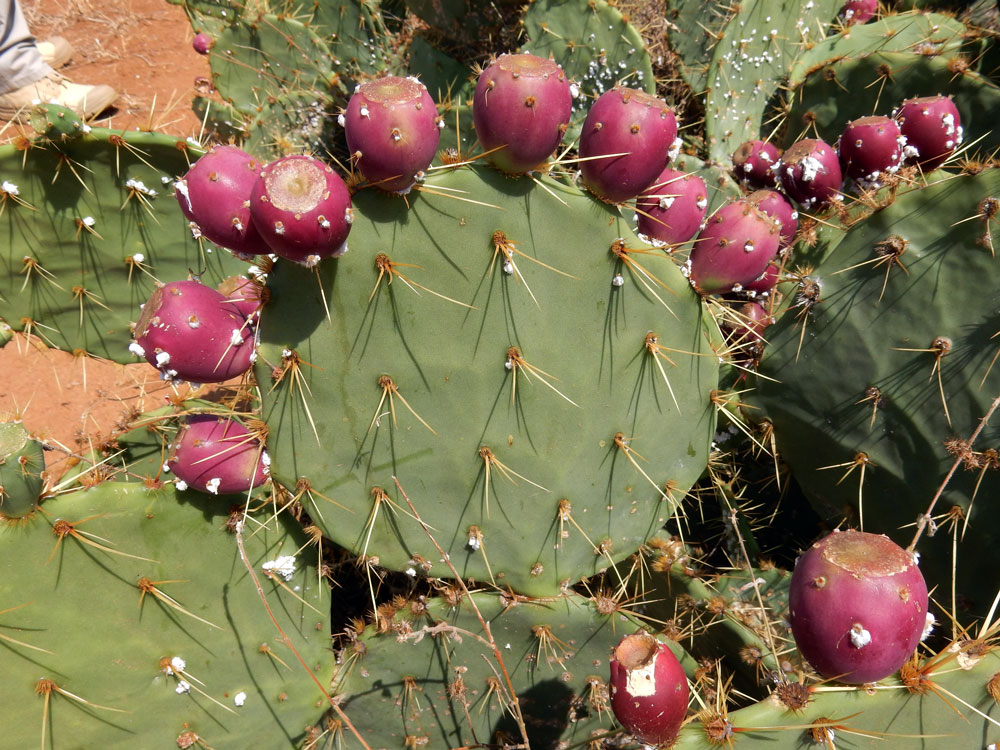
But removing Opuntia is only one side of the equation.
A key part of the project will explore whether the plant itself can have economic value for communities affected by its spread. Among the possibilities being considered are its use as an alternative source of livestock feed and as a raw material for biogas production.
This creates an important shift in the conversation. What if controlling an invasive species could also create useful products, reduce pressure on livestock feed and potentially generate economic opportunities?
Answering those questions will require careful research. Not every use of Opuntia will necessarily be suitable or scalable, and any utilisation will need to support, rather than undermine, the broader goal of controlling its spread.
That is precisely where Mpala can make a difference.
By bringing together researchers, conservation practitioners, communities and other partners, the initiative aims to build an evidence base around what works, what can be scaled and what could ultimately provide a model for tackling Opuntia beyond Mpala.
The first 18 months are therefore only the beginning.
The plan is broader: to help develop solutions to one of Laikipia’s most pressing biodiversity crises while ensuring that the people who live with its consequences are part of, and can benefit from, the solution.