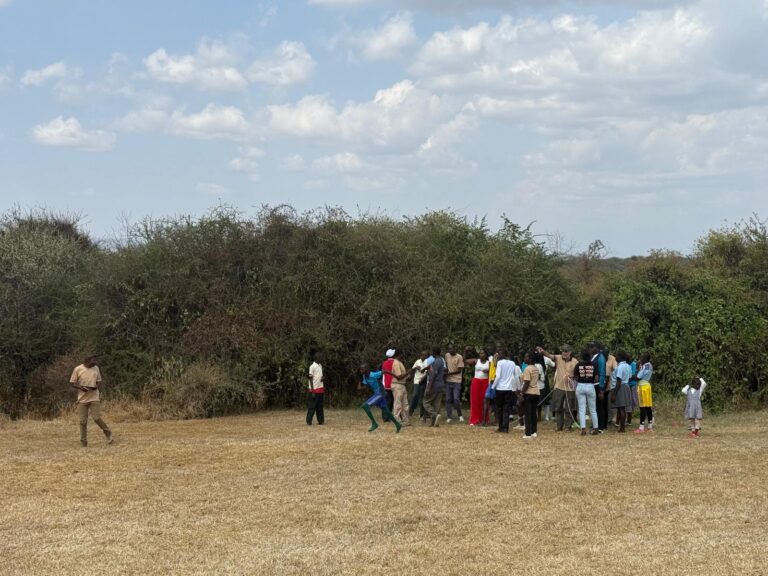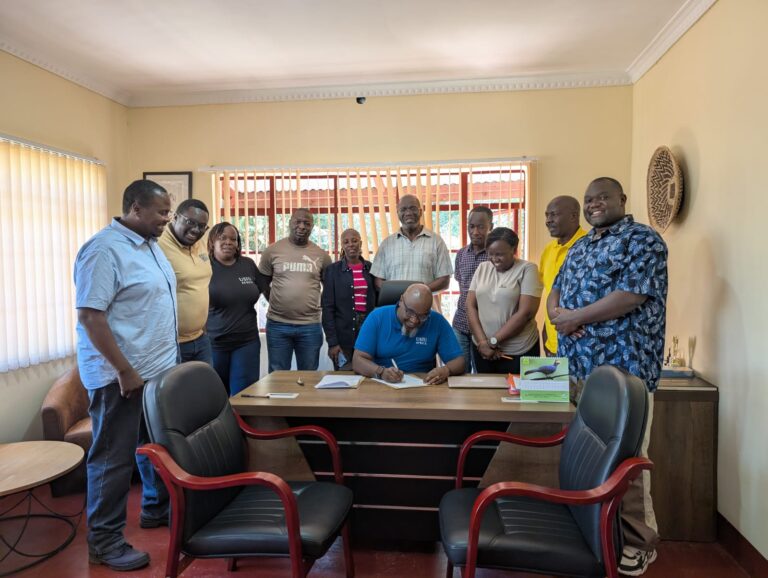
The WildDrone consortium opened up their Hack-a-thon at Mpala on 20 February. Based at the Mpala River Camp for the first two days, the 14 P.I.s and graduate students led by Dr Ulrik Lundquist from Southern Denmark University and Dr Blair Costelloe explored how drone based tools could have an impact on the Mpala research landscape.
The course represents the 19 member interdisciplinary partnership across European and African universities and conservation entities who are in the process of training 12 doctoral candidates. Their goal is to integrate the research areas of aerial robotics, computer vision, and wildlife ecology, using autonomous drone technology as a unifying platform. They are developing new autonomous systems, expanding current software capabilities, and combining these advances to create practical tools for visual inspection and monitoring of wildlife populations, movement, behavior, and habitats in complex field settings.
While on Mpala they explored the habitat differences between riparian murram, transition, and black cotton soil types and observed how different projects use these landscapes as well as which constraints they could build around in both their data collection drone flights and computer vision modeling. Their technical expertise was on display when they assisted the Mpala Baboon Research Project in recovering a malfunctioning baboon GPS collar by demonstrating radio transmission shielding using the UHF download equipment.
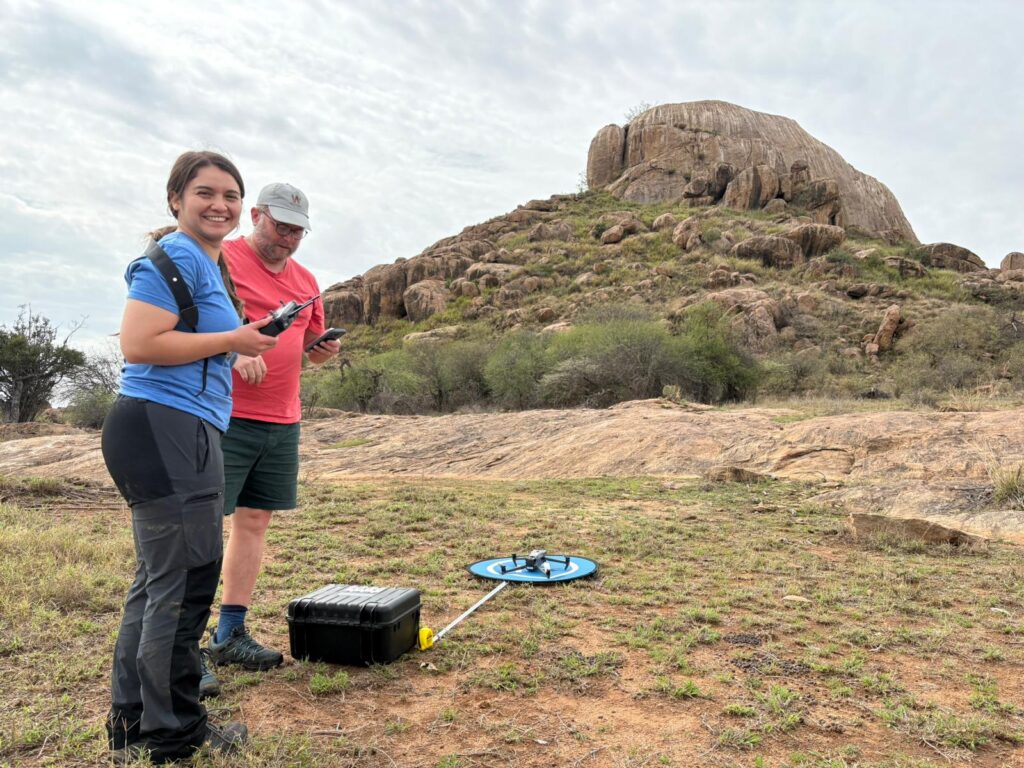
Later in the week, a smaller WildDrone team returned to Mpala, where they used drones to collect aerial photos of the trees and cliffs where baboons sleep, in collaboration with the Mpala Baboon Research Project.
These visits to Mpala were a good opportunity for the group to see how a research managed property that is building up its independent drone operation credentials could be a fruitful space for future collaboration. Given the WildDrone consortium’s cutting edge expertise and strong AI/computer vision experience, Mpala stands to gain unique capabilities from potential future partnership.
Authors:
Dr. Blair Costelloe, Project Leader, Max Planck Institute of Animal Behavior
Dr. Matt Snider, Post-Doctoral Fellow, Max Planck Institute for Animal Behavior
Related
Cutting Edge Conversations:
Virtual Panel on Research at Mpala Join us for a discussion of exciting new research published in Nature Sustainability on how elephants can reverse soil depletion caused by cattle. Panelists will not only discuss the implication of these critical findings for sustainability, but will also touch on their approach to…
Navigating the Research Landscape in Kenya: Insights from Mpala Research Centre’s Webinar
To celebrate Mpala Research Centre’s 30th anniversary and kick off our Science Week, we brought together researchers, stakeholders, and government officials for an insightful webinar held on June 20, 2024. The webinar featured a keynote address from Dr. Patrick Omondi, Director of the Wildlife Research and Training Institute (WRTI) and…
Meet Our Researchers: Leo Khasoha
Tell us about your background. I am from Shiru Village in Hamisi Constituency, Vihiga County, with a background in animal ecology and evolution. I am particularly interested in the mechanisms that maintain ecological patterns and species assemblages, spanning population, community, evolutionary, and conservation ecology. I use molecular biology, field experiments,…