Field Guide
Mycteria ibis
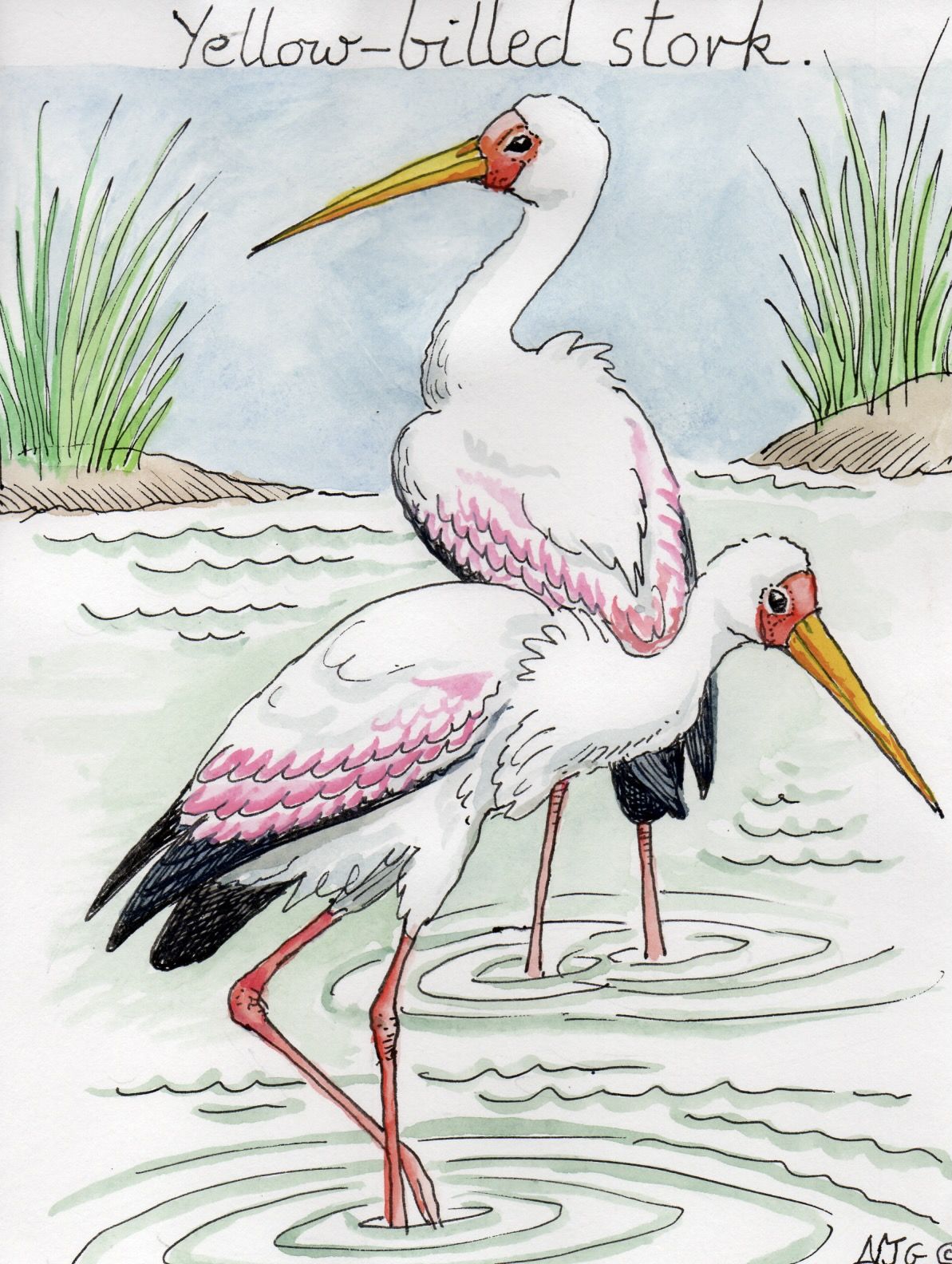
Yellow-billed Stork
Swahili: korongo domo-njano


- Type
- Bird
- Daily Rhythm
- Diurnal
- Diet
- Carnivorous
- Conservation Status
- least concern
- Weight
- 1200 – 2400 g
- Size
- Length: 95 - 105 cm Wingspan: 150-165 cm

Voracious nestlings eat so much that yellow-billed storks earned the German nickname Nimmersatt—never full.
Although yellow-billed storks can be found in the company of other birds, they do not typically form large flocks.
Experts have compared their nesting calls to a squeaking hinge.
Yellow-billed storks prefer wetland habitats, where they partially open their bills in the muddy waters while searching for food; sometimes they submerge their entire heads. They follow hippopotamus and crocodiles to capture potential prey that the larger animals have disturbed. When they are finished foraging, they bask on sandbanks with other wading birds such as herons and spoonbills.
Least concern
Yellow-billed storks feed on frogs, small fish, and other aquatic animals.
Monogamous pairs breed in colonies with herons and other water birds. A colony usually is established in a tree, often over water, and has from ten to twenty pairs, but some can have as many as fifty. The parents construct stick platforms and incubate the eggs for around a month. Ravenous chicks are fed by both parents and fledge around 55 days after they hatch.
Yellow-billed storks sometimes nest in towns, indicating they do not fear humans. They can become the prey of Nile crocodiles, and African fish eagles will raid their nests for eggs.
Yellow-billed storks are found throughout much of Kenya.
Yellow-billed storks live in much of sub-Saharan Africa.