Field Guide
Ceratotherium simum
White Rhinoceros
Swahili: Kifaru mweupe


- Type
- Mammal
- Daily Rhythm
- Diurnal
- Diet
- Herbivorous
- Life Span
- In the wild: 35 to 50 years
- Conservation Status
- Near threatened
- Weight
- 1.9 to 2.5 tons (1.7 to 2.3 t)
- Size
- 5 to 6 ft (1.6 to 1.8 m) high at shoulder
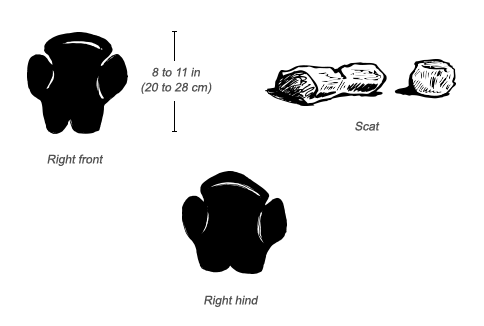

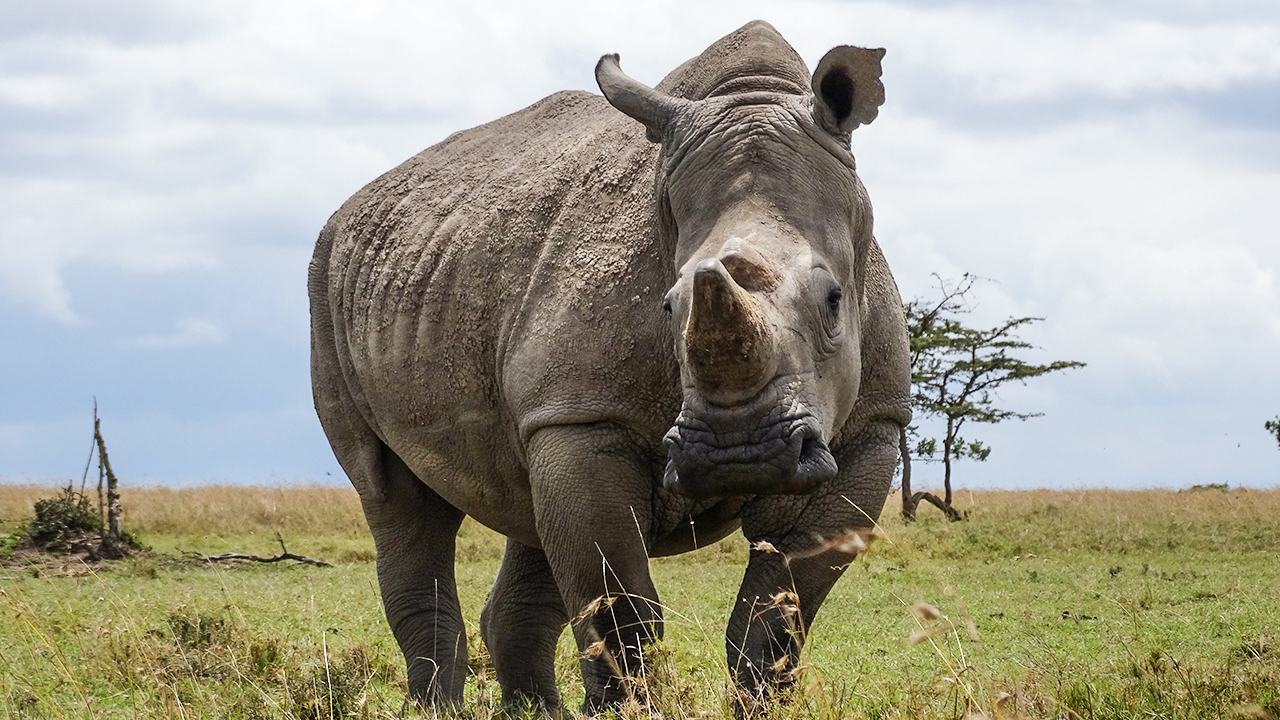
Whether thundering across the savanna or trotting gracefully on its three-toed hooves, white rhinoceroses are one of the most arresting sights in Africa. A social animal, the white rhino has two horns—a long one at the end of its nose and a shorter one closer to its eyes—that protect its face. These horns are made of keratin—the same substance that makes up human hair and fingernails.
Nearly as gregarious as elephants, white rhinos have complex social lives. Females stay with their calves for about three years (until the next calf arrives) and seek out other females for companionship. They form groups of six to 14 individuals. Adult males lead mostly solitary lives, meeting up with females only to breed. Males will share their territory with immature males so long as they remain submissive, but challenge and often fight outsider bulls that trespass on their territory.
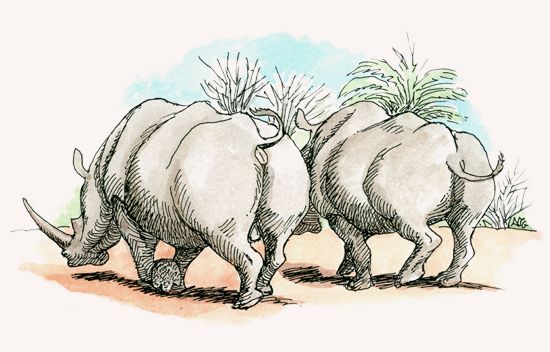
Because they have very poor eyesight, white rhinos rely on both sound (calls, squeaks, snarls, and wails) and scent to communicate. They create middens, or piles of dung, at the borders of their territories. Because the dung is deposited by all of the rhinos in a territory and not just the dominant male, the middens convey information about the number and condition of rhinos in an area.
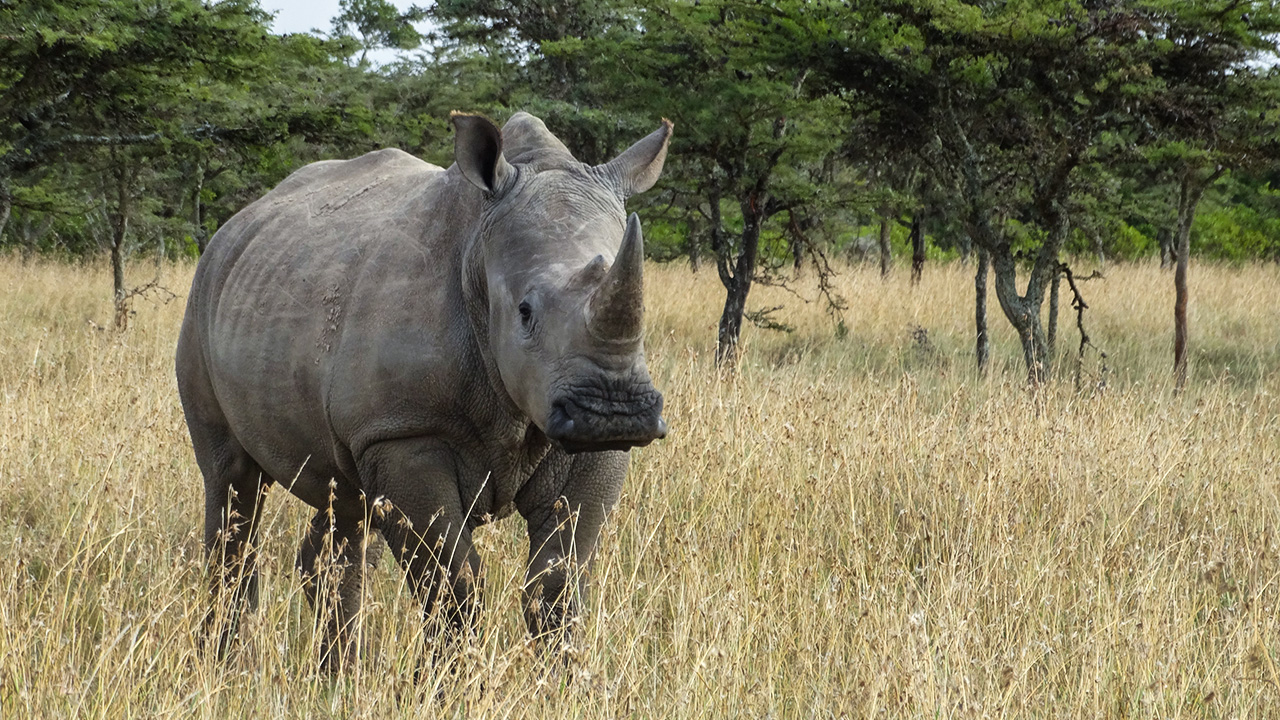
White rhinos alternate between eating and resting during the day and night. They spend the heat of the day in the shade, often wallowing in water when it is available or rolling in dust. These rhinos sometimes gather in groups of as many as 12 individuals. Both males and females have two horns. Males use theirs mainly for establishing dominance or for threat displays, while females use theirs to protect their young. Unlike its black rhino cousin, the white rhino is a grazer and typically moves with its head lowered except when alarmed.
More than a century ago, human hunting and habitat destruction drove white rhinos almost to extinction. Dedicated conservation, breeding, and reintroduction efforts have brought their population up to a “near threatened” level. Poaching and habitat loss still threaten their survival. Their horns are valued in traditional Asian medicine and for handles on ceremonial daggers in parts of Africa and the Middle East. Recent conservation efforts include microchipping all the rhinoceroses in Kenya, poisoning or painting their horns, or removing their horns altogether.
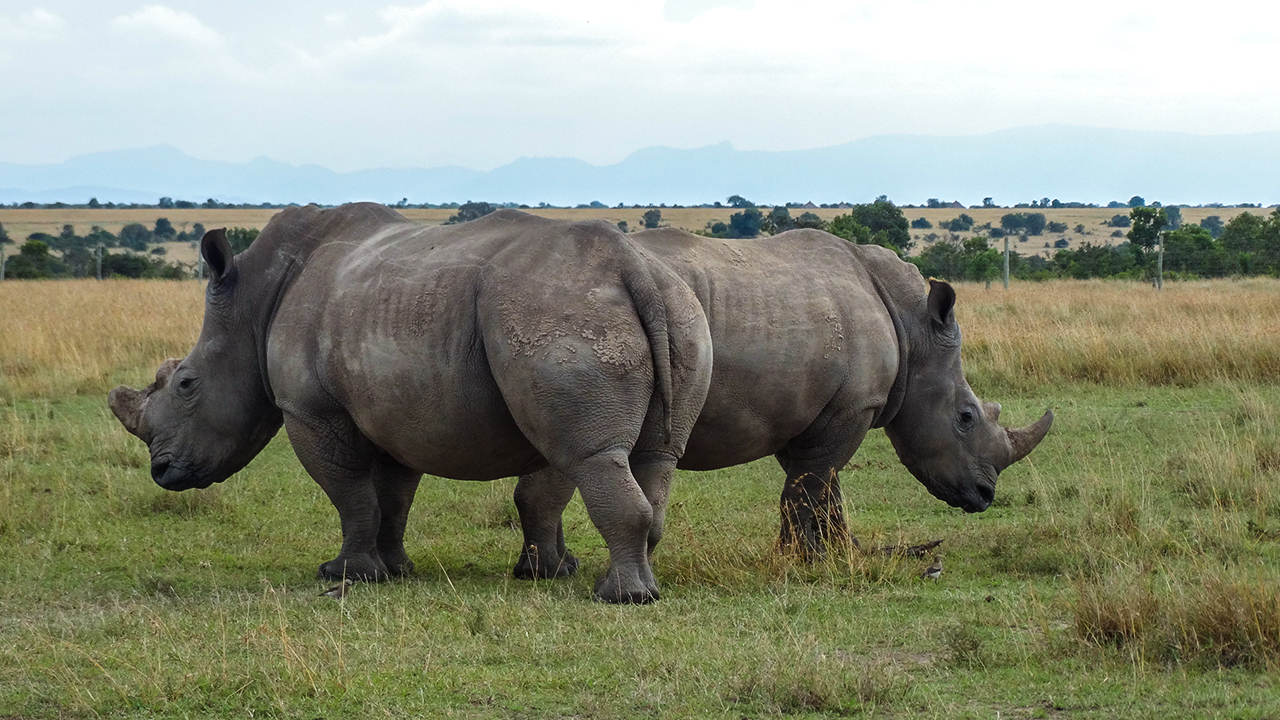
A white rhino’s wide, flat mouth evolved for grazing on grasses. They regularly drink from water holes, although they can go without water for up to 5 days during dry spells.
Males and females reach sexual maturity when they are four or five years old. Females typically reproduce when they are six or seven. Due to competition with older males, males don’t mate until they are 10 to 12 years old. Mating takes place any time of year that a female is in estrous. The male courts the female for a few weeks before mating takes place. Gestation lasts 15 to 16 months. The female temporarily leaves the group to give birth to a single calf that is able to stand and nurse usually within an hour. It begins grazing at two months. The bond between mother and calf is very strong, and a calf will stay with its mother for as long as three years, until about the time that the female is ready to mate again.
Previous Next
The northern white rhino, which once ranged across northern and central Africa south of the Sahara, was declared extinct in the wild in 2008. The southern subspecies lives primarily in Namibia, Zimbabwe, and South Africa. A small population has been reintroduced into Kenya.
White rhinoceroses prefer wide, flat grassland and savanna. They favor areas with plenty of food, shady trees, hiding places, and water for drinking and wallowing.
Small birds call oxpeckers accompany rhinos almost everywhere. Called askari wa kifaru (meaning “rhino guard”) in Swahili, they pick ticks off the rhinos’ skin and cause a commotion at the approach of any perceived danger. Adults rhinos have no predators except humans. However, rhino calves occasionally fall prey to lions, leopards, hyenas, wild dogs, and Nile crocodiles.
Thanks to conservation efforts, more than 20,000 white rhinos now live in the wild, including 360 that were reintroduced into Kenya after being absent from East Africa for several thousand years. Of those, about 226 southern white rhinos live in Laikipia. The Ol Pejeta Conservancy near Mpala is home to four northern white rhinos that were saved from the wild. All the rhinos pictured here are at Ol Pejeta.