Field Guide
Warthog
Phacochoerus africanus Swahili: Ngiri, Nguruwe mwitu


- Type
- Mammal
- Daily Rhythm
- Diurnal
- Diet
- Herbivorous
- Life Span
- In the wild: 12 years In captivity: 18 to 20 years
- Conservation Status
- Lower risk
- Weight
- Male: 130 to 230 lb (59.3 to103.9 kg) Female: 98 to 152 lb (44.6 to 69.1 kg)
- Size
- Male: 24 to 29 in (61.0 to 73.7 cm) high at shoulder Female: 21 to 26 in (53.3 to 66.0 cm) high at shoulder
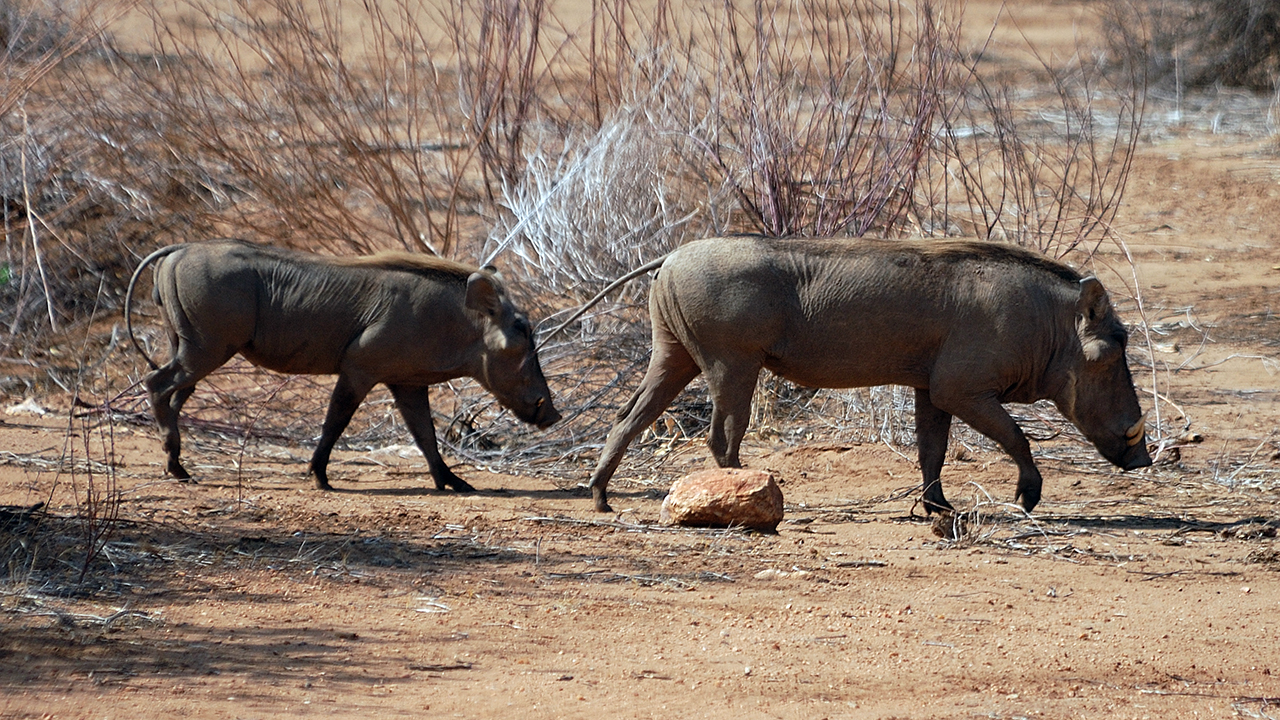
Instantly recognizable with its large head, wide eyes, and wide snout built for rooting in the hard earth, the common warthog is uniquely adapted for the dry savanna. Their upright tails, erect manes, and regal bearings make them easy to spot as they trot through the tall grass.
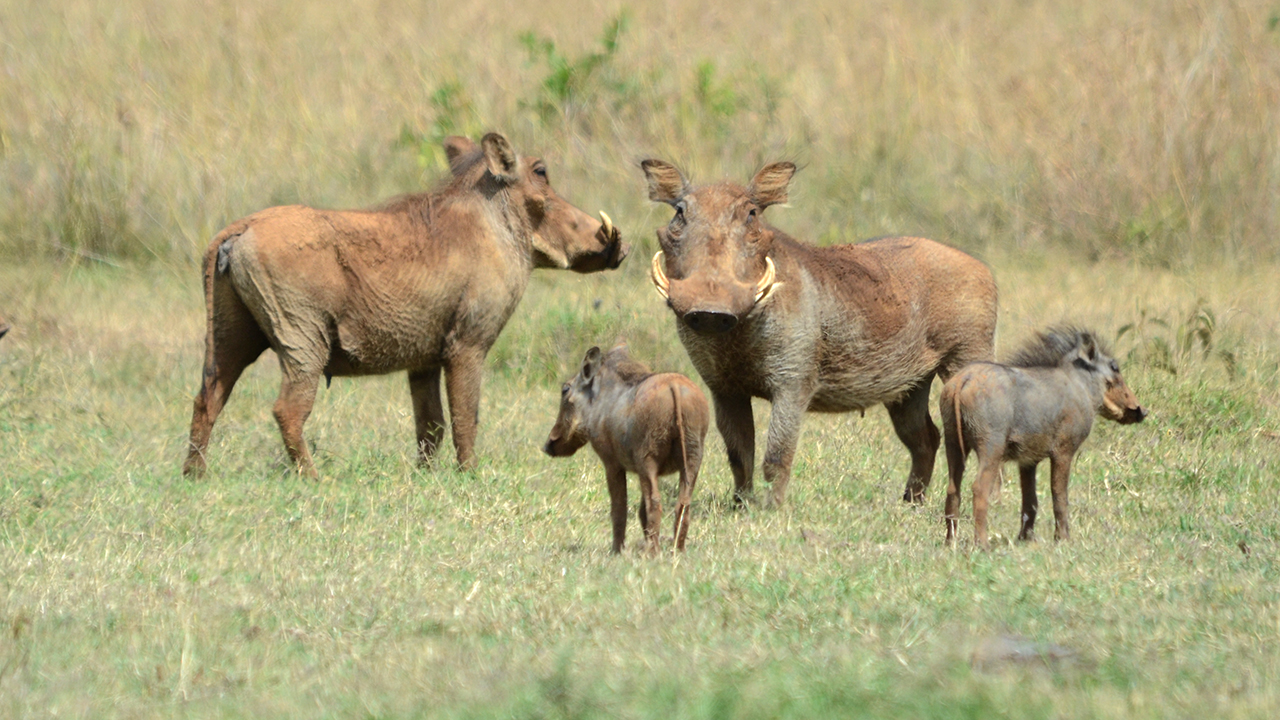
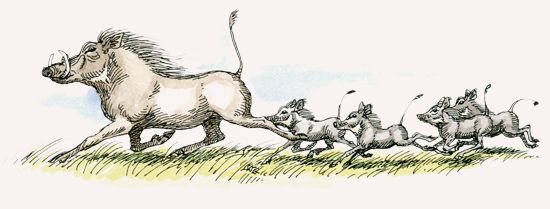
Warthog family groups are based around females. A single adult female, her most recent litter of piglets, and a few female offspring from her previous litters form the core of the social structure. A female and all of her offspring maintain strong bonds, though the number in the family group is limited by the size of their nightly burrow. Males leave the family within their first year of life, forming bachelor herds or remaining alone.
Warthogs use a range of grunts and squeals to communicate greetings, alarms, and threats. Body language is also important. A characteristic threat display includes a raised mane and tall stance, with the tail pressed flat against the side of the body; a greeting involves sniffing and touching another warthog’s nose or mouth.
Warthogs spend their nights in burrows or holes. The piglets in particular need these shelters to survive. They must huddle together to maintain a warm body temperature or risk death. Warthogs emerge from their holes at sunrise and spend the day eating, walking, and socializing for brief periods. Young warthogs enjoy play-fighting, and older family members groom one another to remove nits. Warthogs rest in the shade during the hottest part of the day and return to their burrows at dusk.
Though the International Union for Conservation of Nature (IUCN) lists warthogs as a species of lower risk, their susceptibility to drought and predation is cause for concern. In some regions, hunting by humans is a major threat. Due to a mistaken belief that warthogs spread swine fever to domestic pigs, East Africa once promoted the eradication of warthogs.
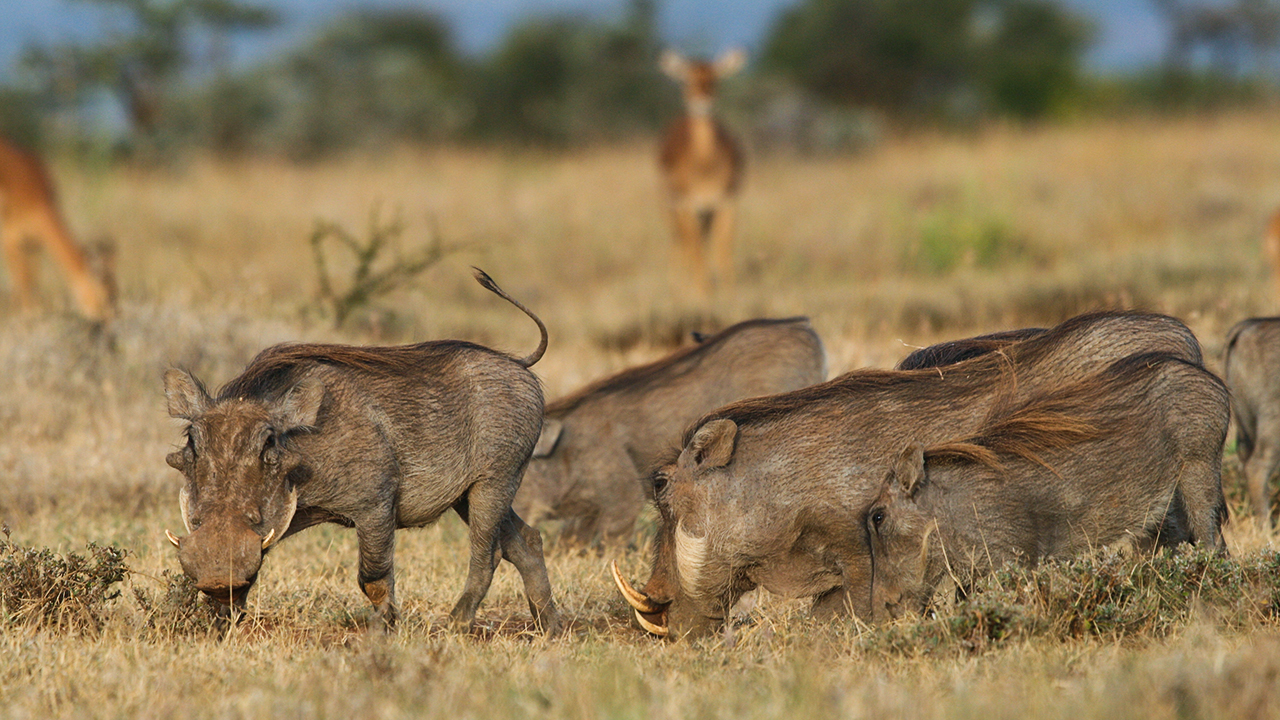
Highly specialized herbivores, warthogs eat grass almost exclusively. Their tusks are useful tools for stripping seeds from various kinds of grass at the end of the wet season. During drier times of the year, they use their tusks and snouts to dig up bulbs and roots. The tough calluses on their knees let them kneel for long periods while grazing on short grasses.
Mating occurs at the end of the wet season, and females give birth at the start of the next rain. During the mating season, dominant males begin to seek out fertile females by visiting their burrows in the morning or even sleeping in their dens with them at night. Once a male has selected a female, he courts her by trotting after her, uttering a loud, pulsing grunt, and resting his chin against her backside. Females leave their family group to give birth. Piglets remain in the burrow for the first one to two weeks, then leave it to forage with their mother. They continue to nurse for up to four months.
Previous Next
The common warthog lives throughout sub-Saharan Africa, with scattered populations in West and East Africa down to the southern part of the continent.
Common warthogs live in grasslands, open bushlands, and woodlands. They often make their homes close to water sources, though these are not required.
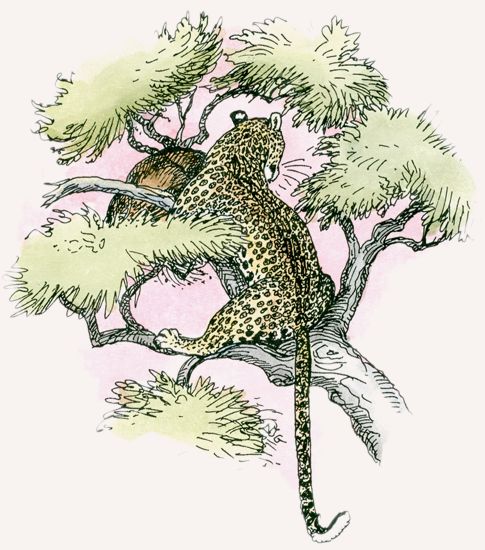
Despite the iconic friendship between Simba and Pumbaa in Disney’s The Lion King, lions are the archenemy of warthogs and are responsible for between 73 and 100 percent of warthog deaths. In some regions, lion prides even learn to specialize in killing warthogs, taking advantage of the warthog’s short legs and lack of speed.
No single area is home to a large number of warthogs. An estimated 250,000 live in southern Africa, while numbers for northern parts of their range are unknown. Their populations are susceptible to natural disasters such as drought or rinderpest (a cattle disease), although high reproductive rates help their numbers to recover quickly.