Field Guide
Chlorocebus pygerythrus
Vervet Monkey
Swahili: Tumbili


- Type
- Mammal
- Daily Rhythm
- Diurnal
- Diet
- Omnivorous
- Life Span
- In the wild: Insufficient data In captivity: 11 to 13 years
- Conservation Status
- Lower risk
- Weight
- Male: 9 to 18 lb (3.9 to 8.0 kg) Female: 5.9 to 8.6 lb (2.7 to 3.9 kg)
- Size
- Male: 19 in (49 cm) long, excluding tail Female: 18 in (44.6 cm) long, excluding tail


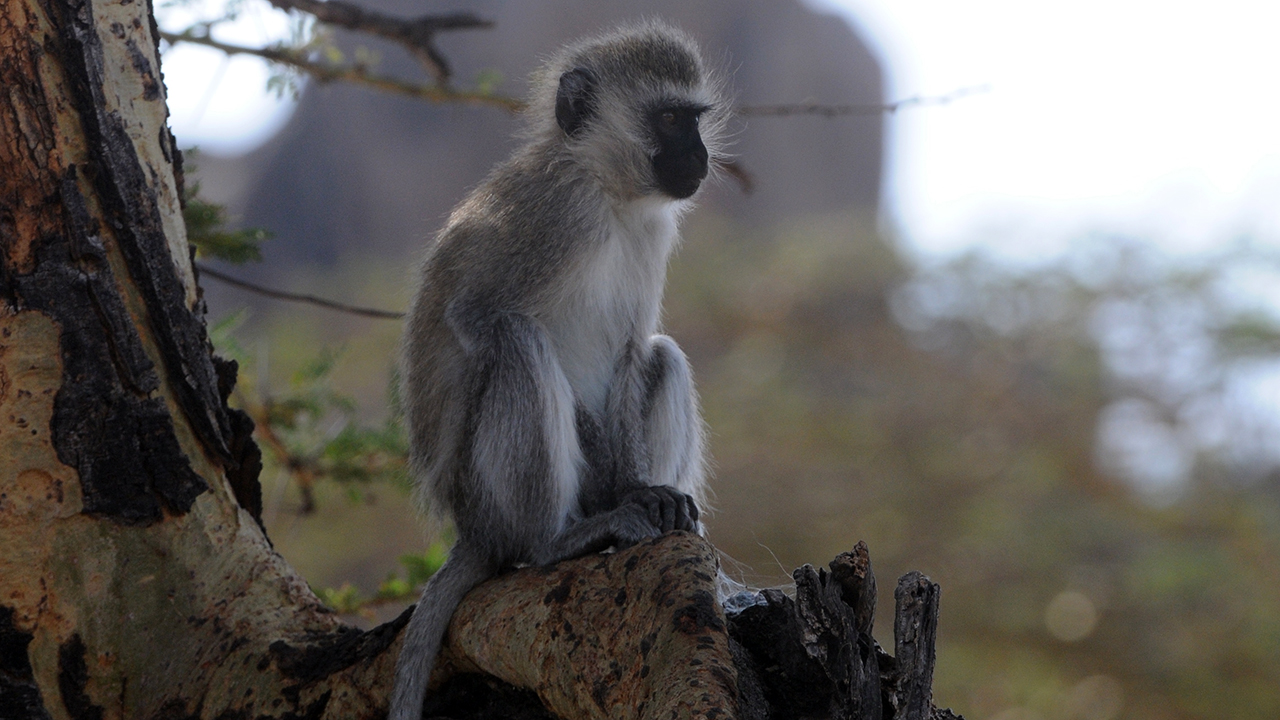
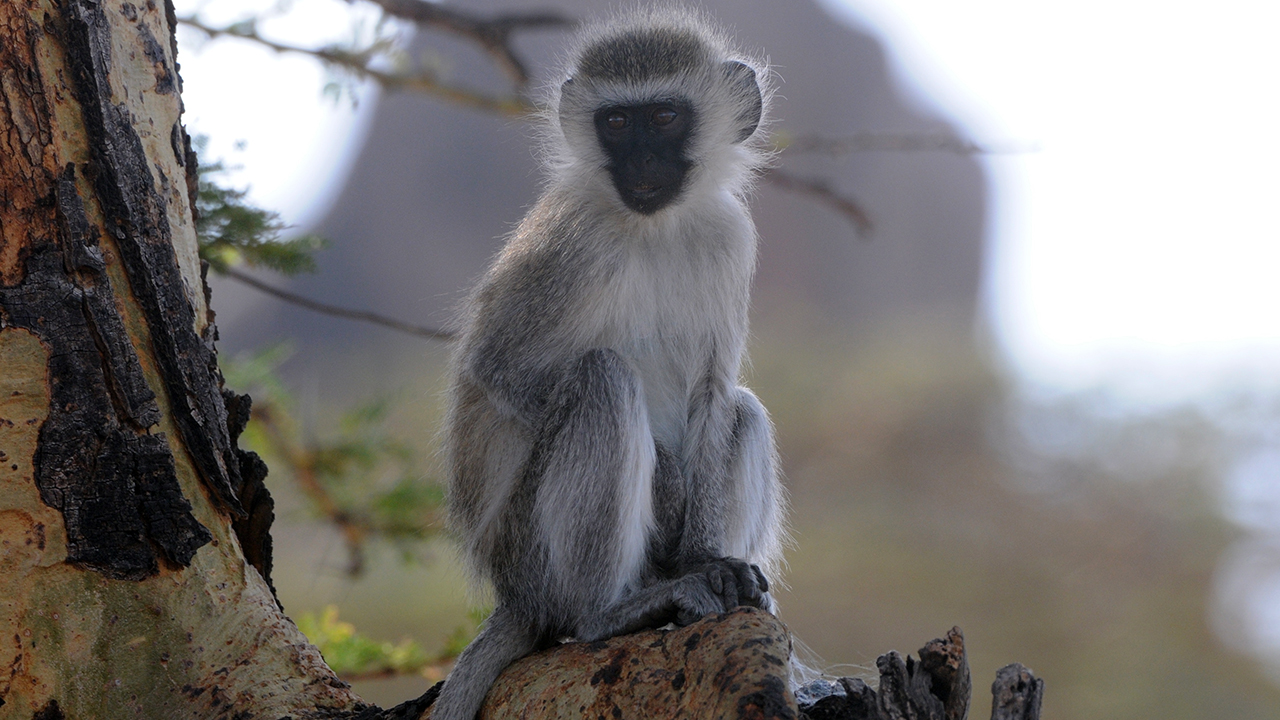
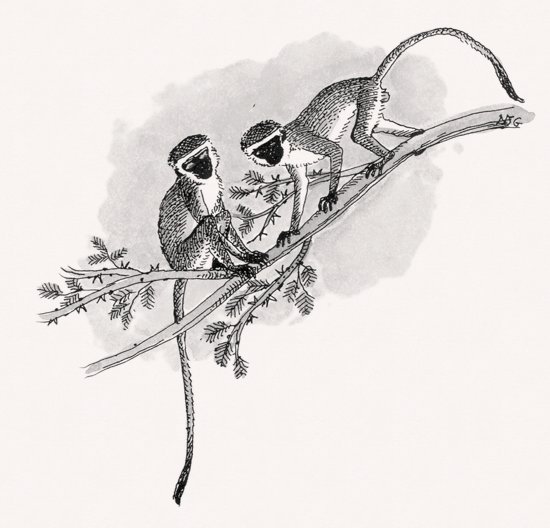
Vervet monkeys are highly adaptable primates that forage the grasslands and trees of the savanna during the day and sleep in trees at night. Some of their behavior is so similar to that of humans that geneticists study these monkeys to learn more about high blood pressure, anxiety, and even alcohol addiction, since vervet monkeys have been observed stealing and drinking alcoholic beverages!
Female vervet monkeys remain in the same group as their mothers, while males disperse to neighboring groups when they are five or six years old. Males must claim their dominance in the hierarchy through vocalizations and displays, while females assume a rank near that of their mothers.
Vervet monkeys have a sophisticated and diverse communication system, making at least 33 different vocalizations. Their warning calls are coded to identify specific predators, including leopards, pythons, and eagles.
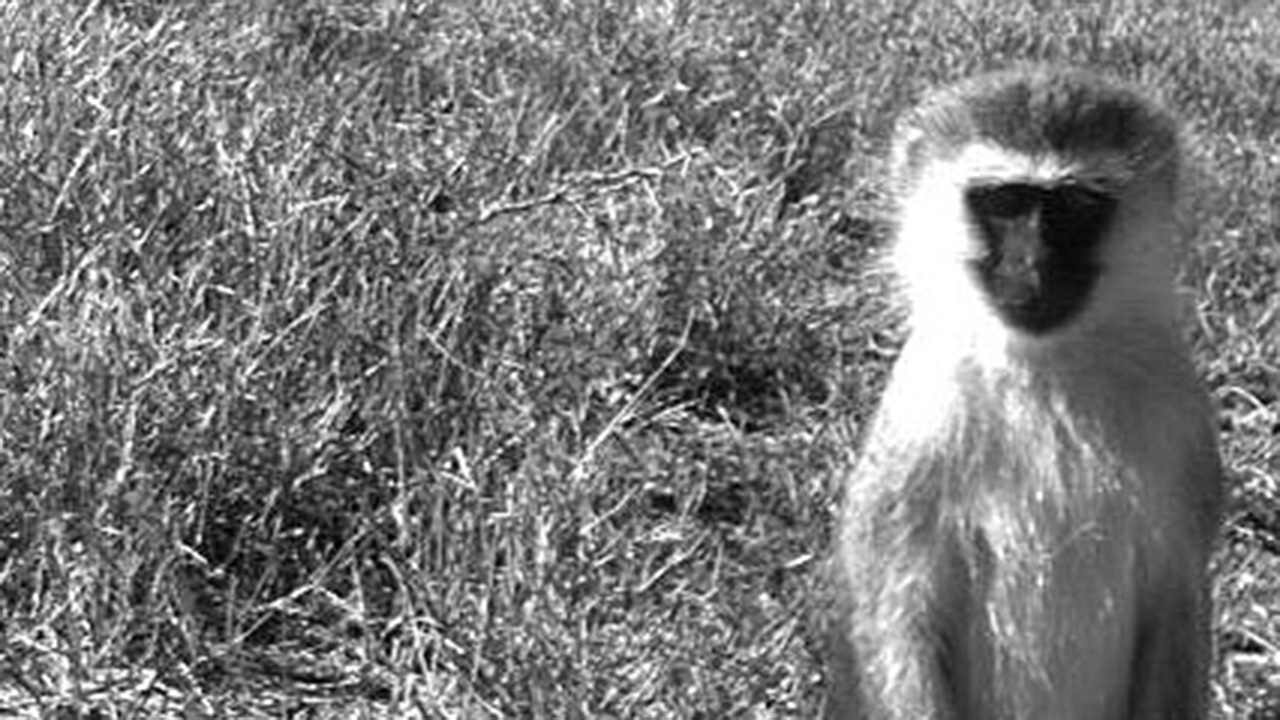
Vervet monkeys start their day by foraging in their sleeping trees and then descend to the ground to eat shrubs and plants. They spend most of their day looking for food, though they retreat to the trees for a mid-day rest. At dusk, they return to their sleeping trees.
Vervet monkeys are a common species with an abundant and stable population. However, their patchy distribution makes them vulnerable to local extinctions.
The diet of vervet monkeys depends on the seasonal availability of food and includes leaves, flowers, fruits, seeds, invertebrates, tree gum, woody shrubs, herbs, and grasses. Vervet monkeys also eat the eggs and young of birds. Cheek pouches allow vervets to store food so they can eat it later.
There is no courtship among vervet monkeys, and females mate with multiple males. Vervets are seasonal breeders, with babies being born after the rainy season when food is more abundant. Females can give birth every one to two years to one infant. The gestation period is 156 to 161 days, and females wean their young by 18 months of age. Mothers, or other adult females, may carry infants up to one year old.
Snakes, eagles, and leopards hunt vervet monkeys. Thanks to their sophisticated communication system, vervets know how to respond to a particular threat. For example, when a vervet makes a snake alarm, members of the group know to look down for the approaching predator. When they hear the eagle alarm call, they know to look to the sky and find cover.
Vervet monkeys are found from East Africa to southern Africa in savanna habitats close to water.
A group’s territory ranges from 12 to 255 acres (5 to 103 ha), depending on group size, density of food trees, and existence of neighboring groups. In Laikipia, vervet monkeys feed and sleep along river habitats dominated by yellow fever trees. They choose tall, large trees for sleeping and rotate between a few sleeping sites
Because of habitat destruction and human encroachment, the total population of vervet monkeys is in decline, although specific numbers are unknown. In parts of Laikipia, their numbers have been greatly reduced, but all 11 groups living at Mpala are reported to be doing well.