Field Guide
Smutsia temminkcii or Manis temminckii
Pangolin
Swahili: Kakakuona


- Type
- Mammal
- Daily Rhythm
- Nocturnal
- Diet
- Carnivorous
- Life Span
- In the wild: Insufficient data, but probably more than 19 years
- Conservation Status
- Lower risk
- Weight
- Male: 5.5 to 38.0 lb (2.5 to 17.1 kg) Female: 10 to 35 lb (4.6 to 15.8 kg)
- Size
- Male: 23 to 45 in (58.7 to 115.0 cm) long, including the tail Female: 22.6 to 44.0 in (57.3 to 111.7 cm) long, including the tail

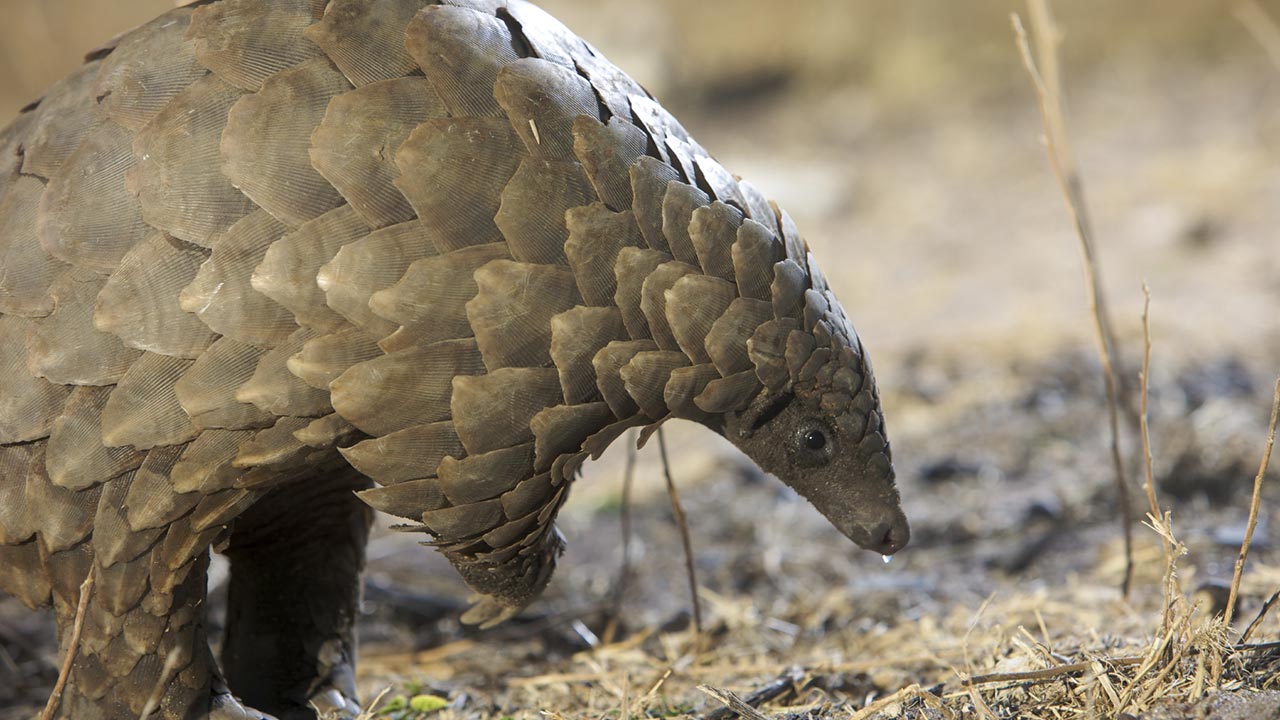
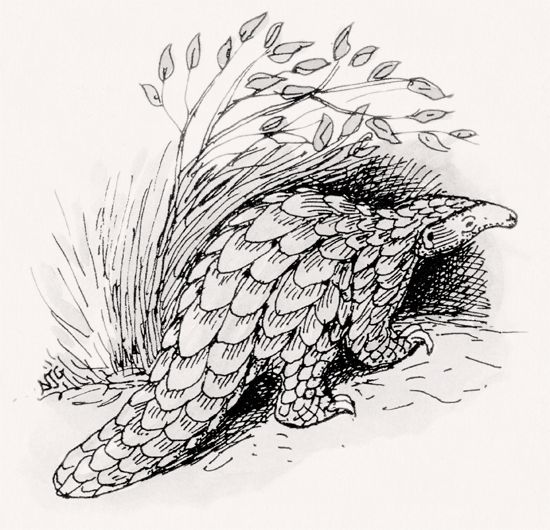
As the only members of their scientific order, pangolins are evolutionary survivors. Their tough, sharp-edged, overlapping keratin scales make pangolins look like they’re wearing coats made of artichokes.
Pangolins are solitary except when mating or when females are rearing their young. Although they are not territorial, males don’t seem to like each other much. If they meet, they will fight until one surrenders and leaves.
Ground pangolins communicate through scents, using urine to signal their presence.
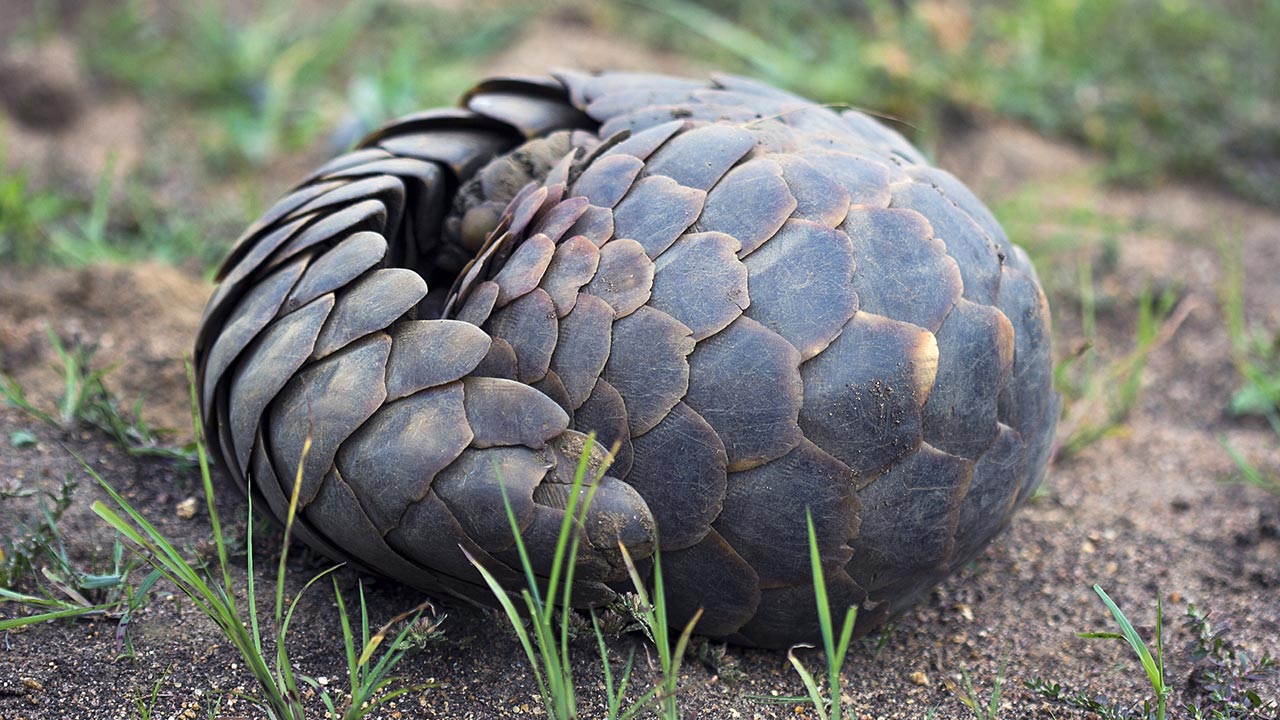
Ground pangolins typically walk on their two back legs, leaving their relatively tiny front feet free for foraging. Their long, heavy tail, by counterbalancing the weight of the rest of the body, helps keep them in a horizontal position when walking. It also provides support when climbing over logs. Covered with sharp scales, the tail can also be used as a weapon to slash enemies. Pangolins are active for only short periods, times when they can catch plenty of food. Otherwise, they burrow underground or in dense vegetation and wallow in mud or manure. They will even create a dirtbath by mixing soil with their own urine. When scared or stressed, they curl up into a tight, armored ball that is almost impossible for most predators to pry open. Pangolins have very poor eyesight and have frequently been observed running into things.
The International Union for Conservation of Nature (IUCN) lists pangolins as a species of lower risk, though not much is known about their abundance and population trends. They do live in a number of protected areas, and in some places they are protected by laws, but their body parts, especially their scales, are still used in traditional medicine.
Pangolins eat mainly social insects, such as ants and termites. They typically forage at night, zigzagging across their turf with their sensitive noses close to the ground. Strong forearms and long claws enable them to dig into trees and mounds to uncover insect colonies.With a quick, darting motion, the pangolin inserts its long, sticky tongue into nooks and crannies of a nest to grab a meal. A pangolin has no teeth, but its stomach has a gizzard-like area that grinds up the insects with the help of small stones or sand.
Pangolins meet only to mate, and stay together for a day or less. After a gestation period of about 140 days, one offspring is born in its mother’s burrow, where it remains hidden for about a month. Then the female moves her young several times, carrying it on her back. She will den with it for about a year. If her young is threatened, the mother will curl her body around it for protection. Mothers don’t teach foraging skills; young pangolins learn how to catch prey through trial and error.
Previous Next
Ground pangolins, also called Temminck’s pangolins, live only in Africa, from Chad to Ethiopia and as far south as Botswana and Namibia.
Ground pangolins prefer savanna woodlands, though they also live in flood plains, rocky areas, or places with sandy soil. They tend to choose environments that get between 10 and 55 inches (25 to 140 cm) of rain each year and that are suitable for digging dens and providing hiding places.
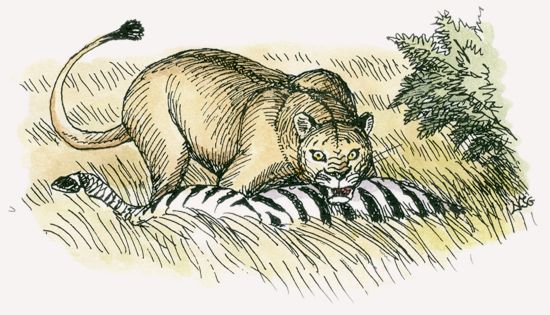
Lions and spotted hyenas are the ground pangolin’s primary predators, though killing a balled-up pangolin is tough work. Once they clamp their scaly tails around their bodies, pangolins are almost predator-proof.
Getting an accurate count of ground pangolins is nearly impossible. Not only are they nocturnal and well camouflaged, but they also stand completely still when they sense intruders, all of which makes them hard to see. However, biologists believe their populations are widespread.