Field Guide
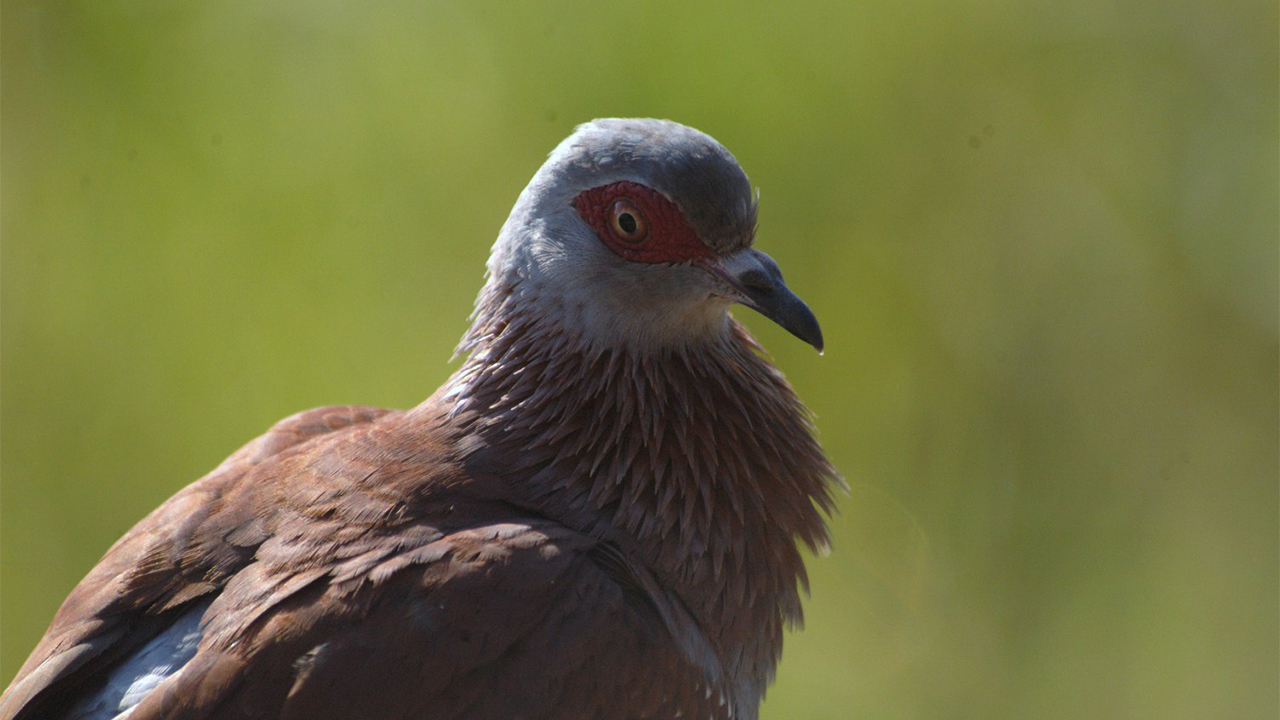
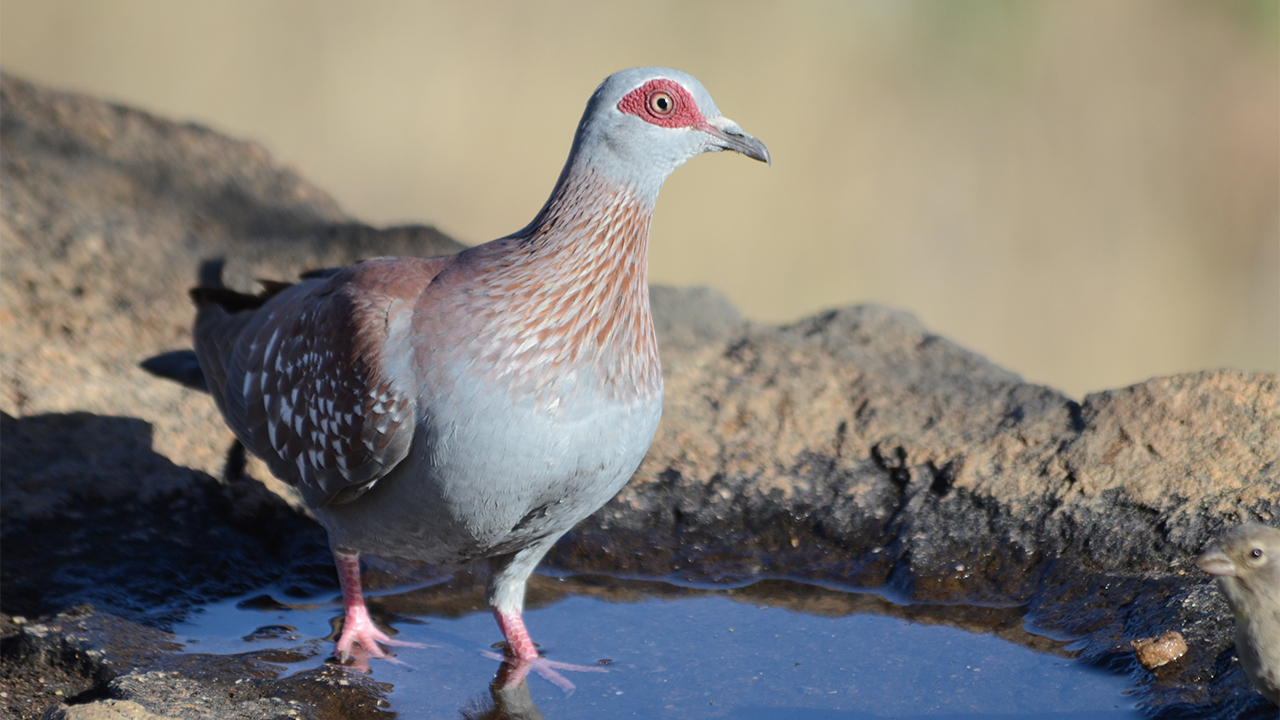
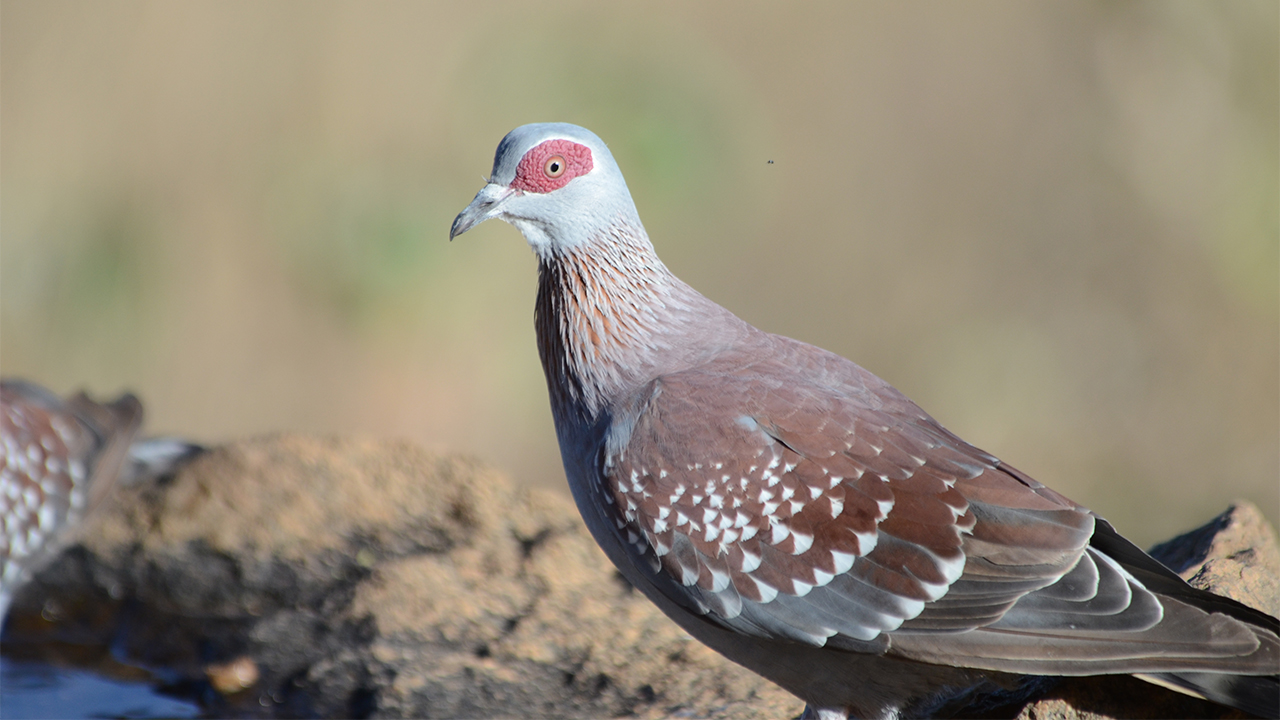
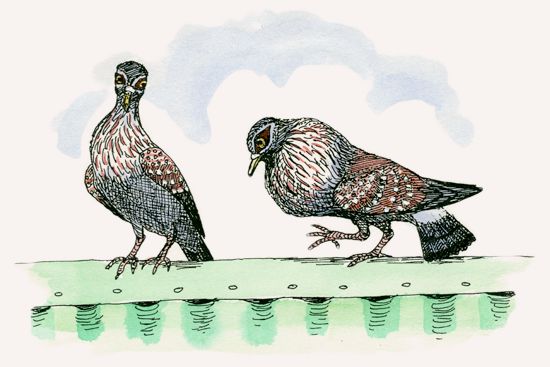
Speckled Pigeon
Columba guinea Swahili: Kunda madoa


- Type
- Bird
- Daily Rhythm
- Diurnal
- Diet
- Omnivorous
- Conservation Status
- Lower risk
- Weight
- 11 to 14 oz (312 to 397 g)
- Size
- 13 to 16 in (33.0 to 40.6 cm) long
As soon as speckled pigeon chicks hatch, “bird milk” begins to roil in both parents. The substance is produced when the crop, a thin-walled sac in the throat, sloughs off cells containing a liquid. Parents regurgitate it, giving their chicks a food richer in calories and fat than human or cow milk.
Speckled pigeons gather to feed in flocks that may number in the hundreds. They breed in every month and sometimes nest in colonies.
The speckled pigeon utters a loud, cooing doo doo doo or whu whu whu whu-WHU, sometimes sounding like whooo are youuu.
They are usually seen in pairs, walking or running, but they may form into large, noisy flocks, especially when feeding.
Speckled pigeons feed mainly on grains and groundnuts but will sometimes add winged termites and other insects. These birds eat throughout the day.
A pair of speckled pigeons builds a nest on the side of a cliff, in a tall tree, or on a building. The female usually lays two eggs, which hatch in about two weeks.
Speckled pigeons inhabit western Kenya, preferring open country with cliffs. Populations also flourish in some towns and cities.
Speckled pigeons are found throughout sub-Saharan Africa in grasslands, farmlands, and cities.