Field Guide
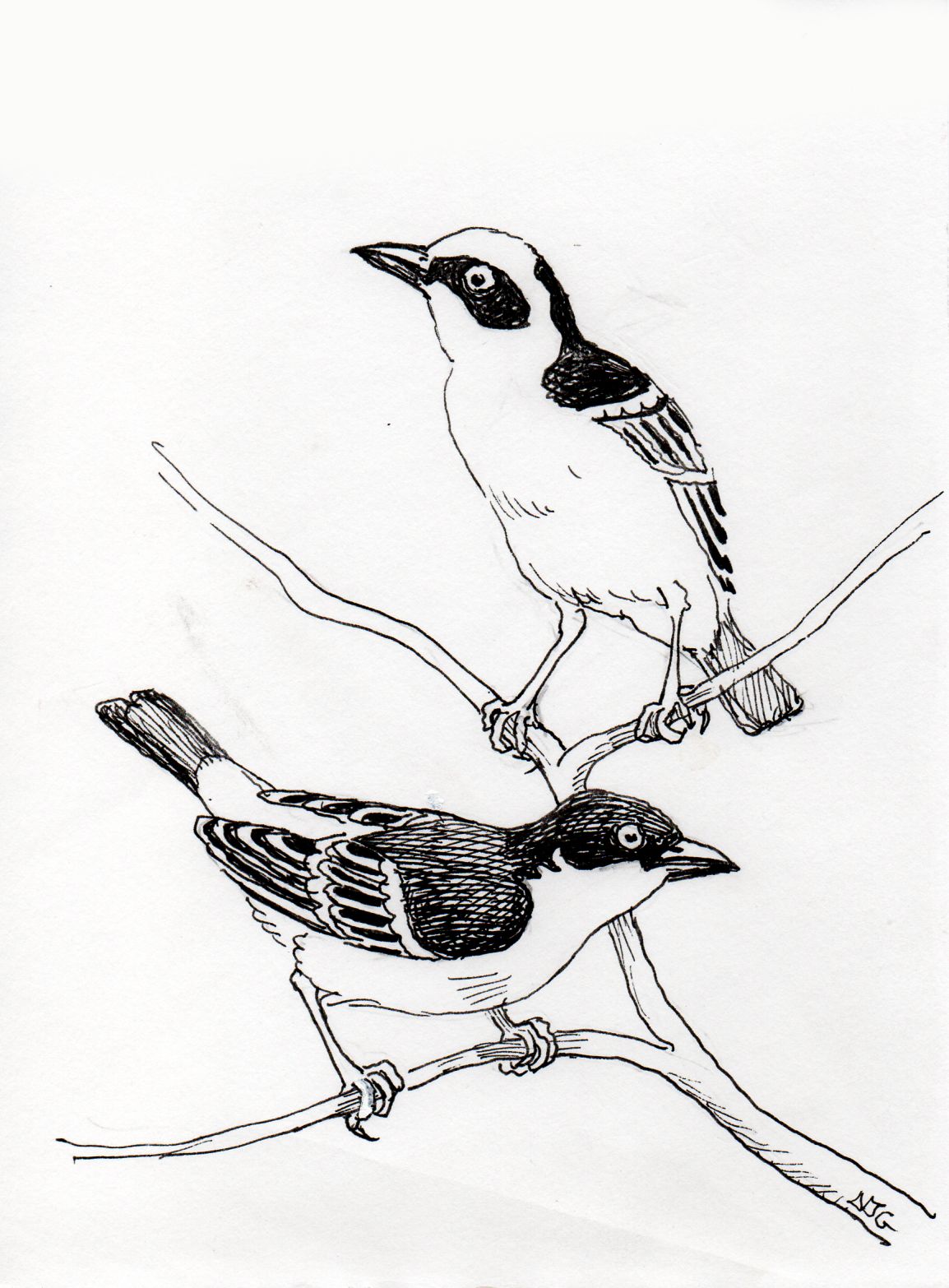
Ploceus baglafecht
Baglafecht weaver
Swahili: Kwera Uso-mweusi


- Type
- Bird
- Daily Rhythm
- Diurnal
- Diet
- Omnivorous
- Conservation Status
- least concern
- Weight
- 24-37 gm
- Size
- 15 cm

Its distinctive name may have come from a meeting between James Bruce, who traveled in Africa in the late 1700s and described Bagla as a tribe or language, and Georges Louis Leclerc Buffon, a noted French naturalist who was the first person known to use the name “baglafecht weaver” in his writings.
This bird is never found in large flocks, but is often observed in smaller groups, in pairs, or by itself.
Its typical song is a complex mix of buzzing churrs and loud calls of “zwink zwink.” Although the baglafecht weaver has several distinct races, they all have similar calls.
Monogamous and territorial, this weaver is a solitary nester, although two pairs can sometimes be found nesting in the same area.
Least concern
This bird is not a picky eater—insects, seeds, plants, fruit, and nectar are all on the menu. It searches for insects and other food in dry leaf clusters and branches, and brings home spiders, larvae, crickets, beetles, and other prey small enough to feed to its young.
Hanging from a frond or branch, a nest is carefully concealed by foliage. Only the male builds the nest, and then the male and female work together to line the nest with grass, feathers, and other material. Around 1-3 eggs are laid in each clutch. Chicks are fed by the female for the first few days, and then the male joins in as well.
In 2013, an observer published reports about a velvet monkey that was seen raiding a baglafecht weaver nest in Kenya.
Pairs are common in the Kenya highlands.
Several subspecies have been identified in Eritrea, Nigeria, Cameroon, Central African Republic, Sudan, Democratic Republic of Congo, Uganda, Rwanda, Burundi, Tanzania, Kenya, Zambia, and Malawi.