Field Guide
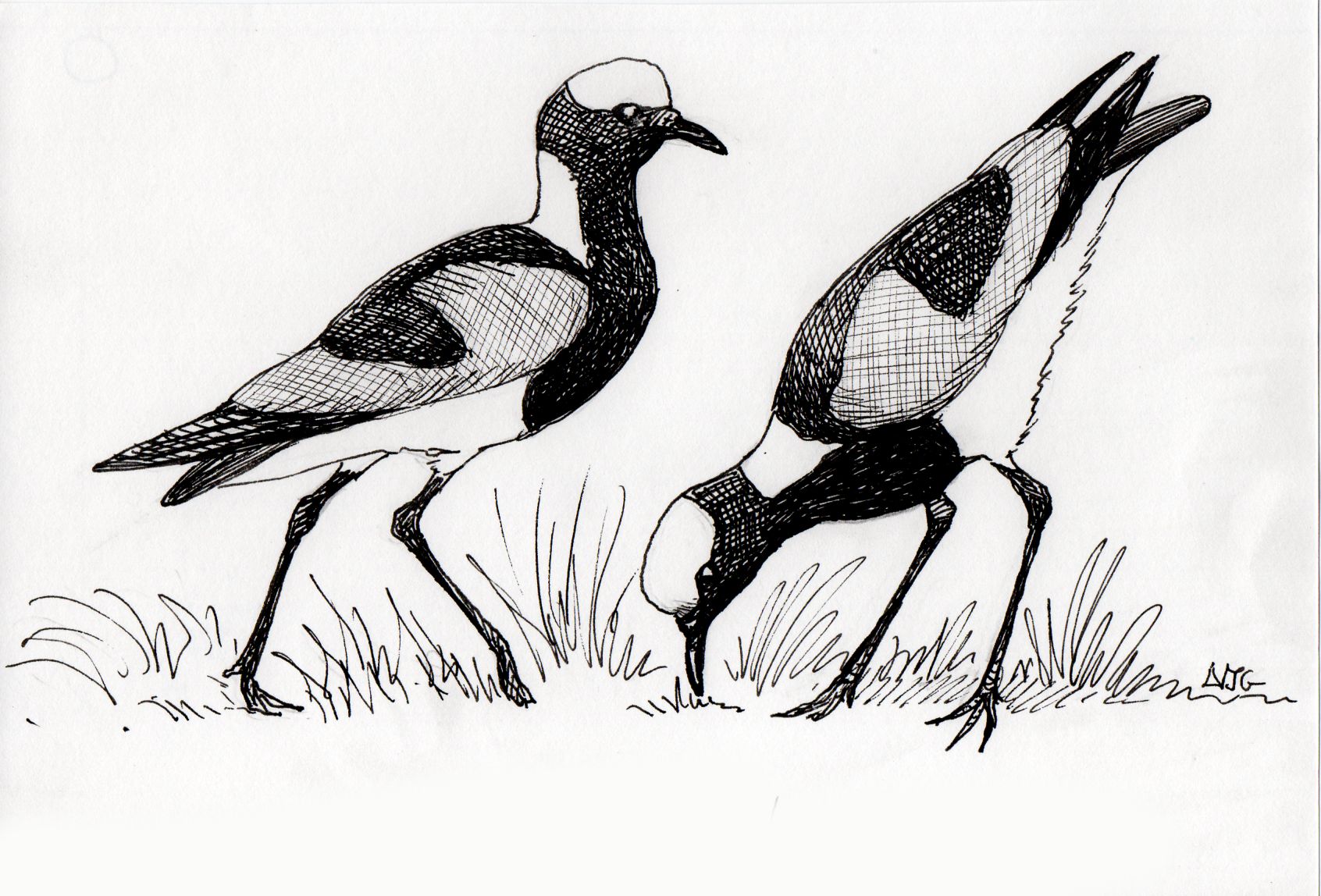
Vanellus armatus
Blacksmith Lapwing
Swahili: Kiluwiluwi fundi


- Type
- Bird
- Daily Rhythm
- Diurnal
- Diet
- Omnivorous
- Conservation Status
- Least concern
- Weight
- 115-210 g
- Size
- 28-31 cm

The blacksmith lapwing calls with a metallic ‘tink, tink, tink’ that sounds like a blacksmith hammering an anvil; depending on the situation, the call can quickly change in volume and speed.
Blacksmith lapwings are usually seen by themselves, in pairs, or in small groups. Like other plovers, they are noted for their territorial squabbles.
In addition to its ‘tink tink’, this bird has a range of other calls, including a quiet ‘chuck-chuck’ from adults to hatching chicks. It often calls all day.
If a blacksmith lapwing is disturbed, it may call ‘tink tink’ even more loudly and quickly, fly off to where the disturbance is coming from, and defend its nesting areas by dive-bombing intruders. Sometimes flocks will roost together on islets.
Least concern
With its long legs, the blacksmith lapwing can easily forage in shallow water, sometimes pecking on the surface of the water for aquatic prey such as fish, shrimp, and shellfish. It also looks for insects in pastures, fields, and animal dung. It prefers feeding early in the morning and late in the day.
Monogamous pairs prepare a simple and solitary nest—usually close to water—that is really just a shallow depression in the ground lined with pebbles and plants. The eggs are incubated by both parents for around four weeks, and chicks fledge at around six weeks, although they may stay close to the nest until the next brood hatches.
Crows, coots, gulls, and jackals all prey on eggs.
Blacksmith lapwings are common year-round residents in south-central Kenya highlands.
Blacksmith lapwings are mainly sedentary throughout sub-Saharan Africa, although vagrants have been observed as far away as Canada.