Field Guide
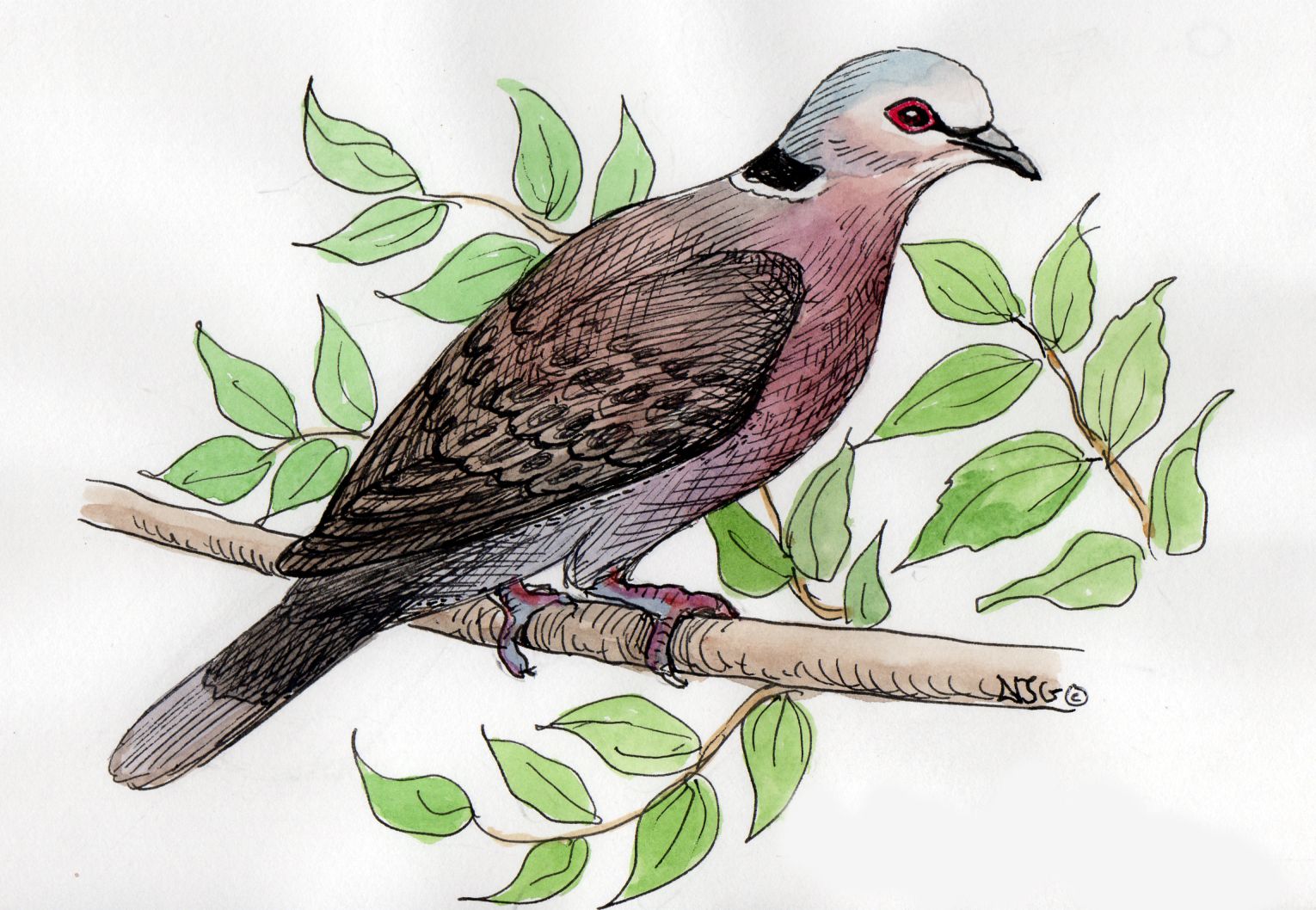
Streptopelia semitorquata
Red-Eyed Dove
Swahili: Hua Fifi


- Type
- Bird
- Daily Rhythm
- Diurnal
- Diet
- Omnivorous
- Conservation Status
- least concern
- Weight
- 162–310 g
- Size
- Length: 30 cm

Like other pigeons, red-eyed doves can be regarded as pests; they will make themselves at home in urban buildings, and harm sunflower crops.
Similar to its relatives, red eyed doves usually keep to themselves or associate with a single other bird. However, it has been seen feeding in mixed groups with other doves.
Red eyed doves often call in a six-note pattern, emphasizing the final two notes.
Red eyed doves usually forage on the ground, often under trees, and usually in the early morning and late afternoon. They call in the morning and at sunset, and have been heard on moonlit nights.
Least concern
Red eye doves eat various seeds, including maize, sunflower, castor seed, and millet. They also consume berries and termites.
Nests are constructed in trees or other vegetation, and are made of twigs and grass, although sometimes red-eyed doves use crow, thrush, or egret nests instead. Broods consist of one or two eggs that both parents incubate for around two weeks, and chicks leave the nest around two to three weeks after they hatch.
Pythons, sparrowhawks, and falcons all prey on red-eyed doves.
It is common in most habitats.
Red-eyed doves are found throughout much of sub-Saharan Africa and along the southwest Arabian Peninsula.