Field Guide
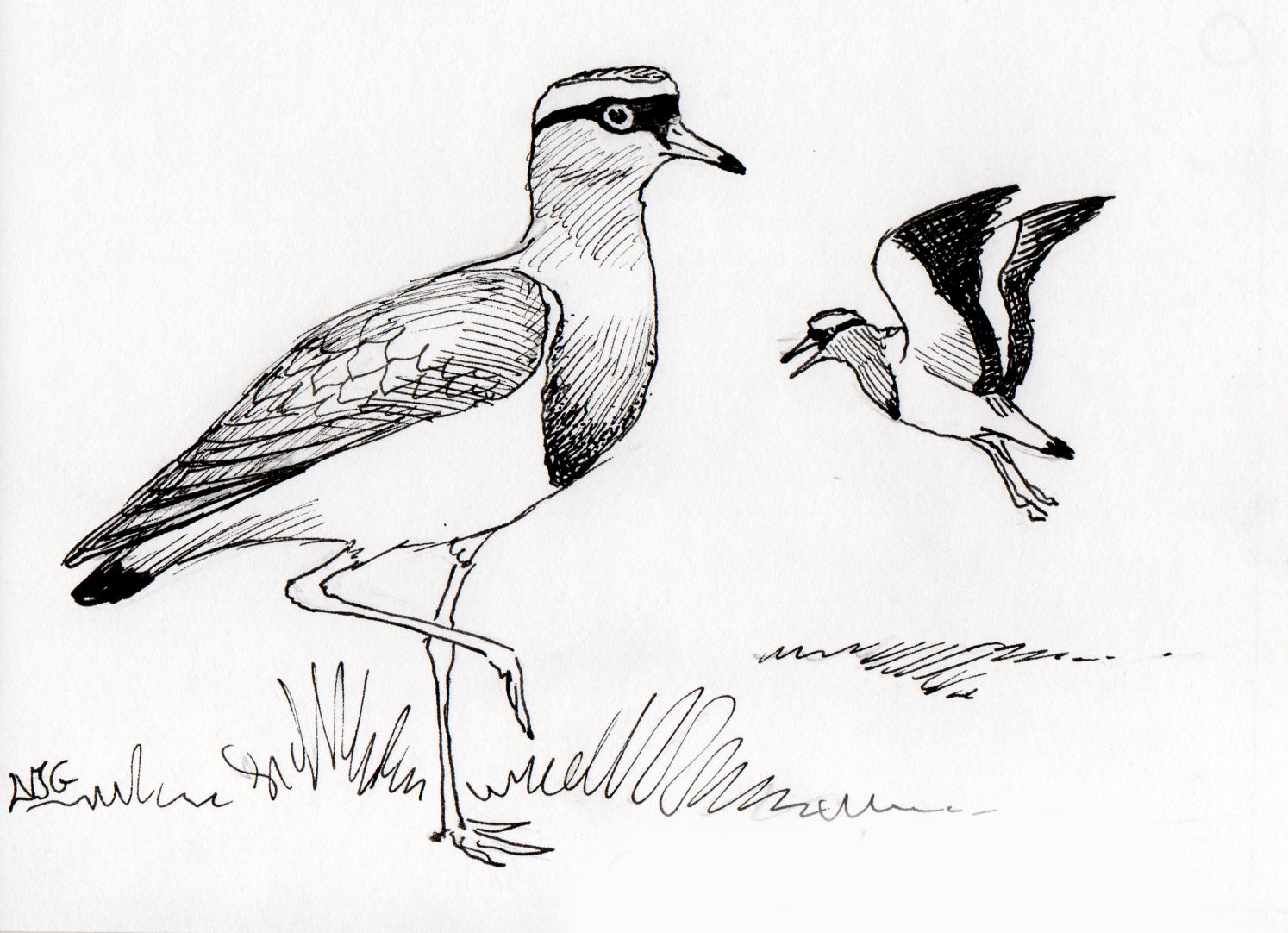
Vanellus coronatus
Crowned Lapwing (Plover)
Swahili: Kiluwitaji


- Type
- Bird
- Daily Rhythm
- Crepuscular
- Diet
- Omnivorous
- Conservation Status
- least concern
- Weight
- 126-200 g
- Size
- 20-34 cm

The Afrikaans name for this bird is ‘kiewiet’, because its most common call is a croaky “krueeet.”
When crowned lapwings are not breeding, they are social and form flocks of from ten to forty birds. When nesting, they often maintain a notable distance from other mated pairs.
While they are most vocal during the day, they are often heard at night as well. Their calls vary depending on current activities, breeding, and alarms.
Loud, gregarious, and aggressive, crowned lapwings are most active at dusk and forage in the late afternoon and at night. They don’t like damp habitats and will leave regions during rainy seasons. Sometimes they feed near cattle and in association with insectivorous bat-eared foxes.
Least concern
Crowned lapwings favor a diet of termites and ants. They often hunt for their food as a group that includes black-winged lapwings.
Monogamous crowned lapwings may return to the same nest for several years, which are often constructed near a tree that provides shade for the resting parent (typically the male). Birds breeding in loose groups can sound alerts about predators and mob them together. Chicks leave the nest for the first time several hours after hatching, but adults continue to care for them and defend them from predators.
Chicks and eggs are prey for snakes, raptors, crows, cats, domestic dogs, and mongooses, while adults are prey for eagles, sparrowhawks, falcons, and owls.
Crowned lapwings are common throughout Kenya.
Crowned lapwings can be seen in eastern and southern Africa.