Field Guide
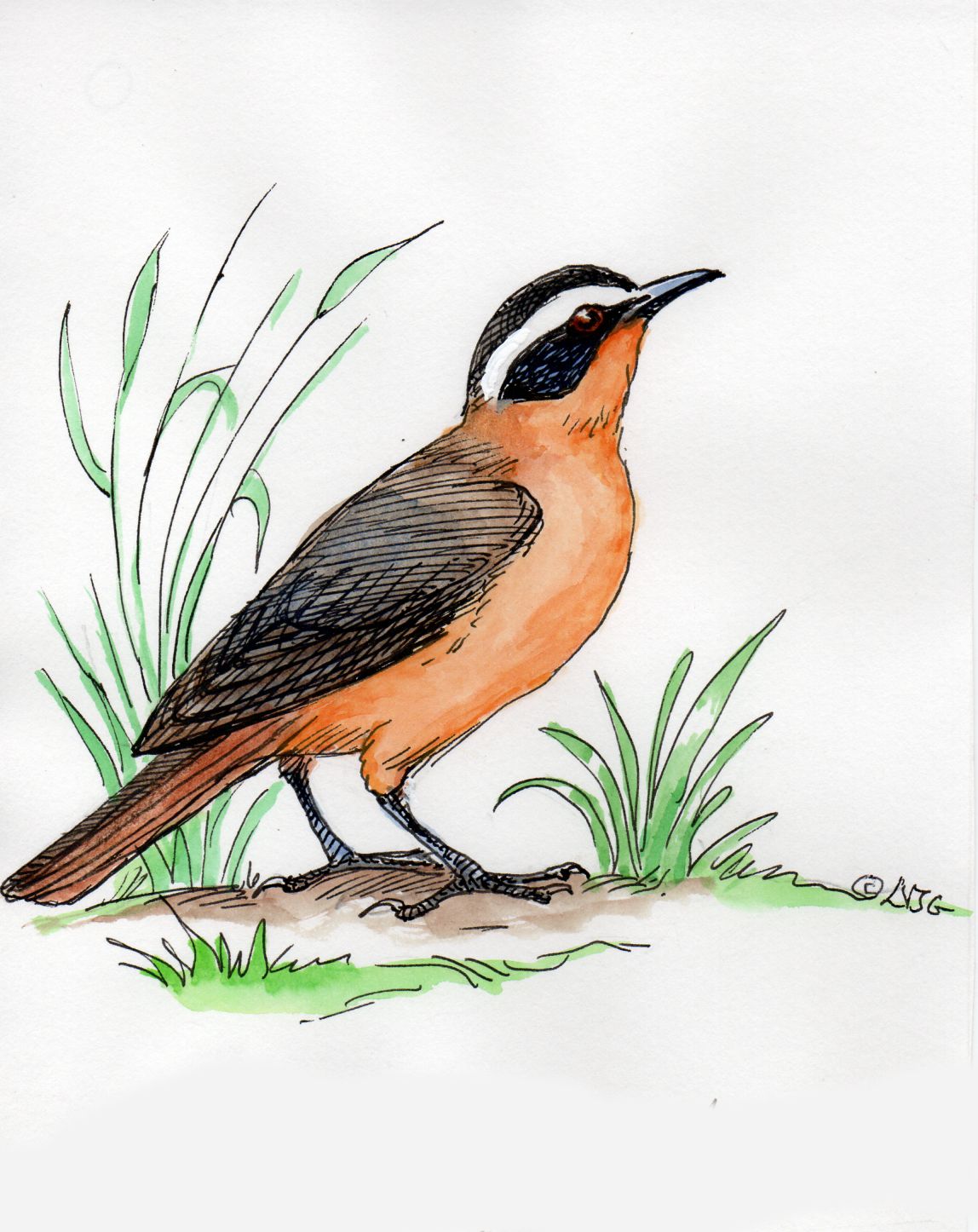
Cossypha heuglini
White-browed Robin Chat
Swahili: Kurumbiza wa Heuglin


- Type
- Bird
- Daily Rhythm
- Diurnal
- Diet
- Omnivorous
- Weight
- 29-44 g
- Size
- Length: 19–20 cm

White-browed robin chats like to be protected by evergreen shrubs, and make themselves at home in gardens and parks.
Like other robin chats, these birds are usually seen alone or in pairs.
White-browed robin chats are noted for their songs, which usually begin with repeated high-pitched refrains that become lower and more rapid; they also mimic the calls of other birds and sing in duets.
Active at dawn and dusk, white-browed robin chats are ground foragers and will also search for food in trees. They are territorial and sometimes attack intruders.
Least concern
These birds mainly prey on insects such as ants and beetles, but will consume a range of other invertebrates as well, and sometimes eat fruit.
Monogamous pairs generally nest in trees by using twigs and other vegetation to build an open cup. Females incubate the eggs for around two weeks and chicks fledge around two weeks after hatching, although they might continue to rely on parents for a few weeks afterwards.
Chicks are taken as prey by boomslangs and cats, and red-chested cuckoos practice brood parasitism.
White-browed robin chats are common in Kenya.
These birds are commonly found in parts of east Africa and other parts of south-central Africa.