Field Guide
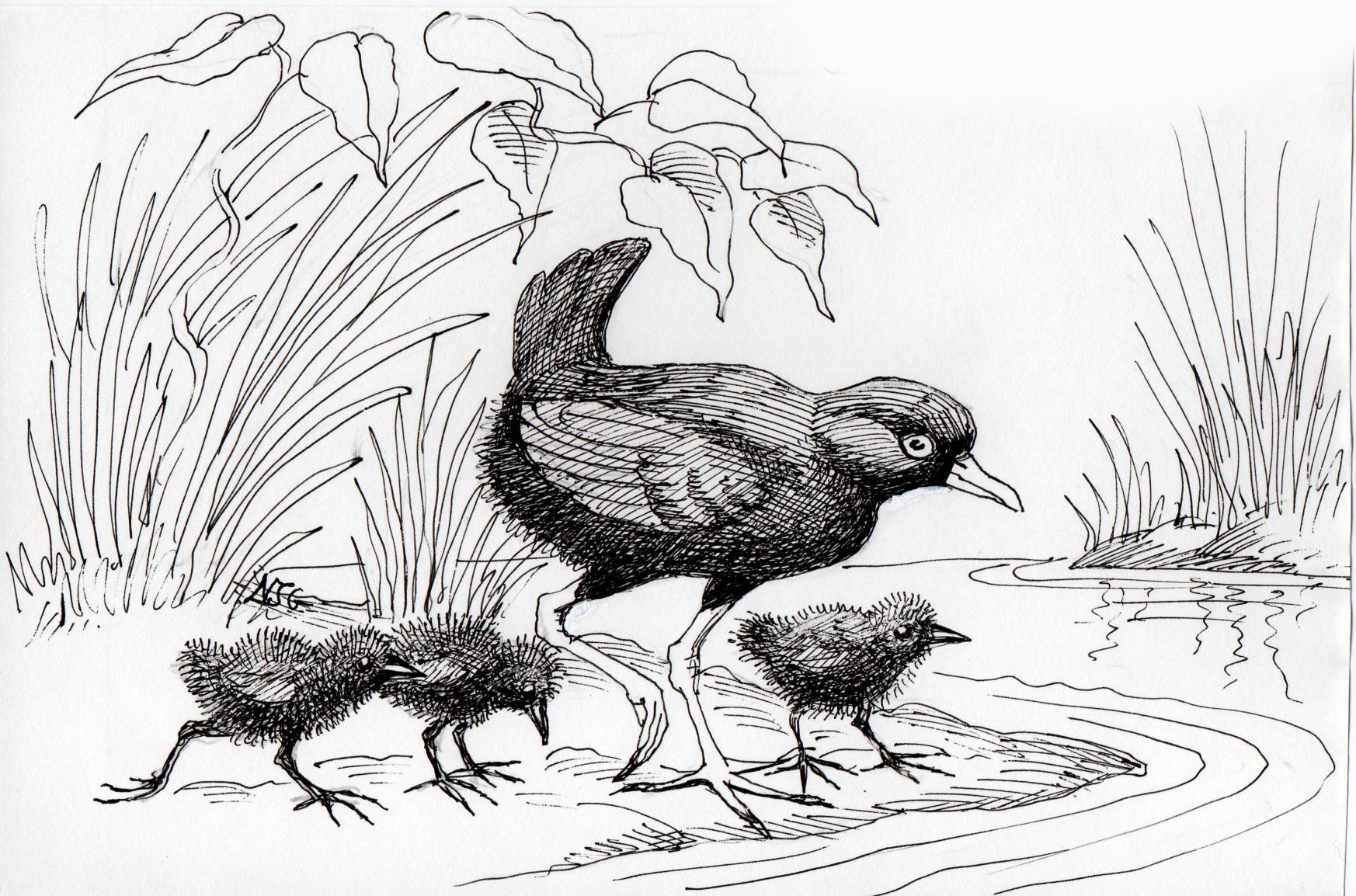
Zapornia flavirostra
Black Crake
Swahili: kiluwiri mweusi


- Type
- Bird
- Daily Rhythm
- Diurnal
- Diet
- Omnivorous
- Conservation Status
- least concern
- Weight
- 69-118g
- Size
- Length: 19-23 cm Wingspan: 25 cm

Like many other birds in the rail family, black crakes have strong legs and long toes that help them keep their balance when they are walking over mud.
This bird is often found in pairs or small groups and its robust legs come in handy when fighting rival birds. Chicks from a previous round of nesting will help raise the current brood and sometimes will stay with their families until the end of the breeding season.
Two or more birds may form a circle facing inwards and call to each other in a distinctive duet.
Unlike other rails, black crakes are frequently out and about during the day as they look for their next meal. They also make themselves at home perching on a hippopotamus or water buffalo to glean for parasites.
Least concern
Black crakes search for their meals in freshwater wetlands of all types, and consume worms, shellfish, crabs, insect larvae, fish, frogs, tadpoles, and seeds. They also prey on heron eggs and nestlings and other small birds. However, they are extremely adaptable and will forage on dry ground and in grass, and scatter leaves and vegetation while searching for food.
Building a nest is a family affair for monogamous black crakes, which are sometimes assisted by offspring from a previous brood. They construct bowl-shaped nests in wetland reeds or other vegetation; the nest is usually elevated over the water, but can also be concealed in vegetation along the shoreline. Chicks leave the nest for the first time several days after hatching and are cared for by parents and siblings for at least three to six weeks.
Black crakes have adapted to human landscapes and can be found around artificial wetlands.
Black crakes most commonly are seen in the southern part of Kenya.
Black crakes are found in freshwater wetlands and ponds throughout most of sub-Saharan Africa,