Field Guide
Podica senegalensis
African Finfoot
Swahili: Kiguudau


- Type
- Bird
- Daily Rhythm
- Diurnal
- Diet
- Carnivorous
- Conservation Status
- Lower risk
- Size
- 26 in (66 cm) long

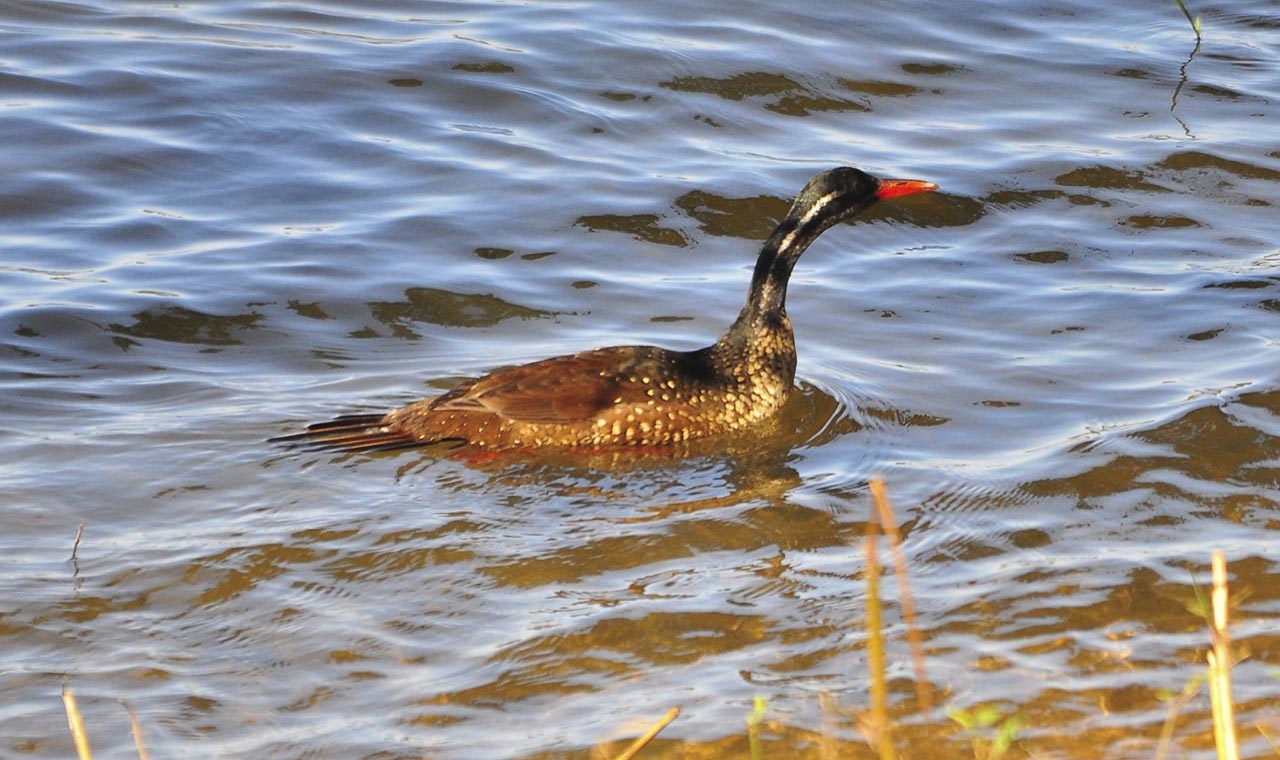
Out of the corner of your eye, you see movement along the edge of a river. You turn and see…a splash. You have almost spotted the shy and secretive African finfoot. Consider yourself lucky. Usually, this furtive bird slips out of sight without even leaving a splash.
The reclusive African finfoot lives with a mate, not in a flock.
The call of this clandestine bird is a series of progressively deeper nasal barks that is seldom heard.
The African finfoot nests in solitary pairs that are territorial.
The African finfoot eats mostly aquatic invertebrates, including the larval stage. Also on its menu: spiders, millipedes, crabs, shrimps, prawns, small snails, frogs, small fish, snakes, and some aquatic vegetation.
Male and female finfoots build a nest of reeds and twigs in a tree along the shore—usually on a branch 3 to 13 feet (1 to 4 m) above the water.
In Kenya, the African finfoot is found mostly in the southwest. Several of these birds frequent Mpala’s hippo pool.
The African finfoot lives in secluded areas along lakes, rivers, and streams in southern, western, and central Africa. These aquatic birds prefer waterways with thickly wooded banks that provide hiding places.