Field Guide
Phoeniculus purpureus
Green Wood-Hoopoe
Swahili: Hudihudi, Ndututu, Gegemela


- Type
- Bird
- Daily Rhythm
- Diurnal
- Diet
- Omnivorous
- Conservation Status
- Lower risk
- Size
- 9 to 18 in (23 to 46 cm) long

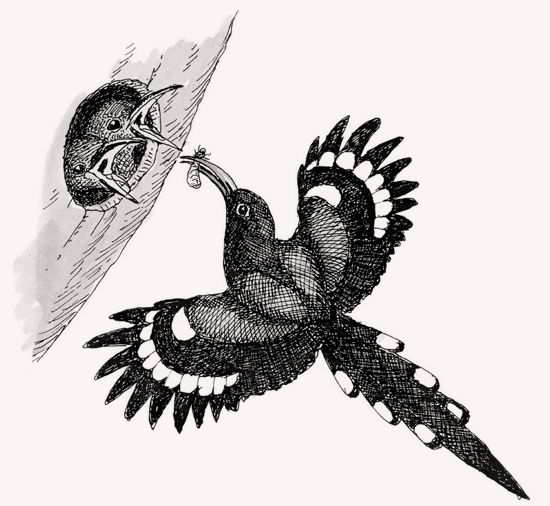
Green wood-hoopoes are naturally generous, often helping in the feeding of chicks—and not just their own. In California’s San Diego Zoo, when no chicks were available, a hoopoe delivered some of its food directly to the open mouth of an obviously startled neighbor, a kingfisher.
Green wood-hoopoes are territorial and live in family groups.
The wood-hoopoe’s cackling call has been described as “bubbling and maniacal.”
Green wood-hoopoes (which often look more blue than green) usually cluster in small, noisy groups. They defend their territory with wing-fanning and tail-swaying displays.
Green wood-hoopoes usually hang upside down on tree branches and poke into crevices in search of arthropods, especially insects, including their larvae. They will also eat small reptiles as well as seeds and some fruits.
Eggs are usually laid in tree holes previously used by other species. Older siblings aid the breeding pair, increasing the survival rate of the hatchlings.
Of the eight species of birds in this family, seven are found in Kenya, where they are common except in the northern and northeastern regions.
Green wood-hoopoes live only in Africa, from Senegal and Gambia, east to Ethiopia and northwestern Somalia, and south to most of Botswana and South Africa. They are numerous in wooded habitat from sea level to 9,000 feet (2,743 m).