Field Guide
Polyboroides typus
African harrier hawk
Swahili: Tai kumbamti


- Type
- Bird
- Daily Rhythm
- Diurnal
- Diet
- Omnivorous
- Conservation Status
- least concern
- Weight
- .6 - .9 kg
- Size
- Length: 50-68 Cm Wingspan: About 120-150 cm

A creature of forests and savannas, African harrier hawks have also learned to make themselves at home in urban environments and farms. It calls year-round, most frequently four to five hours after sunrise.
African harrier hawks are solitary birds that soar gracefully over woodlands.
African harrier hawks call with a loud “wah-wah-wah,” but when they are flying they switch to a softer “suweeeeew” whistle.
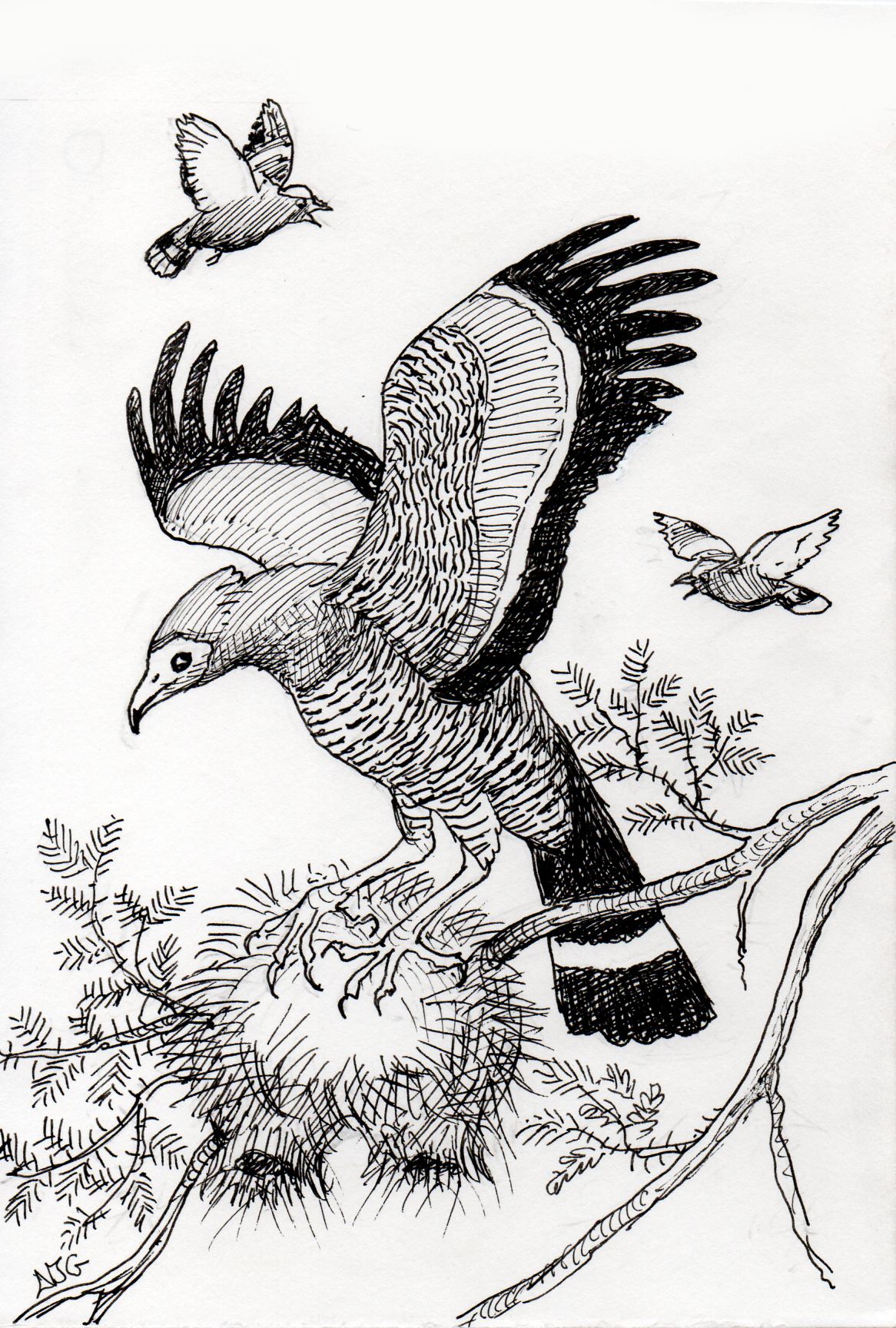
Adapted for life as a robber, African harrier hawks raid nests for eggs and chicks. They hunt by soaring and by climbing around trees, and sometimes hang upside down from branches while in pursuit of their next meal.
Least concern
Like other raptors, African harrier hawks feed on small animals such as rodents, bats, birds, insects, amphibians, and chicks. A specialist at raiding nests for eggs, it also uses its compressed bill and unusual double-jointed legs to investigate rocks, tree crevices, and riverbanks for likely prey.
Their courtship blush is clearly visible because these birds have no feathers on their faces. Pairs use sticks to build a large nest in a tree or a suitable ledge or cliff, and line the nest with leaves. While more than one egg can be produced, there is fierce competition among hatchings, and older chicks often kill younger siblings.
The African harrier hawk is found mostly in the western and southern part of Kenya.
African harrier hawks are found in sub-Saharan Africa.