African Elephant
As the world’s largest land mammal, elephants are incredibly powerful creatures, capable of completely altering environments by uprooting bushes and tearing down entire trees. Despite their strength, elephants are very dexterous. Using the nearly 100,000 muscles in its trunk, an elephant can use the tip of it to pick a single leaf off a branch.
Aardvark
Built to burrow, aardvarks use strong forelimbs and sturdy nails to dig 10-foot (3-m)-deep tunnels with ease and create underground labyrinths often more than 30 feet (10 m) long. Surprisingly, aardvarks regularly abandon these burrows, often staying in a new hole for only a single night. Shy and nocturnal, aardvarks are difficult to study in the wild. Much of what we know about this mysterious mammal comes from research on captive individuals.
Black-backed Jackal
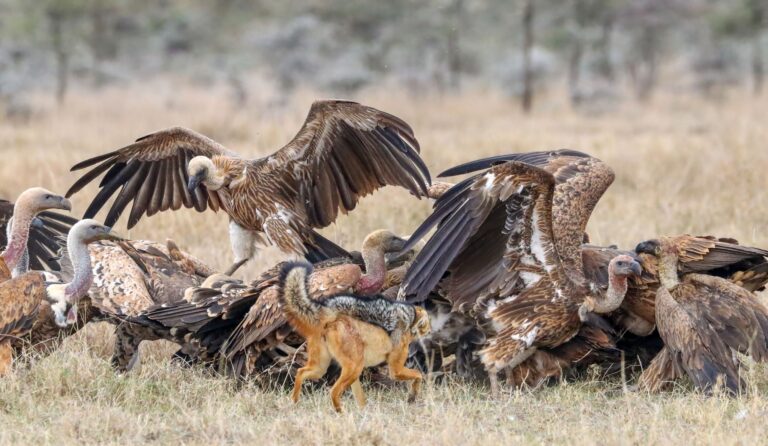
With large, pointed ears that swivel like satellite dishes to listen for predators and prey, black-backed jackals are opportunistic carnivores that thrive in a wide array of habitats. Fox-like canids, black-backed jackals are commonly seen at dusk and dawn with their mates.
Reticulated Giraffe
The word “giraffe” comes from the Arabic word for “graceful.” One of the most distinguished of all African mammals, the giraffe is the tallest living animal on the planet. Its long neck is an advantage in reaching food and in detecting danger from great distances. It also allows the giraffe to use its principal weapon: its head.
White-tailed Mongoose
The mongoose was made famous by its Indian, snake-killing cousin Rikki Tikki Tavi, featured in Rudyard Kipling’s The Jungle Book. African mongooses, especially white-tailed mongooses, also kill snakes, but are more apt to eat bugs. Relatives of otters and weasels, several species of mongooses range across Africa. Of these, the black-legged white-tailed mongoose is the fastest.
White Rhinoceros
Whether thundering across the savanna or trotting gracefully on its three-toed hooves, white rhinoceroses are one of the most arresting sights in Africa. A social animal, the white rhino has two horns—a long one at the end of its nose and a shorter one closer to its eyes—that protect its face. These horns are made of keratin—the same substance that makes up human hair and fingernails.
Warthog
Instantly recognizable with its large head, wide eyes, and wide snout built for rooting in the hard earth, the common warthog is uniquely adapted for the dry savanna. Their upright tails, erect manes, and regal bearings make them easy to spot as they trot through the tall grass.
Striped Hyena
Striped hyenas are smaller, shyer, and less social than the better known spotted hyena. Instead of spots, striped hyenas have dark lines down their light fur and fluffy manes. Their front legs are longer than their hind limbs, giving them a distinctive loping gait.
Striped Ground Squirrel
In African mythology, the squirrel is often portrayed as a frugal and prudent farmer. In reality, they do store food away for future needs, but they are considered pests by farmers for stealing corn.
Slender Mongoose
Small, svelte, and almost serpentine, the slender mongoose is appropriately named. Built for flexibility, strength, and the ability to climb and burrow, this type of mongoose is a successful—if diminutive—predator.