Field Guide
Hyaena hyaena
Striped Hyena
Swahili: Fisi miraba, Simba marara


- Type
- Mammal
- Daily Rhythm
- Nocturnal
- Diet
- Omnivorous
- Life Span
- In the wild: Insufficient data In captivity: 24 years
- Conservation Status
- Lower risk
- Weight
- 51 to 77 lb (23 to 35 kg)
- Size
- 38.5 to 46.5 in (98.0 to 118.0 cm)


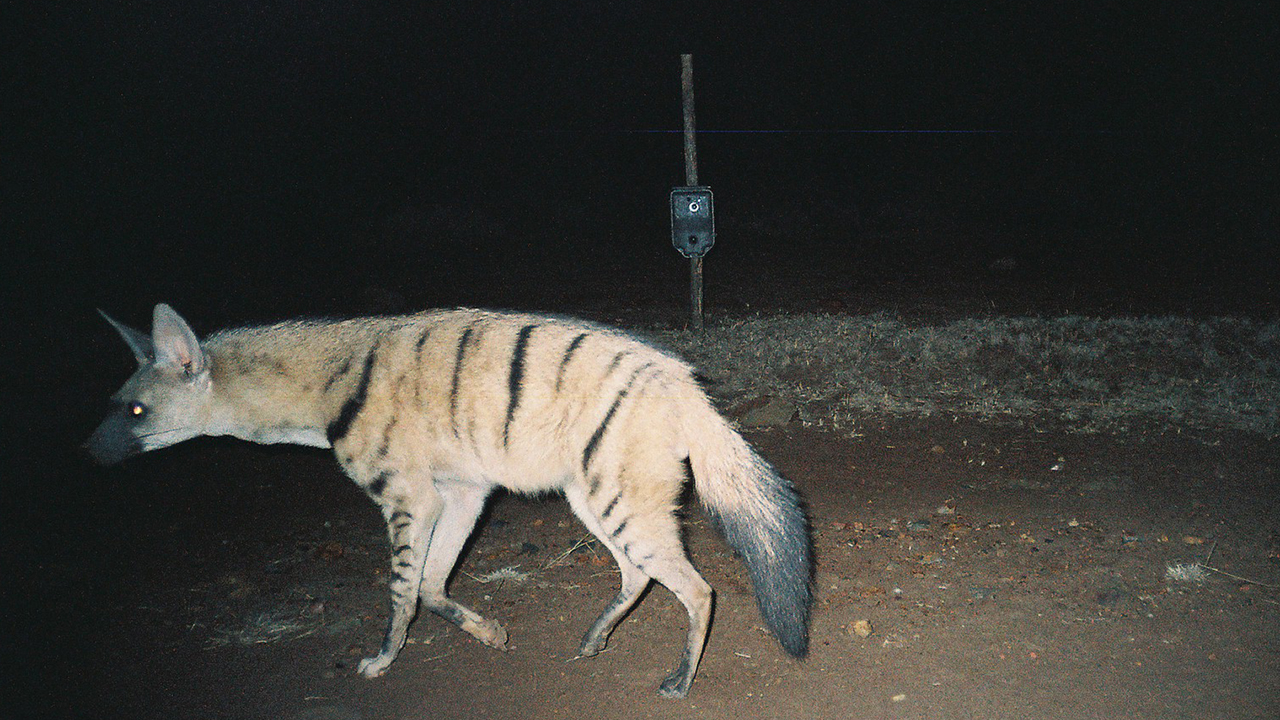
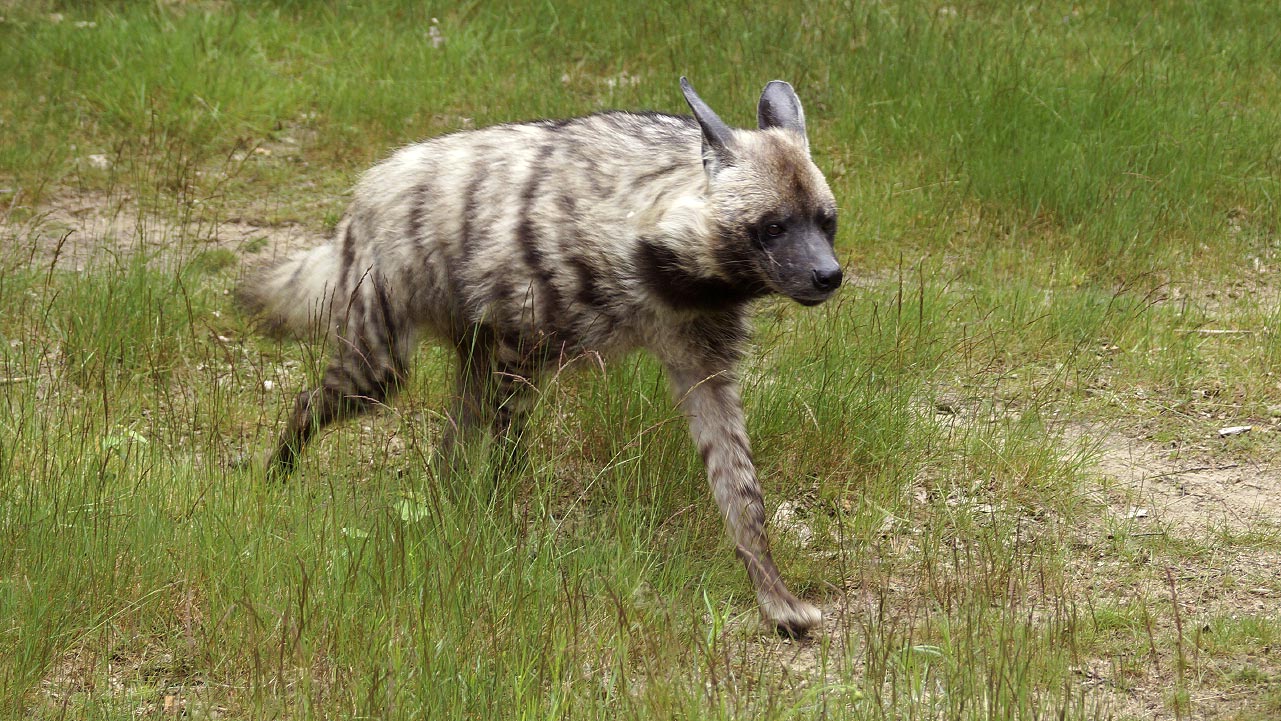
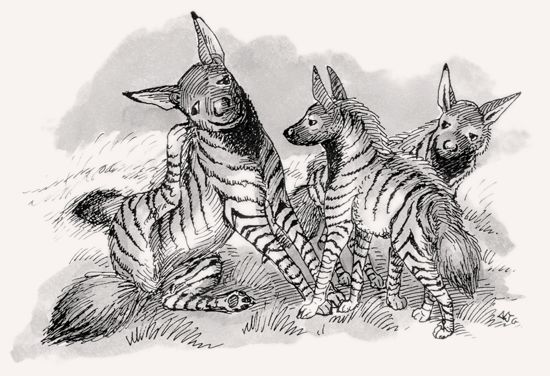
Striped hyenas are smaller, shyer, and less social than the better known spotted hyena. Instead of spots, striped hyenas have dark lines down their light fur and fluffy manes. Their front legs are longer than their hind limbs, giving them a distinctive loping gait.
Once thought to be solitary, striped hyenas actually live in small groups. However, they forage alone. When food is plentiful, a mother and her adult daughters may share a den and hunting ranges. Young females who have yet to find their own home range or to reproduce sometimes help their mothers or sisters raise cubs.
Striped hyenas are usually quiet, but may emit loud screeches or growl then roar when seriously threatened. They call to their cubs and respond to their babies’ whines by feeding them. When upset or threatened, these hyenas raise their impressive manes, making them appear nearly twice their size, encouraging enemies to back off. They also scent-mark the boundaries of their territories as a warning to rivals.
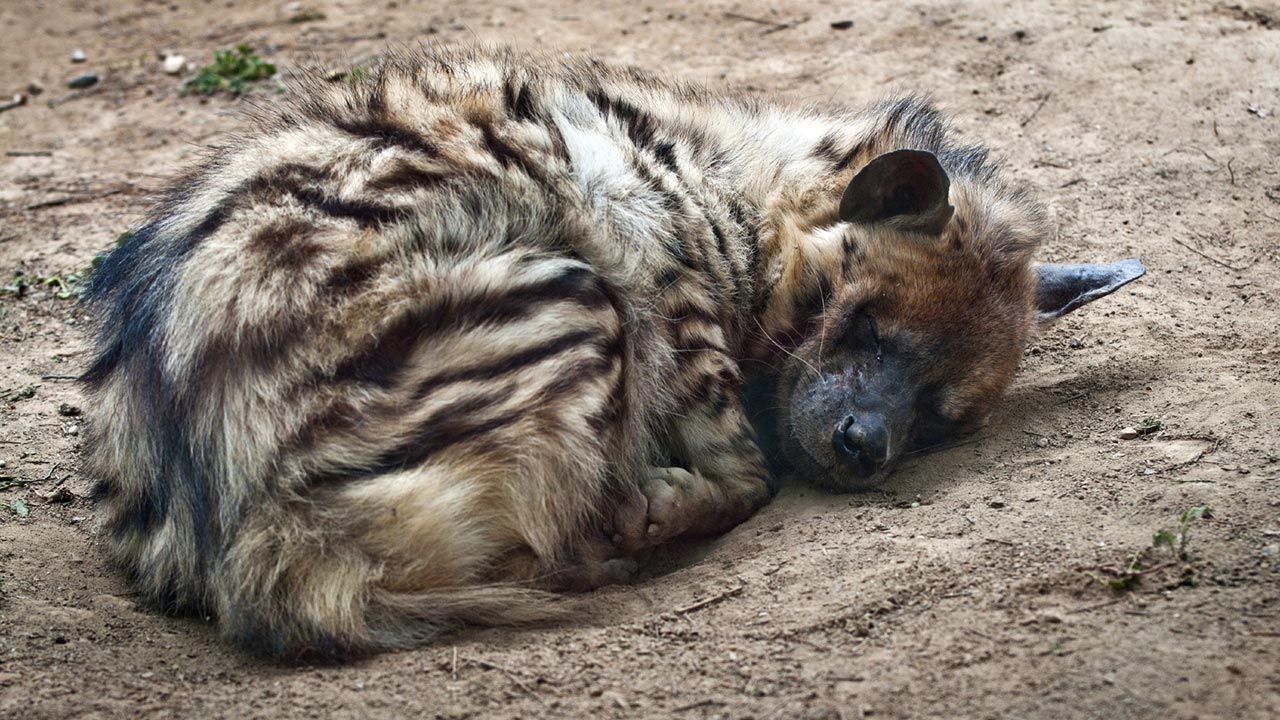
Striped hyenas forage at night and are only active in the day during rainy, cloudy, or stormy weather. They rest and sleep in large caves, though at times will use dense vegetation as cover.
The International Union for Conservation of Nature (IUCN) lists striped hyenas as a species of lower risk. Outside of protected areas, striped hyenas are very vulnerable to human-induced habitat degradation. Prejudices against hyenas reach back centuries. Striped hyenas have a tendency to raid human croplands for fruits and vegetables, and in some areas have been reported raiding human graves. Thus, hyenas are often poisoned. Some of their body parts are also used in traditional medicine. In some Arab countries, they are captured, blinded, and taken from village to village for people to torment.
Striped hyenas are mainly scavengers, feeding on carrion, although they will occasionally kill small- and medium-size mammals and other small vertebrates. They also eat insects, some fruits, and human refuse.
Striped hyenas breed year-round. Males trail fertile females for several days before mating. Cubs are born in litters of one to four after a 90-day gestation period and grow up in dens, caves, or, if necessary, shallow rock hollows. Mothers prefer raising cubs in caves, but if one isn’t available, she’ll move her cubs to a new den every few days or weeks. Once cubs begin to wean, the mother brings solid food back to the den for them to eat. Juvenile males may help their mothers with cubs, but scientists believe the father plays no part in cub rearing.
Previous Next
Striped hyenas live throughout northern Africa and the eastern part of the continent. They are also found throughout northern and central Asia, and occurred in the Mediterranean region until a few thousand years ago.
Striped hyenas live in open grasslands or brushlands that have ample cover and water within six miles (10 km).
Other carnivores don’t usually eat striped hyenas, but they do compete with them for food. Lions and spotted hyenas would win the right to eat a kill. The outcome with cheetahs and leopards is not so predictable, but the cats would likely win. Lions probably kill striped hyenas. Humans are responsible for most striped hyena deaths mainly because the animals are viewed as grave robbers and raiders of crops and livestock.
Striped hyenas occur at very low densities across very large areas, which makes them difficult to study. Various counts put the total African population of striped hyenas between 2,450 and 7,850, which is about half of their global numbers. The number in Kenya is estimated to be more than 1,000.