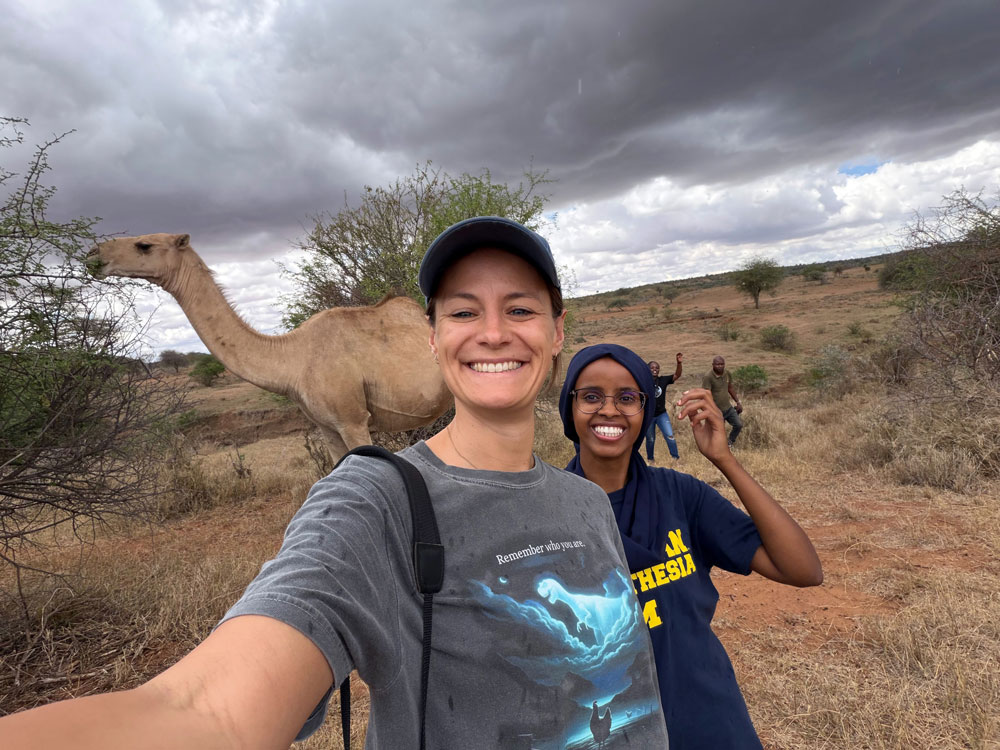
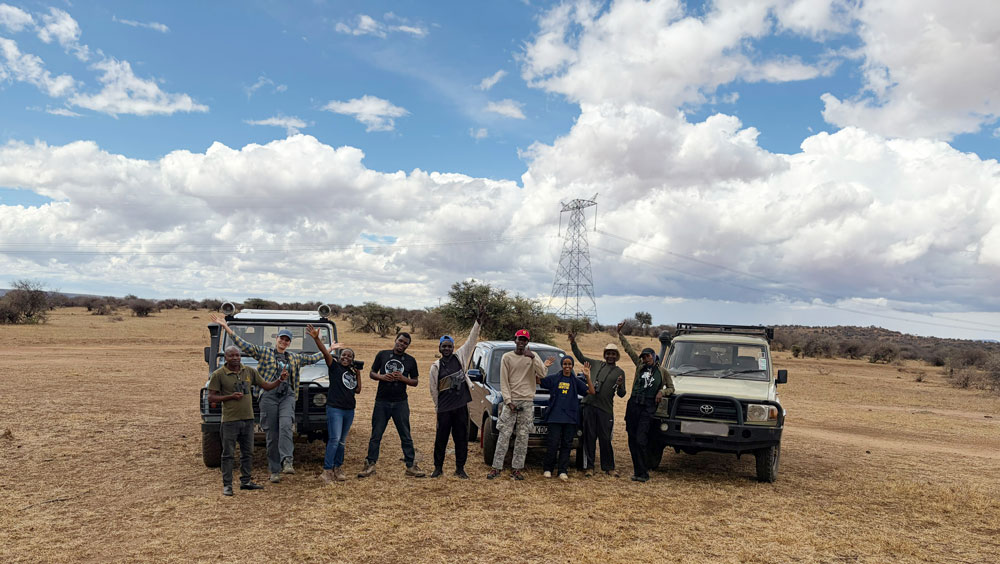
Birders from Mpala, Ol Gaboli and Nanyuki came together for the October Big Day, recording 148 species across the landscape. Behind the day’s sightings lies a remarkable history of research, discovery and people who have devoted years to understanding the birds of Laikipia.
At six in the morning, binoculars were already out at Mpala Research Centre. Staff, researchers, interns and visiting birders had gathered for the October Big Day, an international birdwatching event held on Saturday, 10 October 2026.
Their ambition was to record at least 150 species before darkness. With Mpala’s riverine corridors, black cotton savannah and dams to explore, there was plenty of ground to cover.
The birders divided into two teams whose names reflected their respective destinations. Team Hamerkop would follow the riverine corridors, taking its name from the distinctive wetland bird known for building enormous nests. Team Secretarybird would explore the open plains and dams, named after the long-legged raptor that hunts on foot across the savannah.
The day began with bird walks around the Research Centre and by 9 O’clock, the teams were heading into the field.
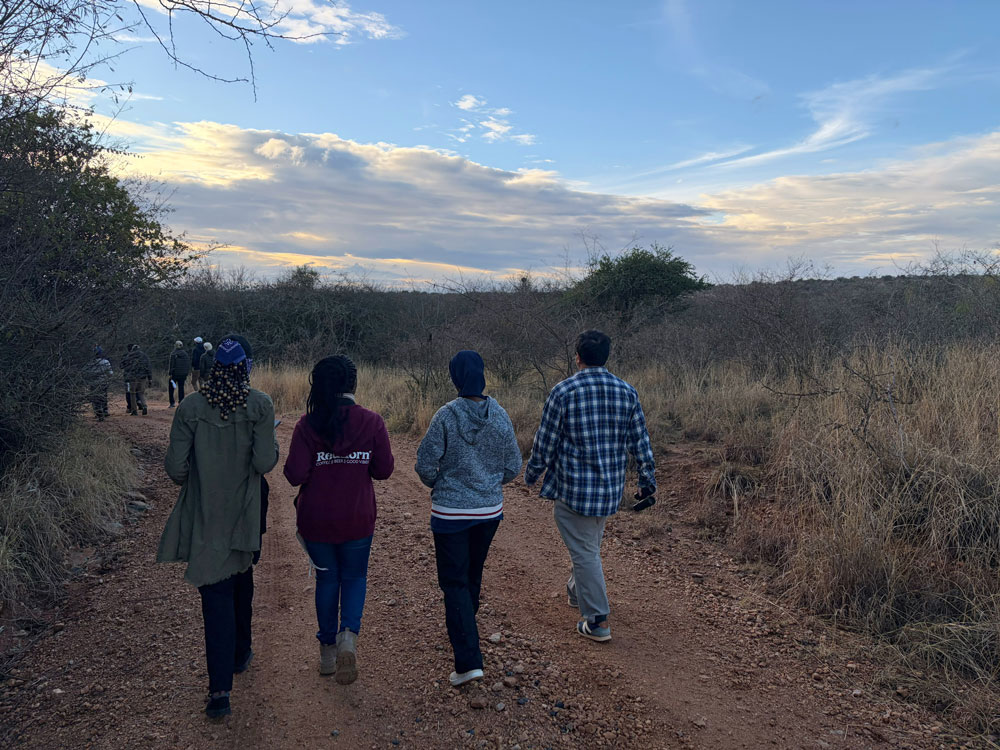
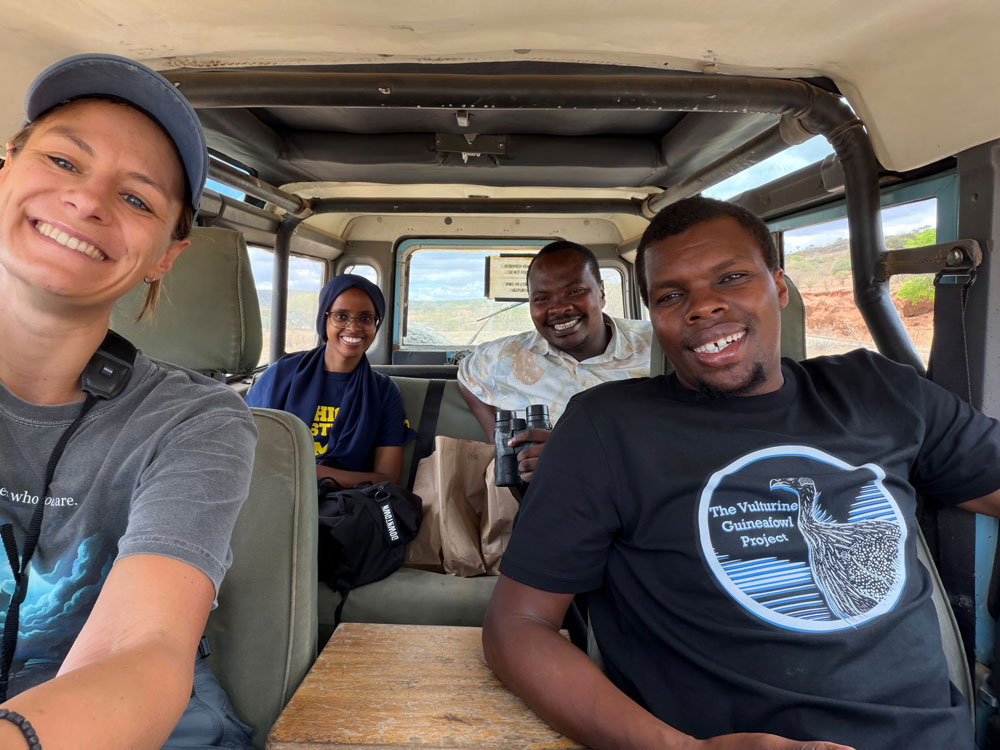
Among the participants were Wilson Nderitu and Kennedy Sikenykeny, two of Mpala’s most experienced bird researchers. Both have spent years following birds across this landscape, accumulating knowledge that extends well beyond identifying species by sight or sound.
Wilson’s work is closely associated with the superb starling, one of the most familiar birds of Kenya’s savannah. Since 2001, researchers led by Professor Dustin Rubenstein have followed these birds at Mpala, investigating their remarkably complex social lives.
Superb starlings live in cooperative groups in which some individuals breed while others help raise offspring. Why birds make these different reproductive choices, how family relationships influence cooperation and what happens when rainfall becomes unpredictable are among the questions researchers have explored.
Wilson has contributed to this work for more than two decades, developing an intimate knowledge of individual birds and their territories. Such familiarity is essential to research that follows the same animals across successive breeding seasons, revealing patterns that would be impossible to recognise during occasional surveys.
Kennedy’s expertise lies with another of Mpala’s remarkable birds, the vulturine guineafowl.
With their striking blue plumage and elaborate neck feathers, these birds are difficult to overlook. Their social behaviour, however, has proved even more remarkable than their appearance.
Since 2016, the Vulturine Guineafowl Project has investigated how these birds organise themselves into groups, maintain relationships and respond to changing environmental conditions.
Dr Charlotte Christensen, who joined the October Big Day birders, is a co-Principal Investigator of the project alongside Professor Damien Farine. Their research has helped reveal that vulturine guineafowl live in complex, multilevel societies, with stable groups associating to form larger gatherings.
By individually marking thousands of birds and fitting hundreds with GPS tracking devices, researchers have been able to follow their movements and interactions in extraordinary detail.
Kennedy, the project’s manager and a postgraduate researcher, is among those whose fieldwork makes these discoveries possible.
For Wilson, Kennedy and Charlotte, birds are not simply entries on a checklist. Their work involves recognising individuals, understanding relationships and observing how behaviour changes across seasons and years.
That depth of experience was part of what made October Big Day at Mpala particularly interesting. Researchers who spend much of their time studying individual species were joining a wider community of enthusiasts to see how many different birds they could identify in a single day.
And there is considerable variety to find.
Mpala’s landscape supports birds associated with open savannah, wooded areas, riverine vegetation and water bodies. Some are permanent residents; others arrive seasonally, connecting Laikipia to distant regions through migration.
The day’s initial checklist included 11 Eurasian migrants and one Afrotropical migrant. For birds arriving from Eurasia, the journey to East Africa can involve thousands of kilometres across continents.
These seasonal movements are part of a much larger ecological story, one that researchers have been documenting in East Africa for generations.
Among the most influential figures in that history was Dr Dale Zimmerman, the celebrated ornithologist and co-author of Birds of Kenya and Northern Tanzania.
Zimmerman spent decades studying and documenting the region’s birds, producing work that continues to inform bird identification and ornithological research.
His connection to Mpala is preserved in the Mpala Live archive through A Chat with the ‘Birdman’, Dr Dale Zimmerman, an interview exploring his experiences and observations in East Africa.
Zimmerman’s interest in changes in bird populations and distribution illustrates why records accumulated over many years matter. Observations made decades apart can help researchers investigate how species respond to changes in habitat and environmental conditions.
That long view has also been important in Mpala’s research on birds of prey.
In the early 2000s, raptor surveys at Mpala documented worrying declines in vultures. Research associated with Dr Darcy Ogada, now Africa Programme Director at The Peregrine Fund, contributed to understanding the threats facing these scavengers and the ecological consequences of their disappearance.
Vultures help remove carcasses from the landscape, providing an important ecological service. Their decline raises concerns about poisoning, human activities and the wider health of ecosystems.
From cooperative breeding in starlings to the social organisation of guineafowl and the conservation of vultures, Mpala’s bird research has helped address questions extending far beyond the species being studied.
Through Mpala Live, researchers and bird enthusiasts have shared their experiences with audiences around the world. Programmes such as Bird Is the Word, a live conversation with bird experts, and the interview with Dale Zimmerman form part of an archive that makes ornithological knowledge accessible to a wider public.
The Mpala Live Field Guide extends that effort, introducing readers to birds such as the eastern chanting-goshawk, bateleur, African finfoot, lilac-breasted roller and the two species that lent their names to the day’s competing teams.
Its profiles explore not only identification but also feeding, reproduction, behaviour and conservation, offering birdwatchers and students a way to understand the species they encounter.
For the participants from Ol Gaboli and Nanyuki, October Big Day offered another opportunity to learn directly from the landscape and from the people who study its birds.
The exercise also connected Mpala’s birding community to a global effort. In a snapshot of the international results, Kenya ranked ninth worldwide, with 824 species recorded across the country.
Back at Mpala, the competition was close.
Team Secretarybird recorded 111 species, narrowly beating Team Hamerkop’s 109. The combined count initially stood at 138 species before additional records brought the total to 148 distinct species, just two short of the day’s target.
As evening approached, the birders gathered for a sundowner, bringing a full day of searching, identifying and recording to a close.
The two teams had explored different parts of Mpala, compared observations and contributed to a national birding effort. Along the way, experienced researchers, interns and visiting enthusiasts had shared something that has sustained ornithology for generations: the pleasure of discovering what is out there.
At Mpala, that curiosity has produced decades of research, contributed to important conservation questions and helped introduce audiences around the world to the birds of Laikipia.
On October Big Day, it brought people together for another reason.
There were 150 species to find, and daylight was running out.