Field Guide
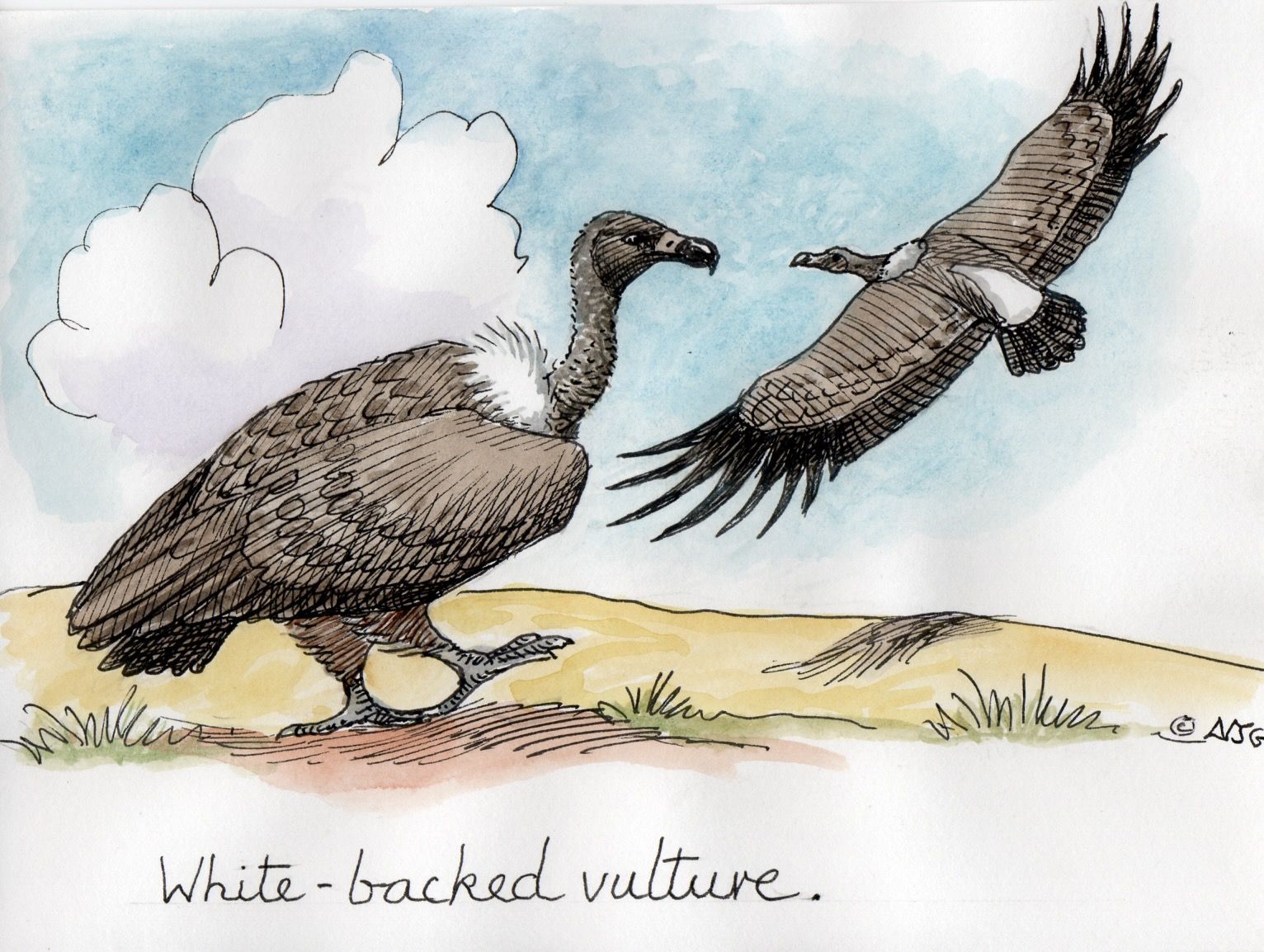
Gyps africanus
White-backed vulture
Swahili: Tumbusi mgongo-mweupe


- Type
- Bird
- Daily Rhythm
- Diurnal
- Diet
- Carnivorous
- Conservation Status
- critically endangered
- Weight
- 4-7 kg
- Size
- 95 cm wingspan 2 meters average

Once the commonest and most widespread vulture in Africa, white-backed vultures’ populations have declined more than 80 percent over the past 50 years, and it is now listed as Critically Endangered.
White-backed vultures soar through the sky in groups searching for carrion or other signs that food is nearby. Gregarious and aggressive feeders, they also can be subordinate to larger vultures; after feeding, they bathe with other birds.
White-backed vultures can be heard cackling at their nests, but otherwise are usually silent, except when feeding.
White-backed vultures usually associate with large mammals and feed on their carcasses; one expert observed a hundred of them stripping a 50-kg carcass in three minutes. After a carcass is found, the birds may wait nearby for awhile before beginning to feed.
Critically endangered
A scavenger that feeds on abandoned prey or carcasses, white-backed vultures primarily consume carrion, but they have also been known to hunt young springbok, warthogs, and chicks.
Nesting singly or with others, monogamous white-backed vulture pairs construct large platform nests of sticks and usually have only one egg per nesting season. Both parents incubate the egg and tend to the chick after it hatches, and chicks generally fledge around three months after hatching.
Sharp population declines have resulted from land use changes. They have also suffered from intentional poisoning by poachers and poisoning when they consume carrion contaminated with pesticides.
Massive population declines were observed between 1976 and 2005.
White-backed vultures are found throughout much of eastern and southern Africa, as well as a belt that runs from coast to coast in sub-Saharan Africa.