Field Guide
Agama agama
Red-headed Rock Agama
Swahili: Kikoti askari siku, Mjusi kafiri


- Type
- Reptile
- Daily Rhythm
- Diurnal
- Diet
- Omnivorous
- Life Span
- Insufficient data
- Conservation Status
- Not evaluated by IUCN
- Weight
- Insufficient data
- Size
- 5 to 12 in (12.5 to 30.0 cm) long, including tail


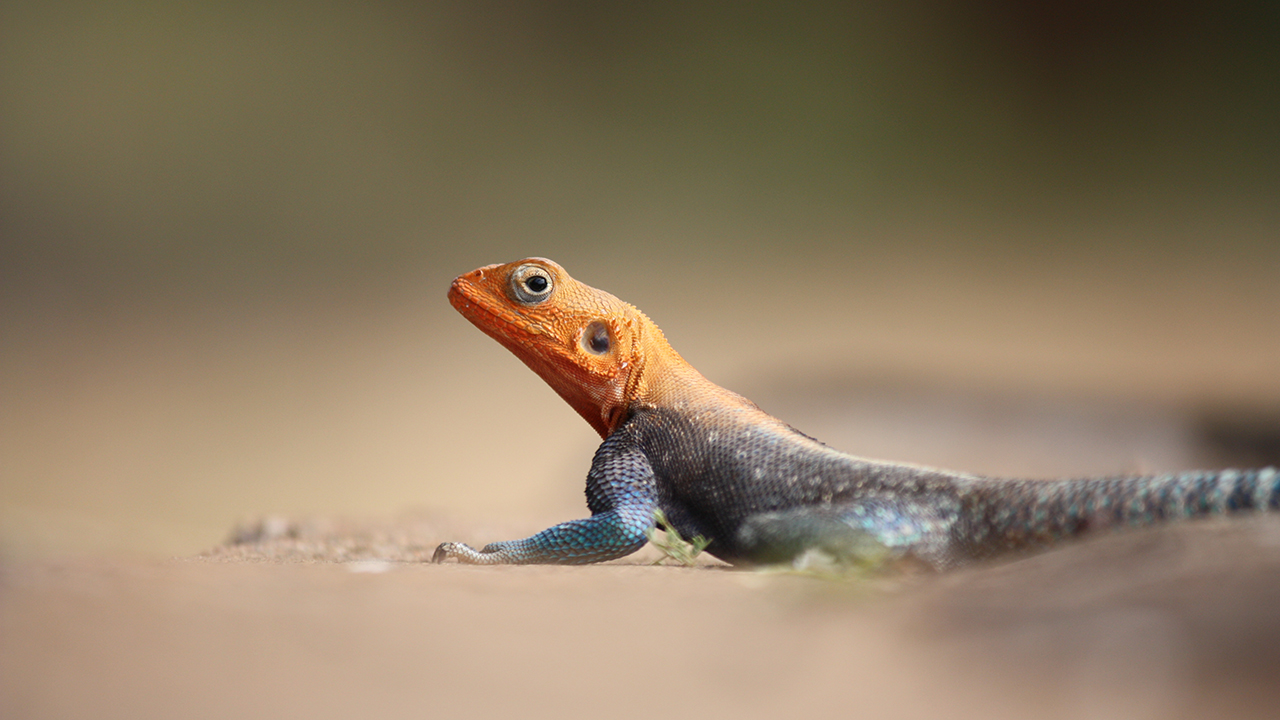
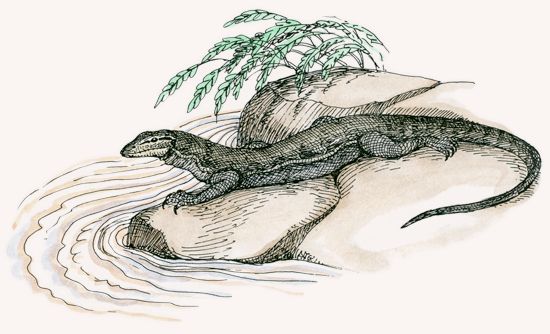
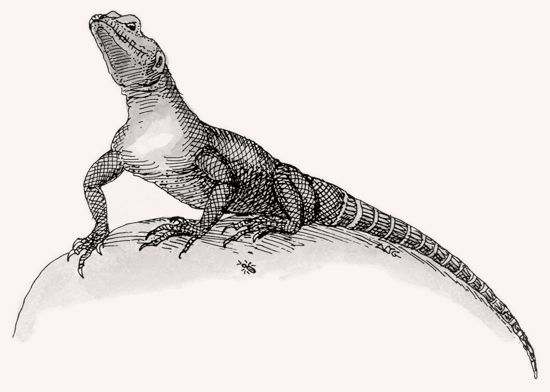
Boasting a brilliant red head and an electric blue body, a dominant male agama during mating season resembles a miniature version of some mythical beast. Among the most common lizards in Africa, these small, long-tailed reptiles live almost everywhere south of the Sahara. Changes in coloration play a key role in their behavior, communication, and reproduction.
Young red-headed agamas live by themselves, but join a group by the time they are four months old. Groups include females, juvenile males, and a dominant male. Male agama lizards defend their territories fiercely. They challenge intruding males by bobbing their heads, an action that looks like the lizard is doing pushups. During fights, the male’s body changes color to dark brown with a blue-gray pouch on their throats.
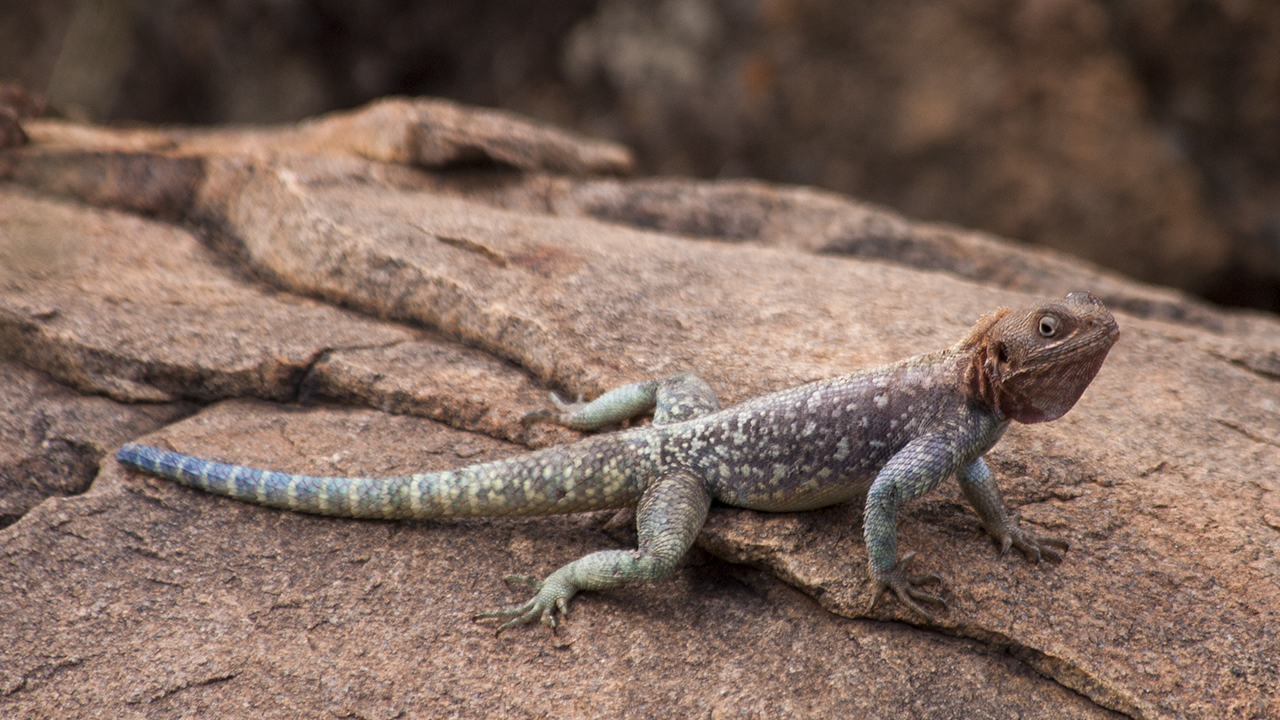
Agamas communicate mainly with their bodies, either through movements and postures or by changing colors. Head-bobbing means different things depending on whose doing the bobbing. Between males, it signals a challenge: “Do you want to fight?” But when a male head-bobs to a female, he’s trying to impress her in an attempt to mate. Subordinate males, females, and juveniles are typically a dull, olive brown, while a dominant male is brightly colored.
Red-headed agamas spend their days hunting for food, basking in the sun, and occasionally seeking out a bit of shade to cool down.
The International Union for Conservation of Nature (IUCN) has not evaluated this lizard, however there are no significant threats to this species.
Agamas mainly eat insects, especially ants, grasshoppers, beetles, and termites. They will also consume berries, other fruit, seeds, eggs, flowers, grasses, and even small mammals. They wait in shadows for prey to pass by. When it does, they give chase and catch it, usually with the aid of their sticky, mucous-coated tongues.
Females are sexually mature at age 14 to 18 months; males reach maturity at 2 years. Only the dominant male mates with the females in his territory. Mating tends to occur in the wet season, but agamas can breed any time they have access to water. A male courts a female by head-bobbing to her. After mating, the female digs a two-inch (5-cm)-deep hole in moist, sandy soil where she lays five to seven eggs. During the day, she leaves the top open so that the sun can warm the eggs; at night, she covers the hole with plant matter. Hatchlings emerge in eight to ten weeks.
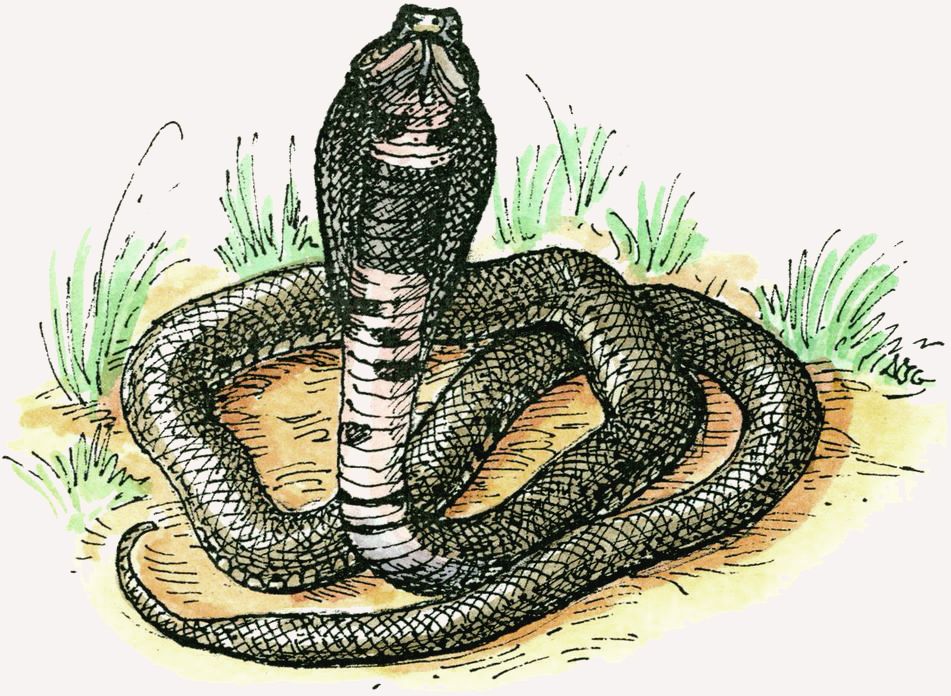
Insufficient data, but snakes are likely predators.
Previous Next
Red-headed rock agamas live throughout most of sub-Saharan Africa.
These lizards occupy a diversity of habitats, everything from deserts, savannas, forests, and mountains to cities and suburbs.
The red-headed rock agama is quite common. Its population is stable, but no total numbers are available.