Field Guide
Crocodylus niloticus
Nile Crocodile
Swahili: Mamba, Ngwena


- Type
- Reptile
- Daily Rhythm
- Diurnal
- Diet
- Carnivorous
- Life Span
- In the wild: 45 years
- Conservation Status
- Lower risk
- Weight
- Average: 500 lb (226 kg) Maximum: 2,200 lb (1,000 kg)
- Size
- Average: 16 ft (4.8 m) long, including tail Maximum: 20 feet (6 m) long, including tail

Crocodiles—reptiles as fierce as Tyrannosaurus rex and almost as ancient—have prowled waterways for millennia. The Nile crocodile reigns as one of the most feared reptiles on the planet and is capable of taking down a small hippo or a hulking African buffalo. But these crocs are also social animals and attentive mothers that face some surprising risks.
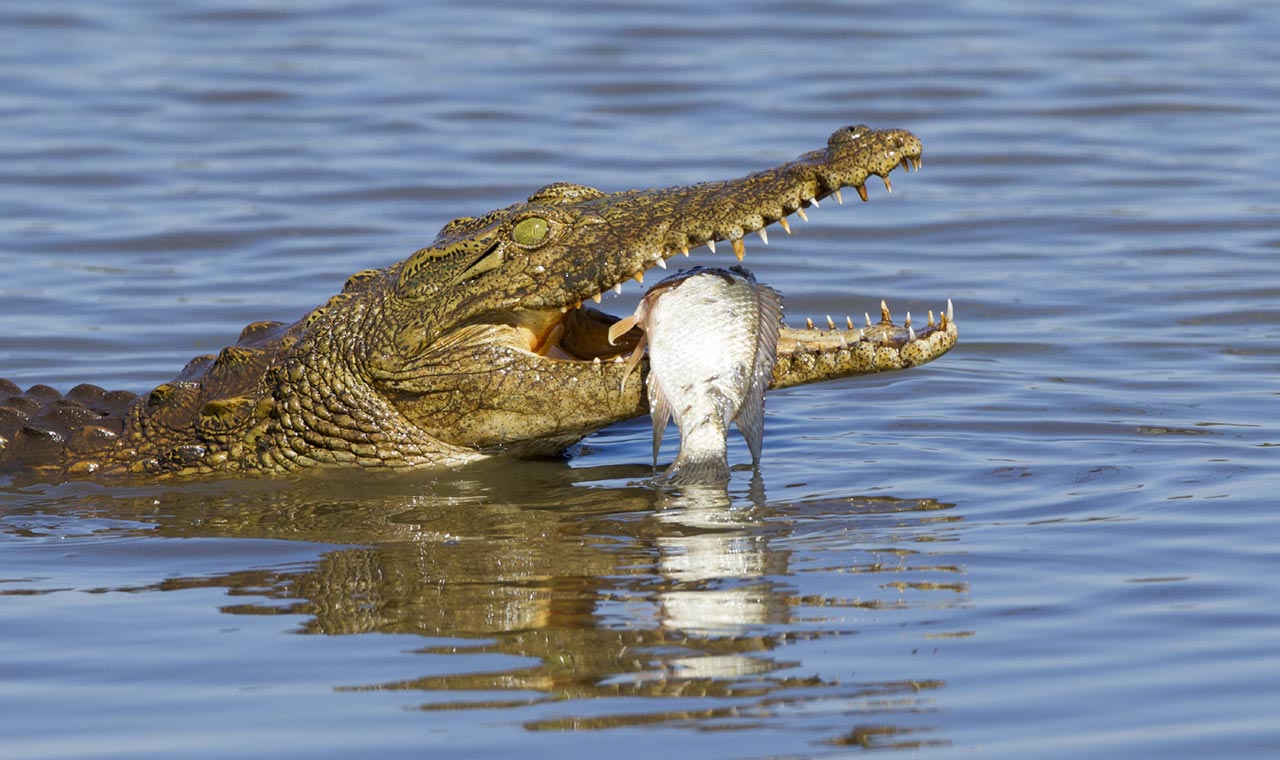
Nile crocodiles are social creatures. Males defend territories along shorelines, but both sexes gather at basking sites, and females tend to make their nests near one another. Sometimes these reptiles hunt cooperatively, herding fish into shallow water. During these hunts, the largest crocs eat first.
Nile crocodiles use a range of calls and hisses to communicate.
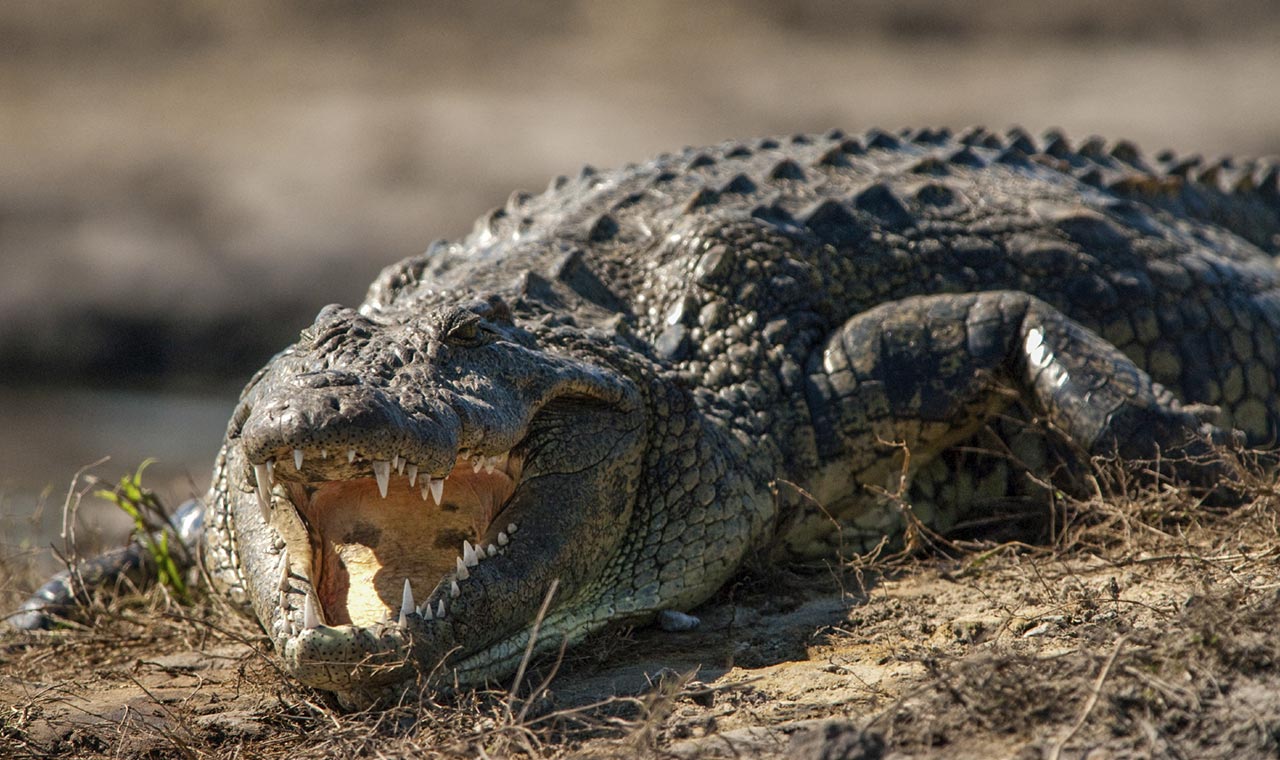
Nile crocodiles spend much of the day warming themselves in the sun, lounging with their mouths open, or retreating to the water to cool down. Small bumps, called integumentary sensory organs, cover their bodies and faces. More sensitive than human fingertips, these organs allow crocodiles to detect extremely slight movements as well as chemical and temperature variations in the water.
Protection provided by international laws and conservation efforts have helped the population of Nile crocodiles recover after nearly being wiped out in the mid-1900s mainly by hunters. The International Union for Conservation of Nature (IUCN) now lists the Nile crocodile as a species of lower risk, although it still faces threats from habitat destruction, pollution, and hunting in some areas of its range.
Nile crocodile hatchlings hunt insects, small fish, crustaceans, and amphibians. As they grow, these crocodiles eat turtles and larger fish as well as birds and mammals, including humans. The largest Nile crocodiles eat wildebeest, small hippos, buffalo, and other large animals. They wait patiently underwater for prey. When an animal approaches, as at a water hole, they launch themselves forward in a lightning attack, then kill their prey by drowning or crushing it. Nile crocodiles also eat carrion.
Nile crocodiles mate in the dry season. Females dig nests and bury up to 60 eggs. The eggs incubate for 90 days before hatching. The temperature of an egg determines the sex of its hatchling: females hatch from cooler eggs (below 87° F/31° C); males hatch from warmer eggs (87° to 93° F/ 31° to 34° C). Nile crocodiles are attentive mothers, carrying hatchlings in their mouths and protecting them for several months.
Previous Next
Nile crocodiles can be found in the Nile basin and throughout sub-Saharan Africa and in western Madagascar.
Although Nile crocodiles are most frequently found in lakes, rivers, and mangrove swamps, several populations have been found living in caves and near springs in the Sahara! Mpala’s hippo pool has a resident Nile crocodile that can be seen sunning on rocks in the river.
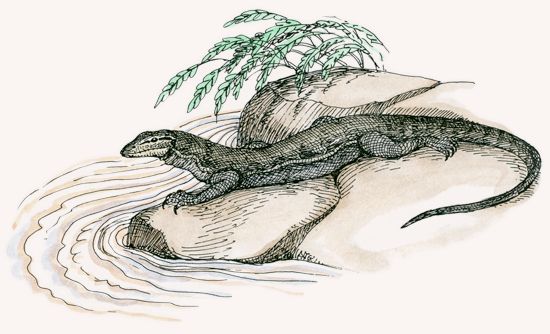
Very little, except humans, threatens an adult Nile crocodile, but its eggs are vulnerable to predators. Nile monitors, mongooses, and baboons are among the animals that eat them.
Although almost hunted to extinction during the mid-20th century, the populations of Nile crocodiles, especially in protected areas, have rebounded.