Field Guide
Geochelone pardalis
Leopard Tortoise
Swahili: Kobe, Kobe chui


- Type
- Reptile
- Daily Rhythm
- Diurnal
- Diet
- Herbivorous
- Life Span
- In the wild: Up to 100 years
- Conservation Status
- Not evaluated by IUCN
- Weight
- 33 to 120 lb (15 to 54 kg)
- Size
- 1.0 to 2.4 ft (30 to 70 cm) long

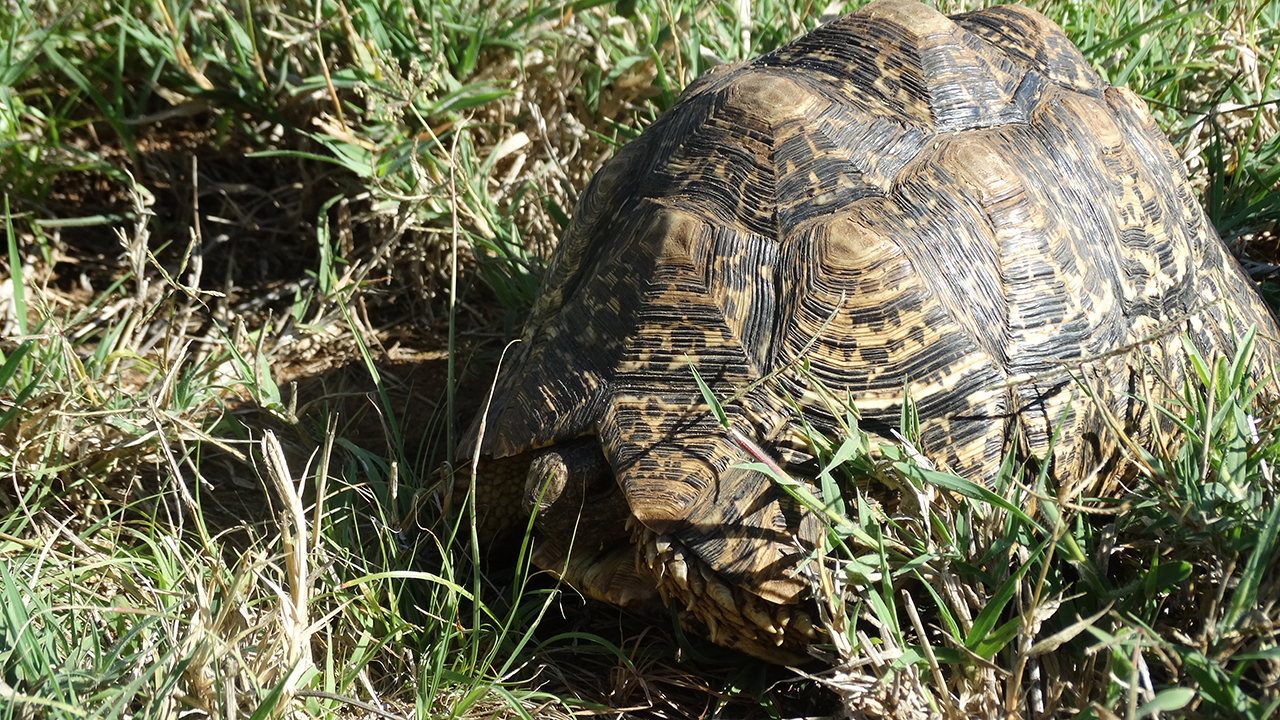
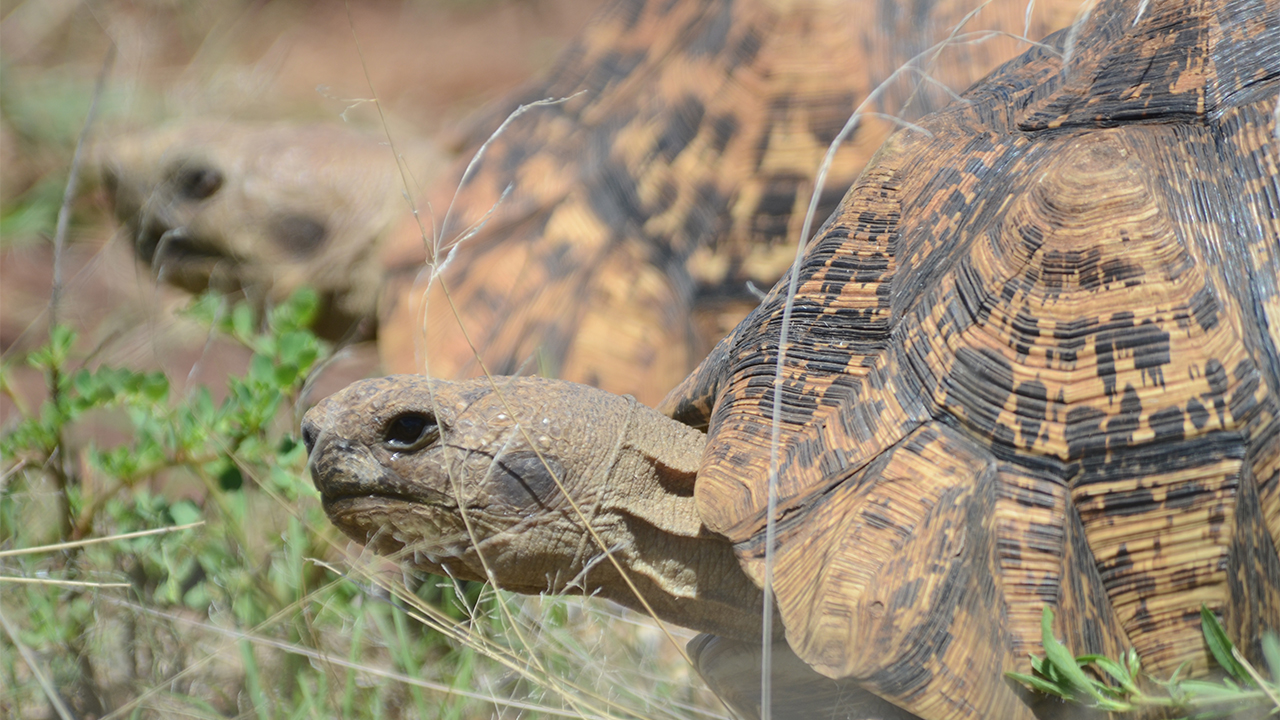
In all the world, only three species of land turtles are larger than the leopard tortoise. Its high, domed shell with its distinctive yellow and brown spots and radiating circles makes the leopard tortoise one of the most beautiful of all turtle species. Its markings make it easy to see how it got its name.
Leopard tortoises are not particularly social animals. Males determine dominance through fighting, but that dominance decides very little other than access to a particular female.
Males call to attract females during the breeding season, and make grunts and groans during courtship. Tortoises hiss when something scares them, but the sound doesn’t always come from their mouths. When they pull their heads and limbs into their shells quickly, they force all the air out of their lungs, which can cause a hiss.
Eating and resting take up the majority of a leopard tortoise’s day. Typically slow moving, they can sprint when scared or startled.
The International Union for Conservation of Nature (IUCN) has not yet evaluated the leopard tortoise, though some countries have passed laws to protect them. Some humans hunt leopard tortoises as food or export them for the pet trade.
Strict herbivores, leopard tortoises will eat grass, though they prefer to graze on flowers, succulents, fungi, berries, and other fruit. Occasionally they will eat old bones or ash, possibly to supplement their calcium levels.
Leopard tortoises become sexually mature when they are five years old. They only breed with one partner each year during the breeding season, which lasts from May to October. The female digs a 4- to 12-inch (10- to 30-cm)-deep hole and lays a clutch of anywhere from 5 to 30 eggs. The eggs incubate for 9 to 12 months. Females lay between five and seven clutches each breeding season, though they wait three to four weeks between each clutch. Neither parent looks after the eggs or the hatchlings, which can move and eat on their own almost immediately after hatching.
Previous Next
Leopard tortoises live throughout southern and eastern Africa, from sea level to elevations as high as 10,000 feet (3,050 m).
A wide range of habitats, from forest and scrubland to grassland and near-desert, support leopard tortoises. They need grass to eat and large trees or bushes to shade them from the heat of the day. These reptiles can’t survive anywhere too wet or too cold, and can have health issues if the humidity is consistently over 70 or 80 percent. They can tolerate temperatures down to 41° F (5° C) for limited periods, but prefer it to be 68° to 86° F (20° to 30° C).
Their size and sturdy shells discourage most wild animals from bothering adult leopard tortoises, but foxes, coyotes, and mongooses sometimes eat eggs and hatchlings. The biggest problem a leopard tortoise faces maybe the tiny tortoise tick. These parasites live in the seams of the tortoise’s shell or in the folds of its skin. They carry disease and weaken the tortoise.