Field Guide
Haliaeetus vocifer
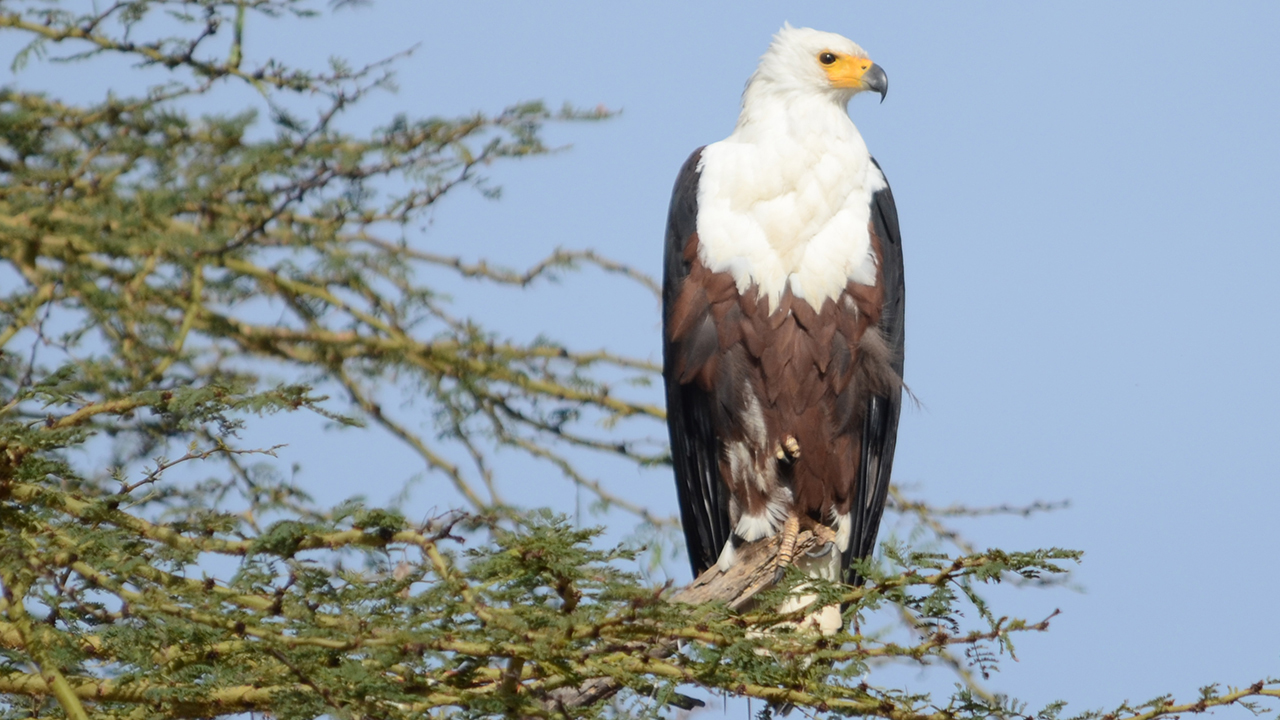
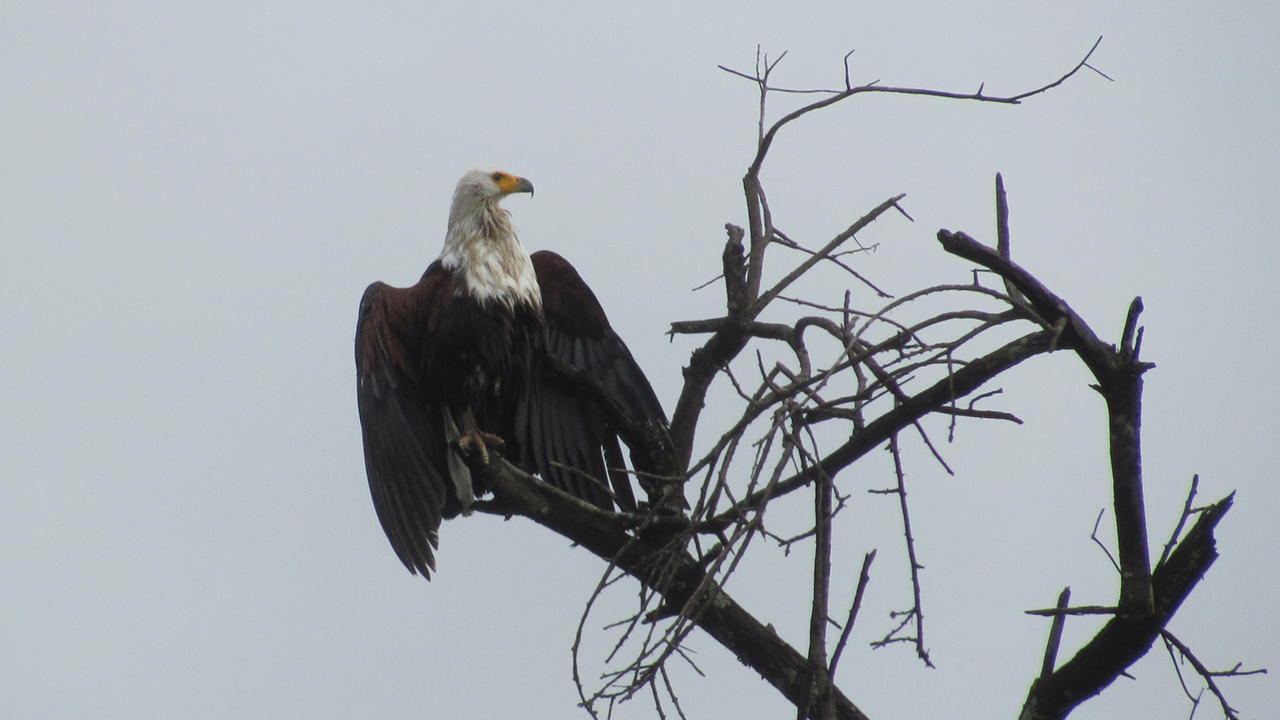
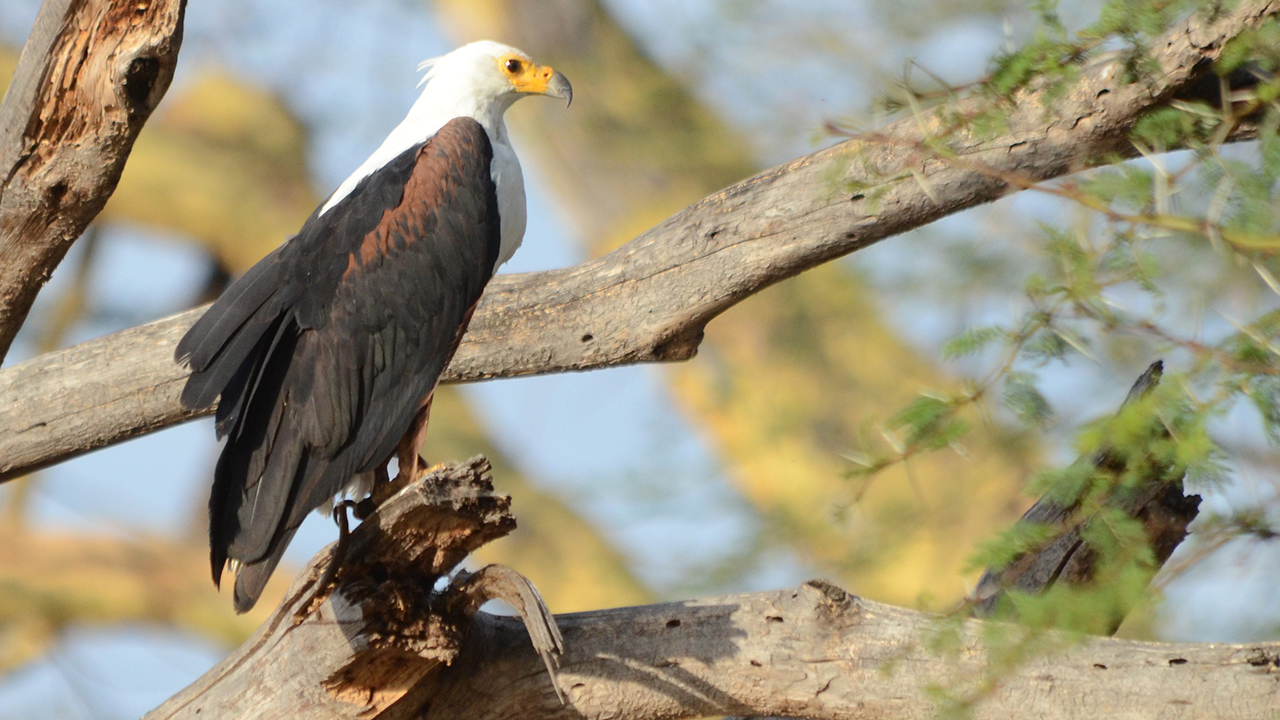
African Fish Eagle
Swahili: Furukombe


- Type
- Bird
- Daily Rhythm
- Diurnal
- Diet
- Carnivorous
- Life Span
- In the wild: 12 to 24 years (if they survive the first year)
- Conservation Status
- Lower risk
- Weight
- 4 to 8 lb (1.8 to 3.6 kg)
- Size
- 25.0 to 29.5 in (63 to 75 cm) long

Big and bold, an African fish eagle perches on a shoreline tree, spots a fish, and dives, snaring its prey in its talons. As it flies to its waterside nest, it makes a distinctive “coming home” call—quock, quock. These eagles typically live in pairs, and the nest-mate can expect part of the meal that its mate brings home.
Their unique, haunting call is one of the famed sounds of Africa. The quock sound in flight is shriller in the females.
These eagles are kleptoparasites, meaning they steal prey from other birds. Usually, though, they hunt for live prey. They can nab a fish swimming about 5 inches (15 cm) beneath the surface. If it weighs 1 or 2 pounds (0.5 or 1.0 kg), the eagle can carry it aloft; heavier fish are planed across the water to shore. Male and female pairs often share what they catch. If the fish eagle has easy access to water, it may have to hunt for only about 10 minutes a day—except when they need to find food for their chicks.
Fish—usually caught live—make up the main diet of the fish eagle. They also eat birds, monkeys, and crocodile hatchlings.
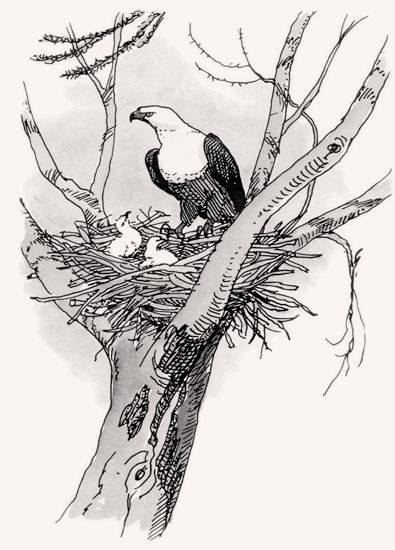
Although the mating season of the African fish eagle runs from March to September, these birds usually are seen as pairs year-round. Birds mate in the air, often executing dramatic dives with talons locked. The female lays one to three eggs in a nest made mostly of sticks in a tree near the water. They hatch after incubating for about 44 days. The chicks fledge by the time they are three months old.
African fish eagles are frequently visitors at Mpala’s hippo pool.
This large, easily identified bird is found throughout sub-Saharan Africa but is rare in the southwest, especially in arid areas.