Field Guide
Alopochen aegyptiacus
Egyptian Goose
Swahili: Bata


- Type
- Bird
- Daily Rhythm
- Diurnal
- Diet
- Omnivorous
- Life Span
- In the wild: about 15 years In captivity: 35 years, maximum
- Conservation Status
- Lower risk
- Size
- 24.0 to 29.5 in (61 to 75 cm) long

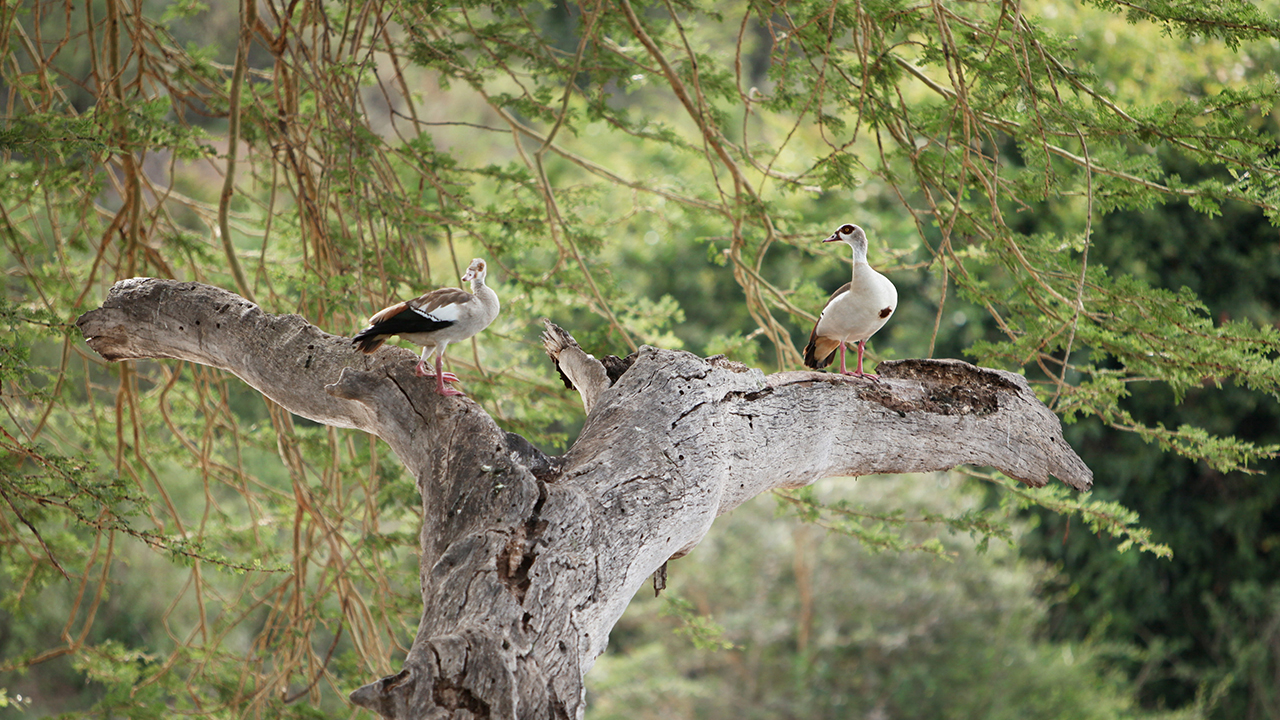
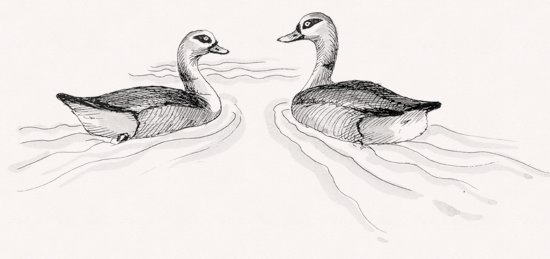
The Egyptian goose figured prominently in ancient civilizations. It was considered sacred by the ancient Egyptians, who believed that the geese were messengers between earth and heaven, and Greeks and Romans raised them for food. In modern times, this cross between a goose and a duck is cherished as an ornamental bird by wildfowl fanciers throughout the world.
Egyptian geese live in family groups within a flock. The male is slightly larger than the female. They form monogamous bonds.
The male Egyptian goose proclaims his presence with high-pitched honks, often in unison with a female, whose call is more of a growl. When upset, males hiss, and females make a crackling sound.
Egyptian geese live in flocks, pairing up with lifelong mates during breeding season. They can be extremely aggressive toward other birds, including their own kind.
Egyptian geese graze on grass, leaves, seeds, grain, and aquatic plants, varying their diet with locusts, worms, and other small animals. They often invade cultivated fields, especially in the dry season.
Egyptian geese mature sexually when they are about two years old. They mate for life and breed year-around, although they prefer spring and the end of dry seasons. They build nests in trees, along ledges, on the ground, or in burrows, always lining them with downy feathers.
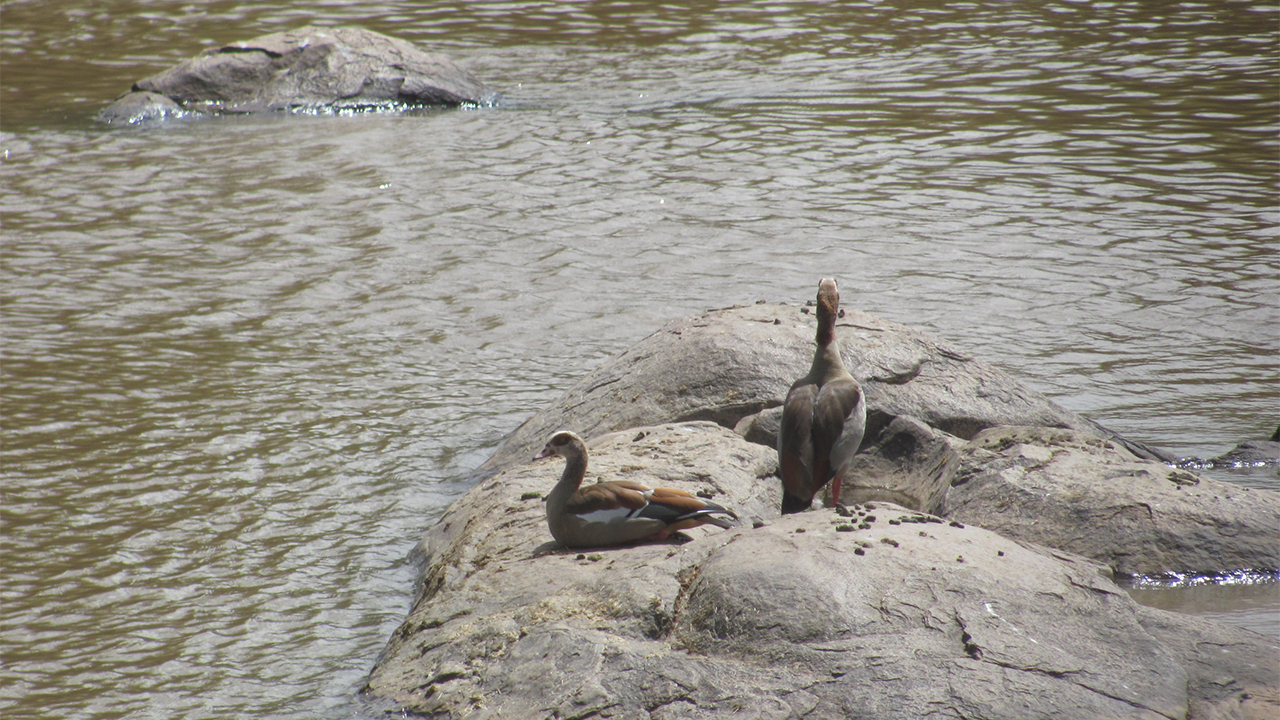
These geese are found throughout Kenya and regularly frequent Mpala’s hippo pool.
Egyptian geese are found throughout Africa south of the Sahara. They prefer inland waters and marshes. A large population occupies Kruger National Park in South Africa. They also flourish outside their native Africa, including in Western Europe and Florida, in the United States.