Field Guide
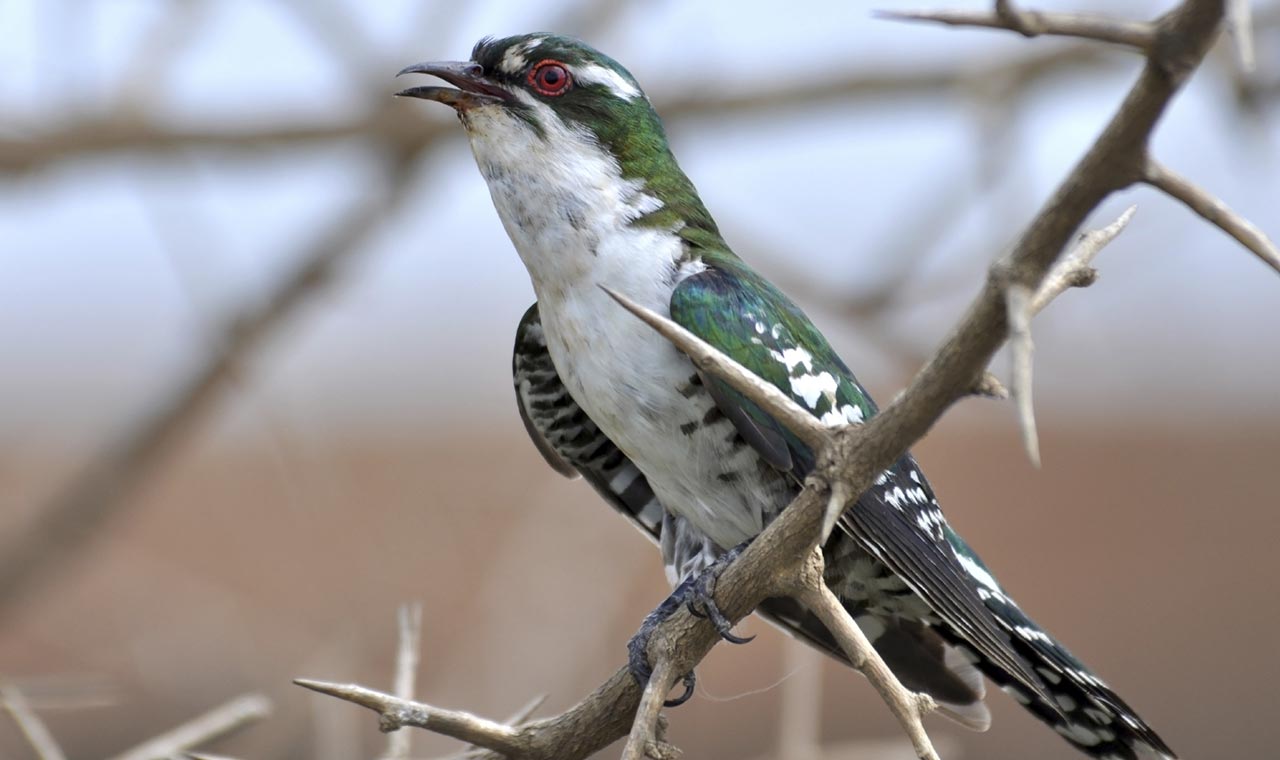
Chrysococcyx caprius
Diederik Cuckoo
Swahili: Tipitipi mweupe, Tama la bibi


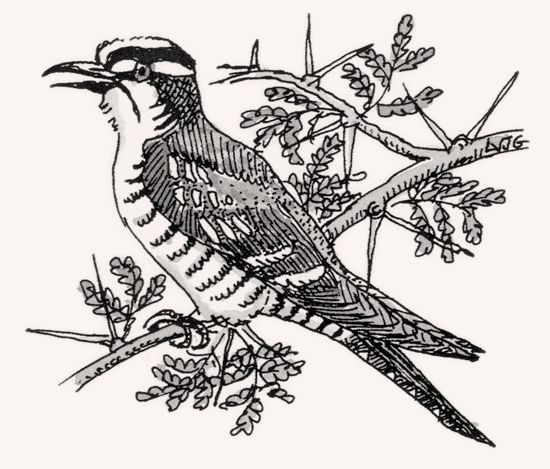
- Type
- Bird
- Daily Rhythm
- Diurnal
- Diet
- Carnivorous
- Conservation Status
- Lower risk
- Size
- 7.5 in (19 cm) long

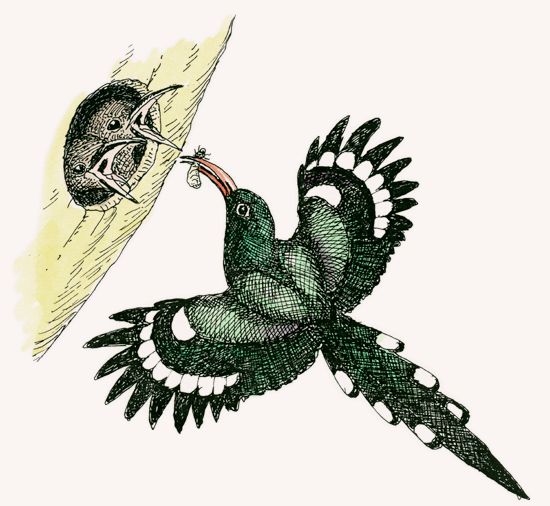
A female Diederik cuckoo does not build a nest or raise her own chicks. She sneaks into the nest of another kind of bird, lays a single egg after destroying any existing eggs, and flies away. A couple of days after hatching, the cuckoo chick eats any eggs that were laid while it was being incubated. The host parents, unaware they are raising an intruder, feed it and treat it as their own. Some scientists believe that the cuckoo chick may help protect the nest by excreting a stinky substance that drives off predators.
The Diederik cuckoo sings its name—dee-dee-dee-dee-derik—in a loud voice.
Diederik cuckoos are intra-African migrants whose movements are dependent on the arrival of rain.
The population of the Diederik cuckoo appears to be expanding in some parts of its range. It is listed as lower risk by the International Union for Conservation of Nature (IUCN).
The favorite food of Diederik’s cuckoos is the hairy caterpillar, although they also consume other invertebrates.
After sighting a female in his territory, a male Diederik cuckoo courts her with song and hairy caterpillars. After mating, she leaves him, lays a single egg in an alien nest, and flies off, leaving the “foster” parents to hatch and raise her offspring. She may lay as many as 20 to 24 eggs in as many different nests during the breeding season.
The Dierderik cuckoo usually chooses the nests of weaver birds to place eggs for foster-parent incubating. Deposited eggs look like the eggs of whatever host bird the female cuckoo selects.
Diederik cuckoos are found throughout Kenya in wooded grassland, dry acacia scrub, parks, gardens, and farmers’ fields at elevations ranging from sea level to 7,200 feet (2,200 m).
Diederik cuckoos inhabit all of southern Africa except for arid desert areas along Namibia’s coast.