Field Guide
Hystrix cristata
Crested Porcupine
Swahili: Nungunungu, Nungu, Nungumaria


- Type
- Mammal
- Daily Rhythm
- Nocturnal
- Diet
- Herbivorous
- Life Span
- In the wild: Insufficient data In captivity: Up to 28 years
- Conservation Status
- Lower risk
- Weight
- 44 lb (20 kg)
- Size
- 25.6 to 33.5 in (65 to 85 cm) long, excluding tail

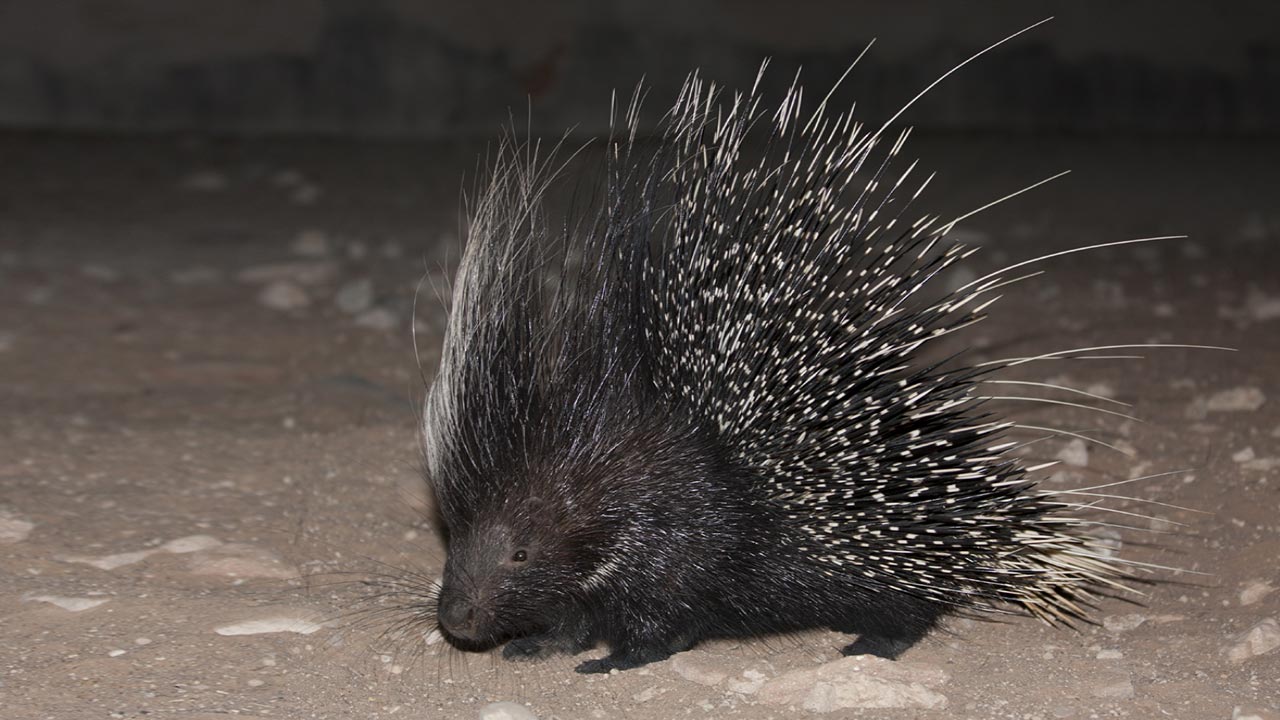
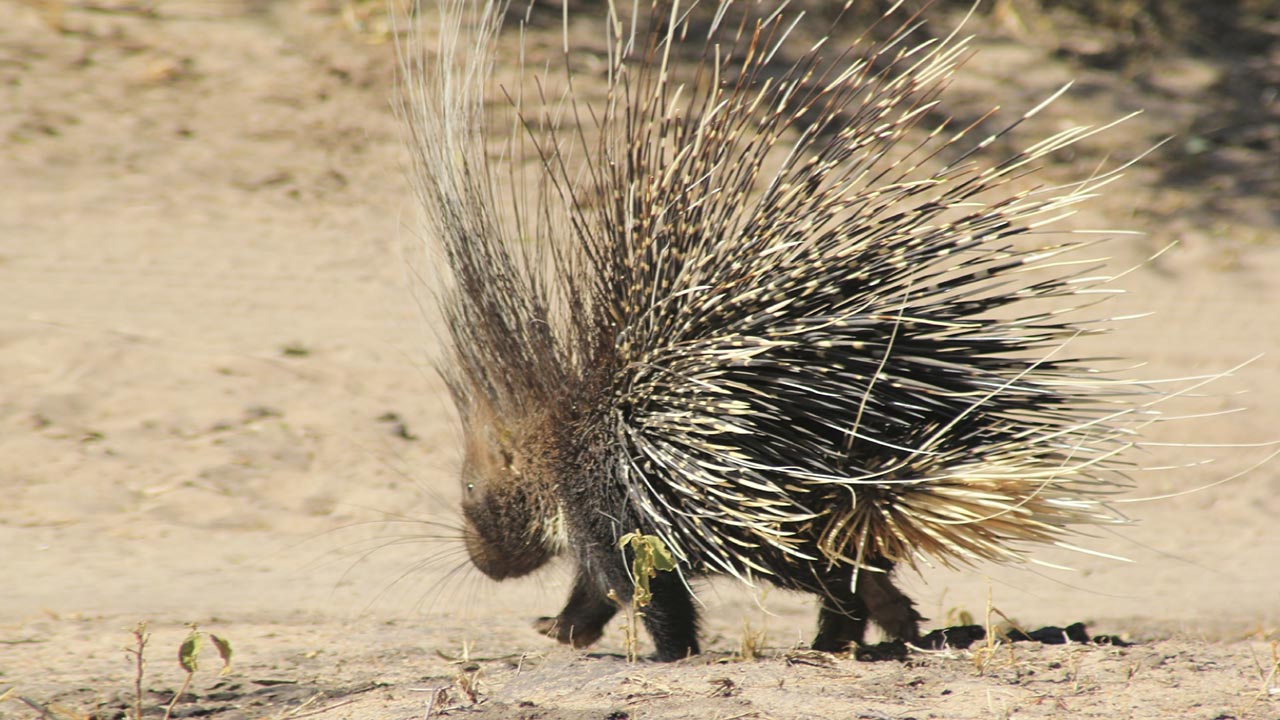
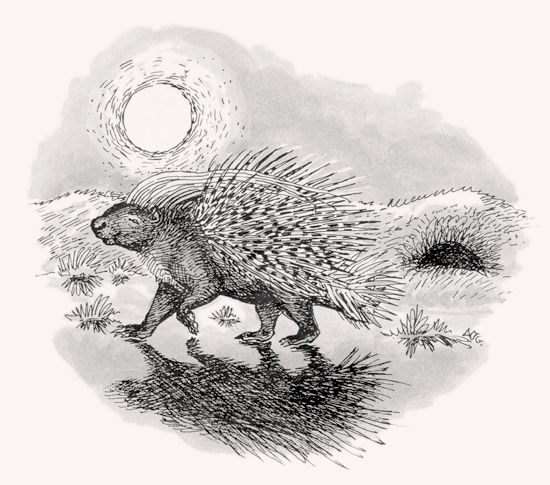
The crested porcupine is the size of a small raccoon, but it has the ability to make itself look much larger. This porcupine has quills that can be as long as 18 inches (45 cm). When the animal is threatened, the quills stand up in an elaborate crest, or mane, along its back. As a result, the animal looks two or three times larger than it actually is—an effective display for warding off unwanted visitors.
Crested porcupines are social animals that live in small family groups. A male and female mate for life and live with their offspring of various ages in an extensive burrow system.
Scientists don’t know much about porcupine communication, but they do know that the animals use both sound and smell to convey messages. They scent-mark their home ranges with secretions from their anal glands to alert others to their presence. They also give verbal calls during mating, to warn of predators, and while fighting.
Crested porcupines are nocturnal animals that spend the daytime hours in caves, holes under trees, or in burrows dug by other animals. They do not dig their own dens.
The International Union for Conservation of Nature (IUCN) lists the crested porcupine as a species of lower risk. Their effective defense system limits their predation, and although humans do hunt them for food, they are not a preferred source of bush meat.
Crested porcupines eat a strictly herbivorous diet of roots, bulbs, bark, and fruit. They also raid cultivated areas to eat cassava, groundnuts, and sweet potatoes. Porcupines chew on the bones of dead animals to sharpen their incisors and possibly to add calcium and other minerals to their diet.
A male crested porcupine courts a female by walking up to her on his two back legs and grooming her. The female signals her interest by holding her tail up in the air. After a gestation period of 112 days, one to four babies are born in the burrow. Their eyes are open, and they have hair and soft quills. Both parents help care for the young; weaning occurs at about 16 weeks. Offspring reach their adult size and become sexually mature by the time they are about a year old.
Previous Next
Crested porcupines are widespread in Africa between the Equator and the Sahel, except in deep rain forest regions. They also live along the Mediterranean coast and as far south as Tanzania.
Crested porcupines are tolerant of a wide range of temperatures, but prefer habitats in semi-desert areas, scrublands, and savannas. They also like places with rocks and caves.
Very few animals are brave, or foolish, enough to approach a crested porcupine. If raising their quills isn’t enough to deter a predator, these rodents charge their attacker hind end first, stabbing with their sharp spines. The quills are easily detached and cause painful wounds that can lead to death. Even lions and hyenas have been driven off by this behavior.
Crested porcupines are common throughout their range, though their nocturnal and shy nature make them difficult to count.