Field Guide
Himantopus himantopus
Black-Winged Stilt
Swahili: msese milonjo


- Type
- Bird
- Daily Rhythm
- Diurnal
- Conservation Status
- least concern
- Weight
- 110-220 g
- Size
- Length: 33–36 cm Wingspan: 75 cm

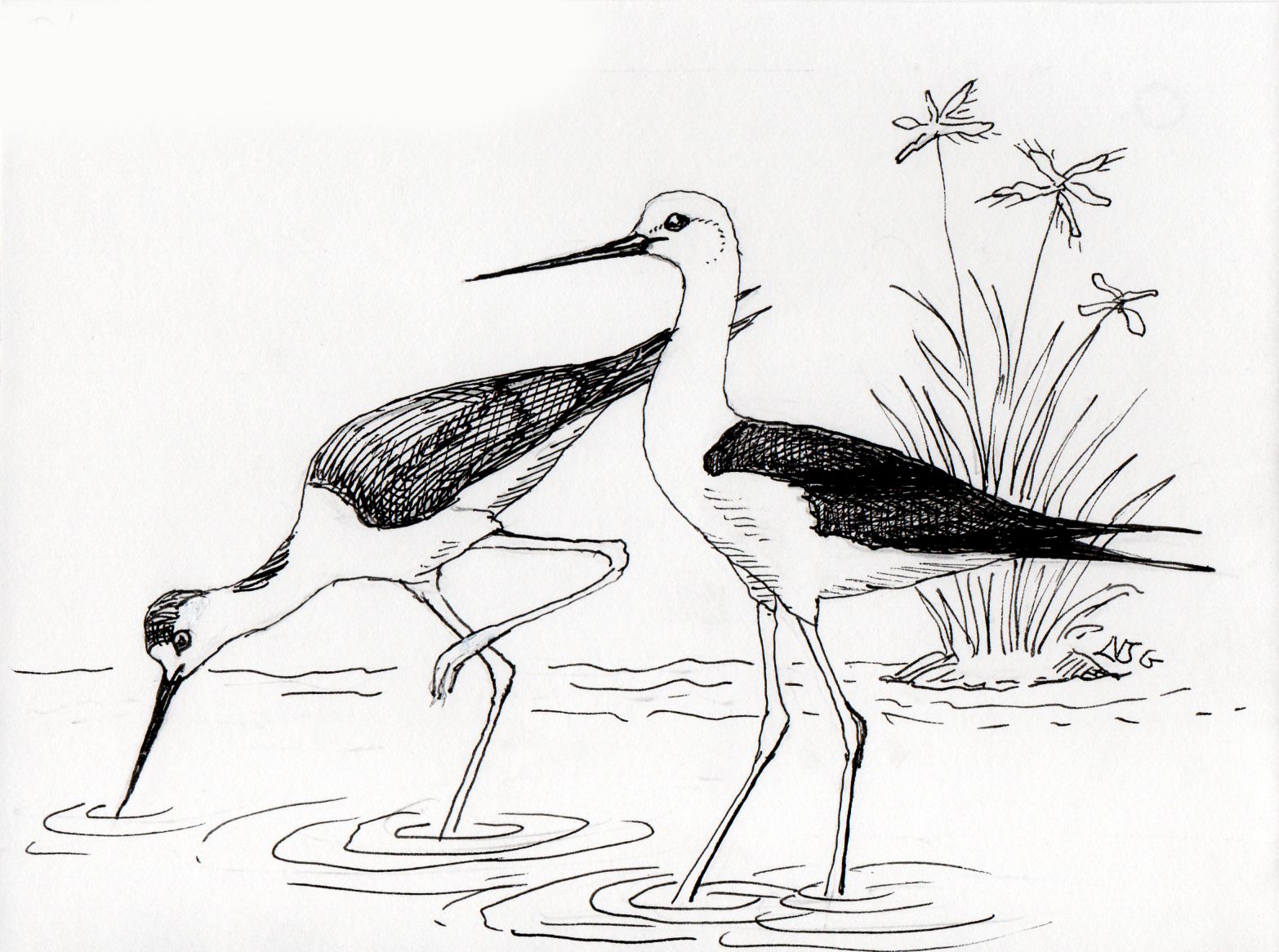
The black-winged stilt has long and spindly pink legs that trail behind it when it flies.
Comfortable in a group, this bird sometimes joins dozens of other pairs while nesting.
Vocal throughout the year, black-winged stilts commonly call with a repeated staccato “kek..kek..kek.”
With legs that are perfect for wading, the black-winged stilt rarely needs to swim in search of prey. Instead, usually forages in shallow water, even on moonless nights, when it may use a scything sweep of its feet to find its next meal.
Least concern
Insect larvae, worms, spiders, fish, tadpoles, mollusks, crustaceans, and other small prey are typical food items, although diets can vary with the season.
Seasonally monogamous, pairs work together to build a rudimentary nest from grass and even bits of sea shell. Sometimes the nest is hidden on land, while other times it floats on the water. Females generally do most of the incubation, which lasts from three to four weeks, and chicks fledge around a month after hatching.
Dogs, foxes, ravens, and gulls all prey on chicks.
A sub-Saharan resident, black-winged stilts have often been seen in southern and western Kenya.
Black-winged stilts can be found from the Mediterranean and sub-Saharan Africa to southeast Asia.