Field Guide
Lepus victoriae
African Savanna Hare
Swahili: Sungura


- Type
- Mammal
- Daily Rhythm
- Nocturnal
- Diet
- Herbivorous
- Life Span
- Insufficient data
- Conservation Status
- Lower risk
- Weight
- 3 to 7 lb (1.4 to 3.2 kg)
- Size
- 16 to 22 in (41 to 56 cm) high at shoulder
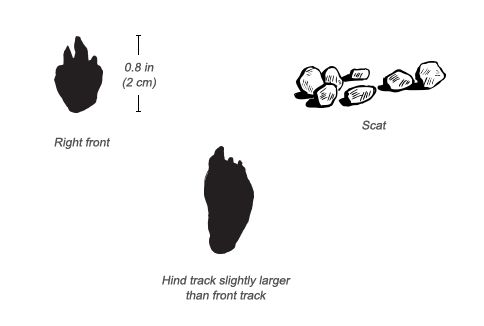

In African mythology, the hare is a clever creature that gifted humanity with the village, the drum, and music. In ecology, the African savanna hare is a ubiquitous mammal, larger than its European and American counterparts.
Savanna hares live mainly solitary lives, though they sometimes form groups of two or three when eating. They have home ranges of 12 to 24 acres (5 to 10 ha).
Savanna hares use their senses of hearing, smell, and sight to avoid predators. These hares have a special pad hidden under each nostril that heightens their sense of smell. Their extremely sensitive hearing allows them to use subtle alarm calls, such as grinding their teeth or drumming their hind feet against the ground, to warn of approaching danger.
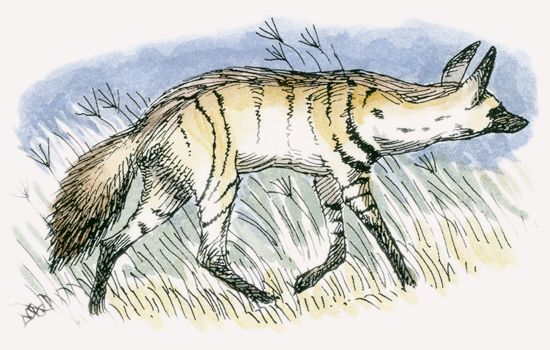
Active at night, hares scatter for cover when they are scared or startled. They cannot see directly in front of them, so when they run, they move in a zigzag pattern at speeds of up to 43 miles per hour (70 kph). To throw off their predators, they make sudden leaps to the side. This breaks up their scent trail, making it difficult for predators to follow. They will also hide in warthog dens or aardvark burrows.
Savanna hares, like many hares in Africa, are listed as a species of lower risk by the International Union for Conservation of Nature (IUCN). Humans hunt them for food and for their fur, but this hunting does not appear to threaten their populations.
Savanna hares eat mainly grasses and herbs, though they will sometimes eat roots, bark, fruit, berries, or fungi. In some habitats, they actually eat their food twice. At night after they eat, hares produce a form of feces, called cecotropes, that contains undigested plant matter. They eat these feces to extract any remaining nutrients. Hares do not eat the feces they produce during the day when they are inactive because those pellets have no nutrients.
Breeding takes place throughout the year rather than during any particular season. Biologists don’t know much about how savanna hares reproduce, but they do know that each year females can give birth to as many as six to eight litters of between one and two kits each. The average for each female is about 14 kits a year. Gestation can range from 25 to 50 days.
Savanna hares thrive in areas where large herbivores, especially hippos, have grazed. Scientists are not sure of the direct cause for this, but it may have to do with new sprouts coming up in already-grazed areas. Snakes, birds of prey, and humans are among their main hunters.
Previous Next
Savanna hares live only in sub-Saharan Africa. They range from the Atlantic coast to Ethiopia and south to South Africa, but they do not live in the central African rain forest.
True to their name, African savanna hares thrive on savannas, scrublands, and in semi-desert regions. They live on Mount Kenya, but not at elevations above 12,000 feet (3,600 m). They prefer areas with generous amounts of cover, especially those where grasses are growing back after a fire.
It’s very difficult to count savanna hares in the wild, mostly because it’s difficult to distinguish from the Cape hare. However, scientists are confident that savanna hares are abundant. In some areas of their range, they exist in densities of up to 44 rabbits per acre (18 rabbits per 100 ha).