Field Guide
Anhinga rufa
African Darter
Swahili: Mbizi


- Type
- Bird
- Daily Rhythm
- Diurnal
- Diet
- Omnivorous
- Conservation Status
- Least concern
- Weight
- 1 – 1.8 kg
- Size
- Length: 81 – 97 cm Wing span: 115 – 128 cm

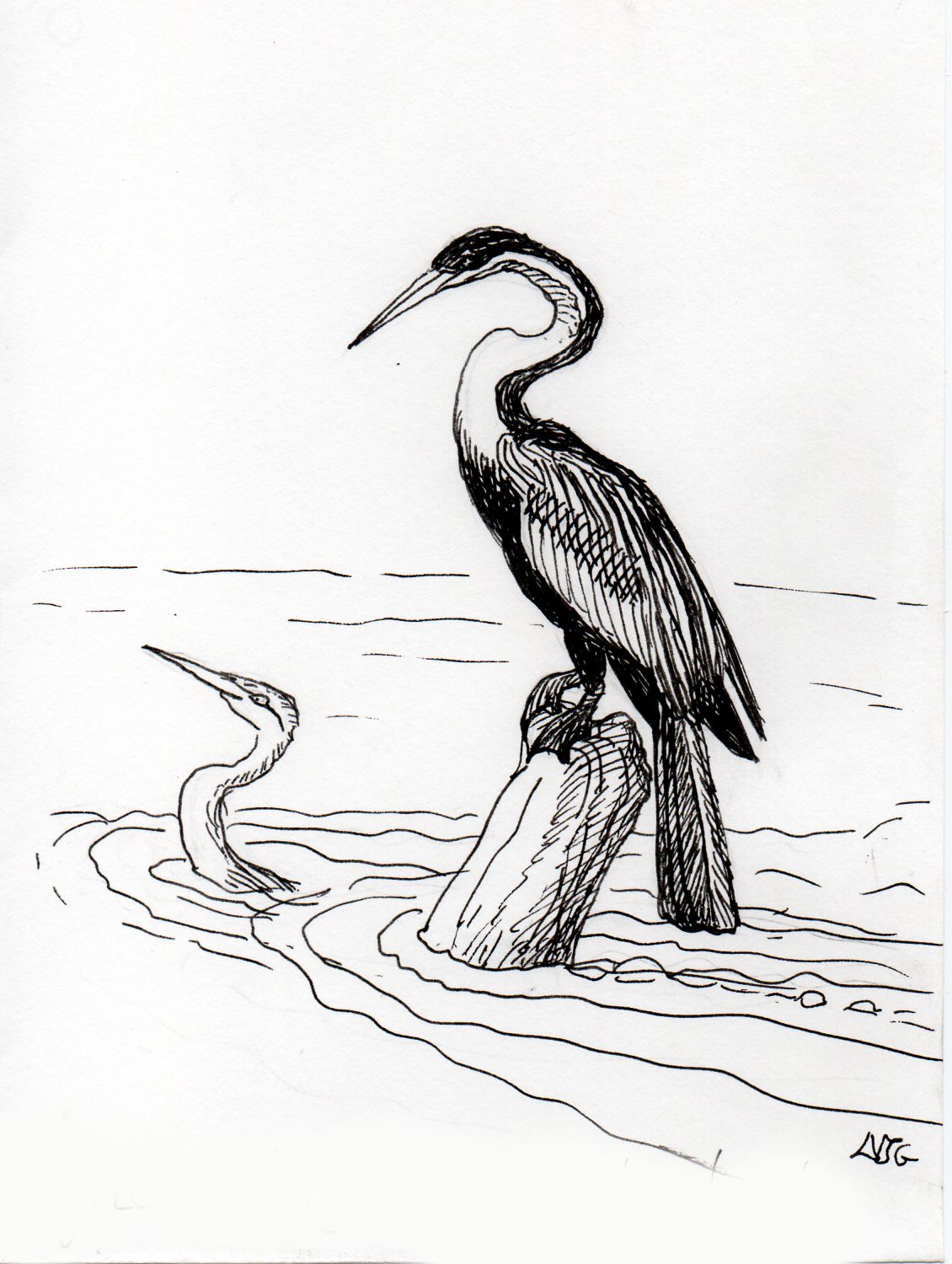
As it swims in search of fish or other prey to spear with its long sharp bill, only the African darter’s slender neck and head can be seen above the water, which is why some people call it a snakebird.
Often found alone or in pairs, African darters will sometimes form larger flocks on still or slow-moving waters.
The African darter is generally silent, but near its nest, it may call with a variety of grunting and staccato barks.
At home in the water, on land, or in the air, the African darter can dive for long periods to successfully ambush its next meal. After a dive, it perches on stumps, branches, or jetties and stretches out its wings to air-dry, since its feathers are not waterproof.
Least concern
While the African darter mainly subsists on fish, it will also eat snakes, terrapins, amphibians, insects, and even mollusks. After catching their prey underwater, they surface and toss it into the air, and then catch it and swallow it.
African darters are monogamous, and although breeding can occur at any time, it is usually a seasonal event, and breeding colonies are formed with cormorants or other birds. African darter females will build a platform nest of sticks and reeds above or next to the water. Males and females take turns incubating up to 6 eggs for a month. Both parents take care of the chicks after they hatch, and the chicks fledge around 7 weeks later.
Predators include ravens, raptors, crows, eagles, and crocodiles; humans also can pose a threat through habitat destruction and by collecting their eggs.
It is found throughout Kenya.
African darters are common in many sub-Saharan African countries and it is one of the most frequent water birds seen in Kenya.