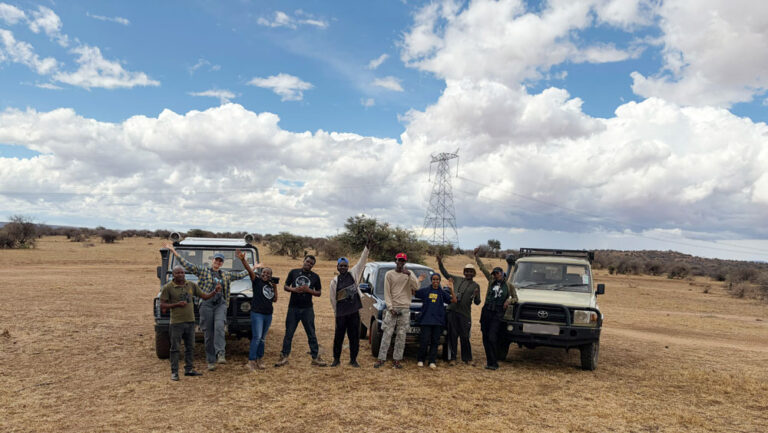
I always loved animals, but I did not think that studying animals was something I could do for a living. In fact, I’m still surprised that it’s possible. I guess the proof is in the pudding: it’s been 13 years since I set foot on a small game reserve in South Africa, where a long-term project on dwarf mongoose behavioural ecology first slurped me into the life of a field research assistant. It’s fair to say dwarf mongooses are to blame for everything that has ensued.
I loved that every day was different and yet offered comforting routine. Rolling out of bed pre-sunrise, stumbling to a termite mound or log where the mongooses were sleeping, spending the day following them on foot recording their interactions and behaviours, taking care not to step on any twigs that might break them out of their feverish concentration as they dug for crunchy insects. Day in and day out, until the sun set, when the walk back to research house punctuated by the sound of crunching gravel and the smell of sweat and sunscreen signalled the end of a day well spent. For my MSc, I played cruel tricks (also known as carefully planned experiments) on the mongooses, moving faecal samples from one territory to another to test whether they would show differentiated responses to intrusions by familiar, neighbouring groups relative to stranger groups. Spoiler: they did not.
When I came back for a third stint as project manager, I had gained enough experience that the once terrifying thought of doing a PhD was becoming appealing, but where and on what? I had started reading about GPS-tags that could follow the movements of animals wherever they went, revealing fundamental rules about collective decision-making. I thought to myself “this might be the closest we’ll ever get to reading animal minds”. In hindsight, I was starry-eyed, as I appreciate now more than ever the value of observing animal behaviour directly in the field. Nevertheless, after months of getting tangled in thorny shrubs while searching for the smallest carnivore in Africa, part of me could not help but be enticed by the possibility of remotely tracking animals.
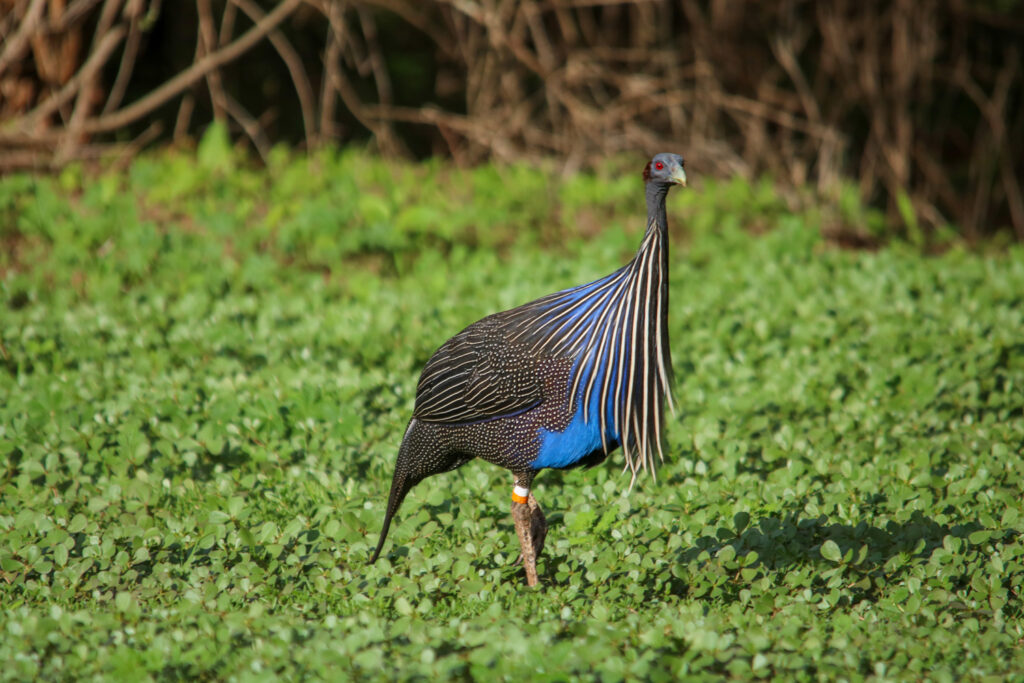
It was during an evening at the project house that I came across a job advert to work in Kenya, on a bird called… the vulturine guineafowl? At that time, we used a dongle to connect to the internet, which meant that the picture of this mysterious bird loaded slowly, like a game of ‘exquisite corpse’. Revealing first a bald head with a bright-red eye, then a long bare neck, a load of bright blue as well as stripy feathers, and finally a sturdy little body, planted firmly on the ground. If any bird could convert me from mongooses, it would be these terrestrial dinosaur-lookalikes, which, lo and behold, were going to be studied using solar-powered GPS-tags. I applied and in 2016, I was on my way to Kenya for the first time to help Damien Farine, founder of the Vulturine Guineafowl (VGF) Project and PhD student Danai Papageorgiou, set up this new project, at a place we all know well: Mpala.
Dr Charlotte Christensen
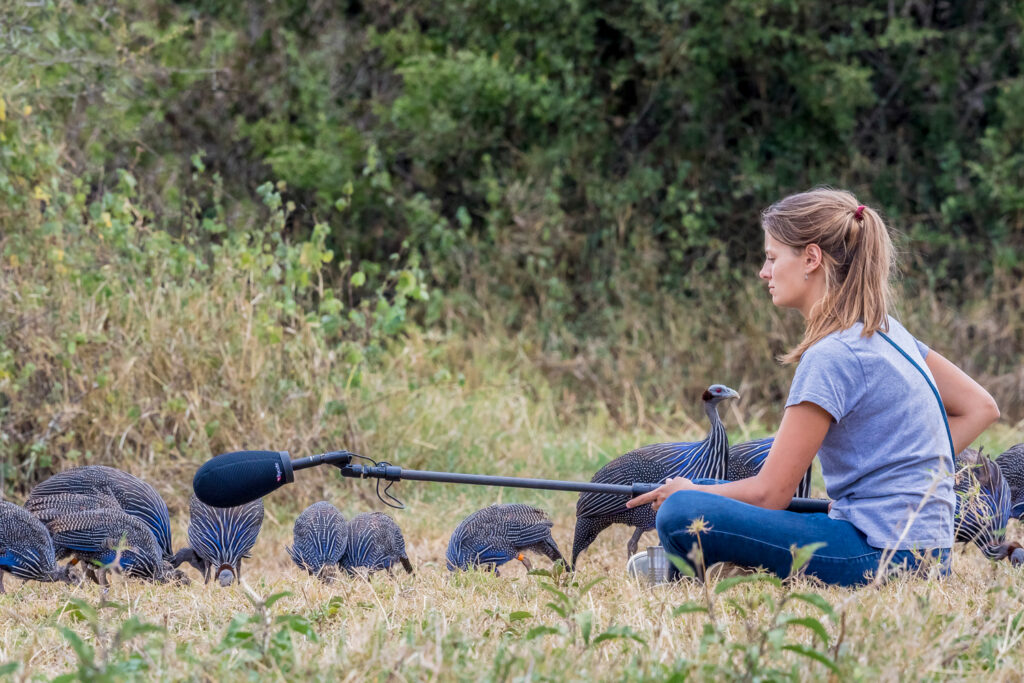
The first months were full of discoveries and challenges. Online information about vulturine guineafowl was sparse; but it became clear quite quickly that this was a bird with a rich (and sometimes ear-drum-piercing) vocal repertoire as well as a fascinating social system. Many evenings were spent discussing behavioural observations and planning out the data collection protocols we still use today. Looking at the study population of 1000+ colour-banded guineafowl now, we forget that there was a time that no guineafowl had a band and the main question on our minds was: how do we catch these birds? Arriving back for dinner usually meant being greeted by the other researchers with the dreaded question: “Did you catch any birds today?”. We started off with bungee cord powered woosh-nets, catching a few birds at a time (if we were lucky). We worked our way up to large walk-in traps that could catch entire social groups, triggered by the press of a button. Nowadays, you can watch Kennedy and the team build these walk-in traps over the course of a few days, assembling its components piece by piece, baiting the trap with millet to lull these (rightfully) weary birds into a false sense of security. But I’m getting ahead of myself. It was mid-2017 and I had just received the good news from Nat Geo that my explorer proposal was funded but the bad news from the Deutsche Forschungsgemeinschaft that my PhD proposal was not. It seemed that my time at Mpala was going to come to an end.
I decided it was time to cast a wide net once more, and this is when I came across a most exciting PhD opportunity, working on chacma baboons in Cape Town. A quick google search will paint a picture of the baboon-human conflict and the hotly debated management issues that arise from living on this densely populated peninsula alongside an intelligent, curious and food-motivated primate. In 2018, I got to see it for myself. During an intense field season, where we deployed tracking collars on a troop of baboons and collected more faecal and urine samples than I care to remember, I developed a deep appreciation for the baboons and the people tasked to mitigate the conflict. Observing baboons in their natural habitat munching on fynbos and engaging in their meticulous grooming rituals starkly contrasted with the brief glimpses most residents got when a baboon came breaking into their after-all-not-so-baboon-proof-bin. At the same time, the rangers who used paintball-guns to coerce the baboons out of urban spaces seemed always caught between a rock and a hard place, criticized for interfering too little (“why don’t you just cull the baboons?”) or too much (“you’re hurting them”). Ultimately, their work was essential in reducing baboon-human overlap as became painfully clear when the funding for the management program was temporally suspended, and the number of human-induced baboon deaths rose sharply. Far away from the conflict, at Swansea University in the UK, I had begun decoding the tracking data from the baboon collars. This time, I was not focussing on the “where did they go?” GPS-data but rather the “what were they doing?” accelerometer data. As any behavioural ecologist will tell you, a systematically tracked activity budget can reveal a lot about what challenges an animal is facing. How do you allocate limited time and energy to all the essential activities: moving, feeding, resting and (in the case of baboons) lots of grooming, when natural and unnatural pressures around you are changing? This remains a central question in my work.
COVID lockdowns and limited funding precluded a follow-up field season to Cape Town. When I closed my laptop after my remote PhD-defence in 2022, I had no firm plans yet on what would come next. I had put feelers out, and one of them was bound to bring me back to Mpala. Because, as luck would have it, there was some funding available to hire me as a postdoc on the VGF Project. The task was right up my alley: building the machine-learning pipelines to turn the accelerometer data from the tags into guineafowl activity budgets. Turns out, these nifty GPS-tags could be reprogrammed remotely to collect accelerometer data, too. Coming back to Mpala was a trip. A lot had changed; I had changed. The VGF project had grown into something beyond what I could have imagined when I left in 2017. Many people contributed to this success and appropriately crediting them will require another article (which is in the pipeline).
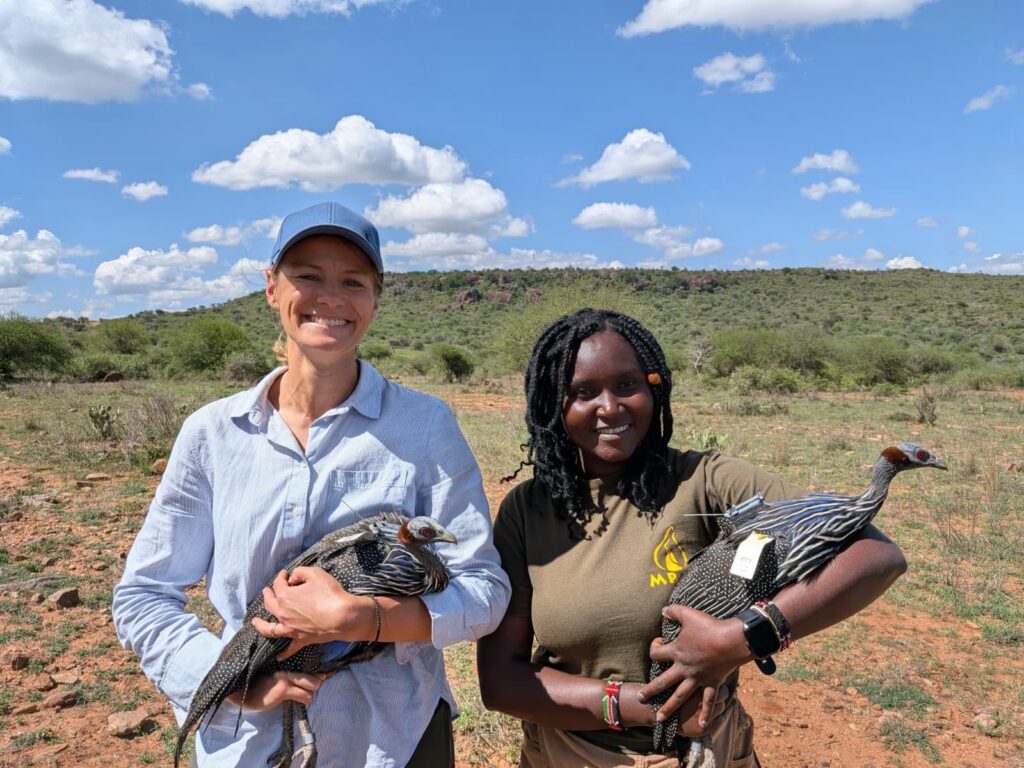
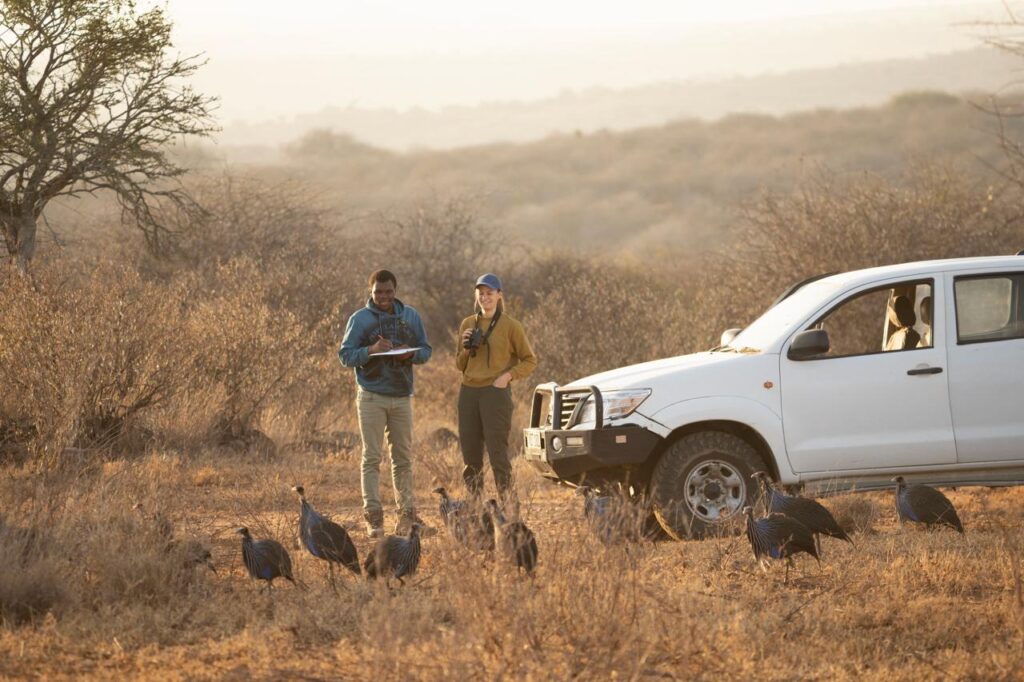
In my totally biased opinion, the VGF team is one of the smoothest operating teams in Kenya. Trapping and tagging the birds, downloading the precious tag data nightly, painstakingly stalking birds for faecal samples and censusing the ever-growing number of colour-banded birds is no small feat. These data are the bedrock for understanding how guineafowl change their movements, their activity budgets and their social associations as climate change continues to shift the norm. This had always been the question at the back of my mind, since the first time we watched the guineafowl expand their home-ranges dramatically during an already bad drought in 2017, only to be eclipsed by an even more devastating drought in 2023-2025. To me, it seems like a powerful case study in how behavioural changes will be the early-warning signals we will want to monitor to understand how climate change will impact wildlife populations. In 2025, I was awarded a four-year grant from the Swiss National Science Foundation, to pursue these questions and ensure the continuation of the VGF project.
In trying to summarise my research journey succinctly (and failing to do so), I made some important omissions, which I will try to address in this paragraph. It might seem from the outside looking in that I hopped from lily pad to lily pad, as they blossomed open with the next magical adventure. The truth is that more doors closed than opened. More applications were rejected (or unanswered) than accepted. At the same time, I have been incredibly lucky, from the moment I was born in Luxembourg, a small and rich country, where we take things like free public transport and socialised health care for granted. I had parents that supported me financially and morally to pursue Zoology – not a famously lucrative career path. I was able to take on unpaid research opportunities for the CV lines they would afford me. There is no point in feeling guilty about that, it won’t change anything about the imbalances created by post-colonial capitalism. What I can do in my role as a PI on the VGF project is play my part in redressing some of that imbalance. Important as the science may be, an equally important (and enjoyable) part of the job is creating a training ground and a launch pad for early-career Kenyan researchers. Ultimately, the two goals are intertwined: we do the best work when we collaborate and there are still so many things to learn about this bizarre bird.
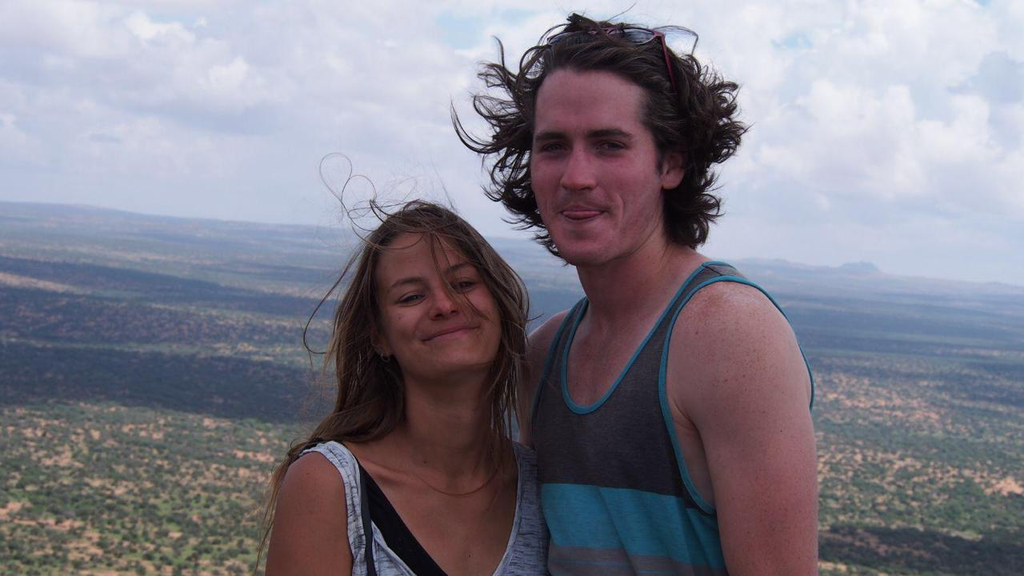
Finally – when Victor Kasii asked me to write this profile piece – he told me to “Make it personal”. Therefore, I would be remiss not to mention the biggest impact working on Mpala has had on my life. It is where I met Patrick Milligan at the outdoor dining table, my now-husband of 5 years. It is probably not surprising to meet kindred spirits in places like Mpala. Indeed, many of the people I have met throughout my research journey are now life-long friends. Nevertheless, given the prominent role coincidence has played in my trajectory, I can’t help but feel superstitious about the ways the universe unfolds… a brave thing for a serious scientist to admit.
If you’re still reading this, thank you. Maybe one of these days, we will sit across from each other at a communal Mpala dinner, and I will hear your story too!