Field Guide
Equus quagga
Plains Zebra
Swahili: Punda milia


- Type
- Mammal
- Daily Rhythm
- Diurnal
- Diet
- Herbivorous
- Life Span
- In the wild: 21 years
- Conservation Status
- Lower risk
- Weight
- Male: 490 to 625 lb (222 to 284 kg) Female: 385 to 534 lb (175 to 242 kg)
- Size
- Male: 3.7 to 4.0 ft (1.1 to 1.2 m) high at shoulder Female: 3.5 to 4.0 ft (1.1 to 1.2 m) high at shoulder

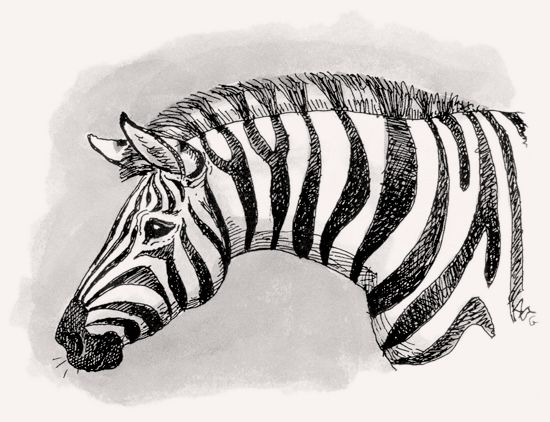
The highly social plains, or Burchell’s, zebra is an icon of the African savanna. This zebra’s smaller size, wider stripes, pointed ears, and shorter, stockier neck help to distinguish it from the Grevy’s zebra, with which it shares some habitat in Kenya. As its scientific name suggests, the plains zebra is the only living relative of the quagga, an animal that had stripes only on its neck and back and that went extinct in the late 1800s.
Plains zebras are social animals. With the exception of some solitary stallions, plains zebras live either in family or stallion groups, although they will mingle with other groups. Family groups protect and care for all their individuals. They will even slow down for sick or injured animals or backtrack to bring a stray member back into the herd. Family groups, also called harems, include one stallion, one or a few mares, and the foals, yearlings, and two-year-old offspring of those mares. Once mares join a family group, they usually will stay with it their whole lives, though the original stallion may be replaced by a younger, stronger male. The stallion defends his harem, but when the family group is on the move, he brings up the rear; the lead goes to the highest-ranking female. Stallion groups consist of males that have not yet built their own harems.
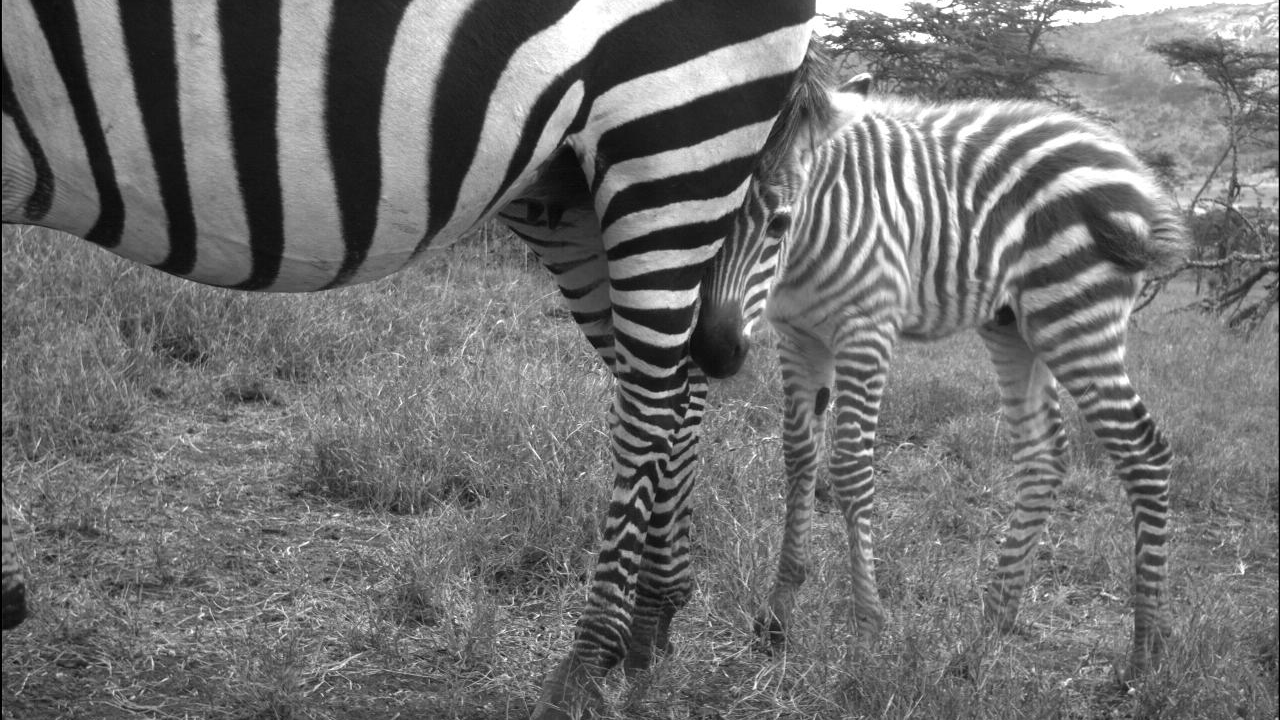
While some scientists suggest that the zebra’s stripe pattern is nature’s way of confusing predators, it may allow zebras to recognize one another since each pattern is unique to a specific animal. When a foal is looking for its mother, it walks from group to group, touching noses with each individual until the foal finds its mother. Nose-to-nose contact is important for adults, too, as a form of greeting. It’s often followed by sniffing the rest of the body. Zebras communicate verbally by braying and by emitting two-syllable hee-haws (possibly as a warning) as well as squeaks and squeals to communicate fear or distress. They also snort and produce a barking sound that sounds like quagga quagga quagga.
Plains zebras spend half of their waking hours grazing. The remainder of the day they are either on the move or resting. When at rest, one individual may stand guard. Certain behaviors help plains zebras bond with each other. One of the most important of these is skin nibbling between mothers and their young. These zebras also groom each other, and like to rub against trees or take dust baths while rolling on the ground. When plains zebras fight, they use a variety of techniques, including neck wrestling, biting, rearing up, and chasing.
Plains zebras are a species of lower risk, with population numbers reaching nearly a million. They are well-protected in Kenya and Tanzania as well as other areas of their range. However, their heavy dependence on water makes them susceptible to droughts like the one that almost wiped out the population in northern Kenya in the 1970s. Fortunately, plains zebras are quite hardy and possess a high breeding rate that helps them bounce back from such natural disasters so long as they can find suitable habitat.
Over 90 percent of a plains zebra’s diet is composed of grasses. Though they can consume a variety of species, one kind of grass can dominate depending on the area. In some places, it has been observed that Panicum maximum makes up 40 percent of their diet. They also prefer to feed in areas of short grass, particularly in recently burned regions where new growth is flourishing. During the dry season, plains zebras consume herbs as well as fiber-filled grass stems that other grazers avoid.
Previous Next
Plains zebras have a wide range, reaching from South Sudan and southern Ethiopia down to South Africa and west to northern Namibia. They are extinct in Lesotho, Burundi, and possibly Angola.
As their name suggests, plains zebras prefer grasslands and grasslands interspersed with bush. Though they can occasionally be found in woodlands, they do not live in the equatorial rain forest or in the desert. Plains zebras need a constant source of water, rarely moving more than 7.5 miles (12 km) from it.
Mares usually mate with the stallion in their family group. Foals are born after a one-year gestation. There is no true breeding season, but more births tend to take place in the rainy season when good food is more plentiful. Mares give birth while lying down on their sides. A foal can stand on its own 11 minutes after being born, take steps after 19 minutes, walk completely after 34, and canter within 45 minutes. Adolescents stay with their mothers’ family group until they are 1 to 2.5 years old.
Zebras fall prey to lions and spotted hyenas, while the foals are vulnerable to hyenas, African wild dogs, cheetahs, and leopards. In some areas (though not in Laikipia), predation controls the population size. Plains zebras often associate with other herbivores, particularly wildebeest. In northern Kenya, plains and Grevy’s zebras may graze together for hours or days, though they eventually separate.
Many plains zebras are found in protected areas, though in some places such as Kenya, they are also found outside of protected areas. Scientists estimate the total population at between 660,000 and 1,000,000 individuals in the wild. Upwards of 200,000 plains zebras live in the greater Serengeti ecosystem; some 40,000 live in Laikipia, where predation isn’t a big problem.