I never was one of these kids who dreamt of working in Africa. I spent lots of time at my grandparents’ farm catching snakes and making plaster casts of raccoon and coyote tracks; I also spent lots of time looking at field guides. I watched PBS Nature specials on savanna wildlife, but working in East Africa seemed so completely beyond the realm of what was possible, like traveling to Jupiter.
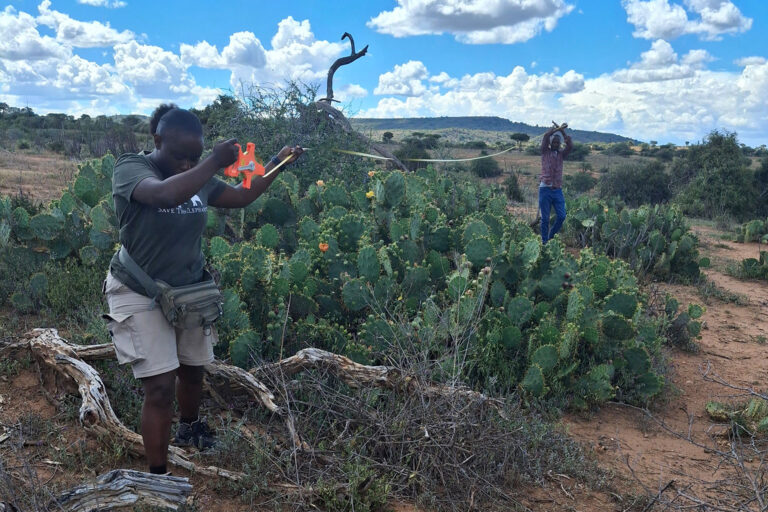
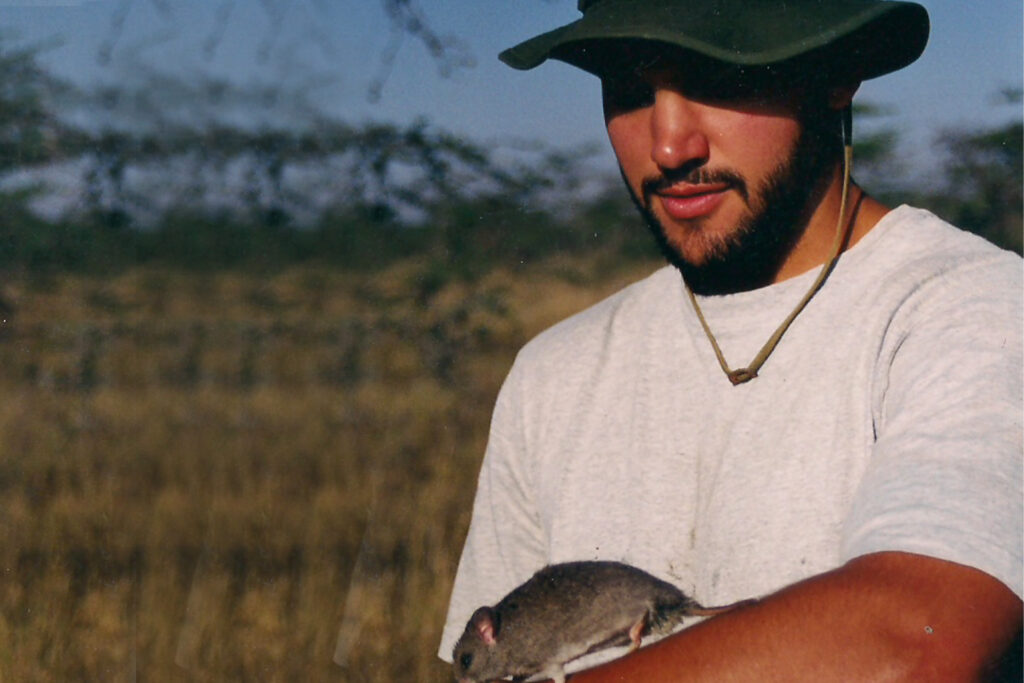
In March of 2002, I first came to Mpala. It seemed like a big-boy step at the time, as I’d barely been out of the U.S. Midwest and never to another country. My connection to Mpala was through Felicia Keesing (Bard College), whom I met during the summer of 1998. After about two years of asking/nagging her to host me, she relented. Altruist that she is, Felicia took a leap of faith and fully supported me to do proverbial “independent” work in her ongoing studies of small mammal populations. That work itself was conducted in collaboration with the Kenya Long-term Exclosure Experiment, and its PI (Truman Young; U California, Davis) likewise welcomed me with open arms.
So, Felicia and Truman taught me about inflection points in life: rare, pivotal moments that shape where we wind up professionally and personally. It’s a reminder of the position that we professionals are in when we interact with aspiring, motivated youngsters—the scientists-to-become.
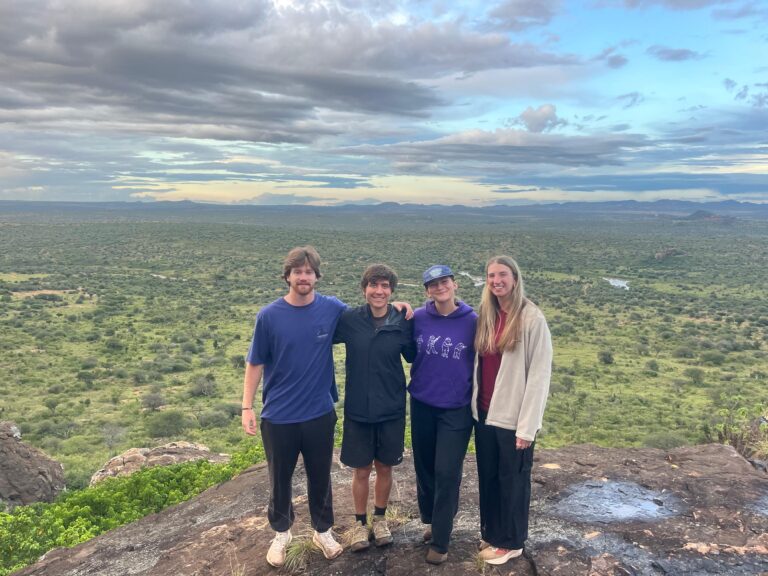
Three other Mpala scientists—Todd Palmer (U Florida), Rob Pringle (Princeton U), and Corinna Riginos (The Nature Conservancy)—taught me that research is best done when ideas are shared openly, and with curiosity, passion, and humor. There’s so much to do, and there are so many ways to do it, that intellectual turfiness is never the way to go. For best Mpala moments, conversations with these three and many others on Baboon Cliffs, in the dining hall, or in UHURU S2MEGA rank right up there with seeing an aardvark or trapping a broad-headed stink mouse for the first time.
Mpala has grown in the last quarter-century in ways that few of us long-termers could’ve anticipated. While the pros outweigh the cons (we used to have electricity for four hours a day, phone calls were virtually impossible, we went to Lekiji for alcohol, and we drove on roads worse than those currently to Nanyuki for dial-up internet), maintaining collegiality and familiarity, and making new friendships, can take a bit more effort.
My unsolicited advice/request for both Mpala newcomers and long-termers: introduce yourselves to staff and researchers alike. No one bites, and you have more in common than you might think at first blush. For long-termers especially, in the event you’re reading this: remember that you were there once; be approachable and make yourselves available. For newcomers especially, in the event you’re reading this: you don’t need to come all the way to Kenya to play on your phones (as someone older than 40, I am legally obligated to point this out, and just because I’m old doesn’t mean that I’m wrong). At Mpala, you can watch Guenther’s dik-dik raise their mohawks and have territorial scraps with each other! You can learn the differences in songs among Superb, Hildebrandt’s, Greater-blue Eared, Red-winged, and Rüppell’s Long-tailed starlings! Your time with the dik-diks and the starlings is in short supply, and thus is valuable. Make the most of it.
Mpala is unique. The staff are exceptional—by which I mean an exception to the rule, in a good way— research assistants, kitchen and housekeeping crews, electricians, builders, security, and so forth. Mpala has the charisma of places like Serengeti and Yellowstone, but (despite how it may appear initially) vastly less red tape and bureaucracy. The plants and animals of Mpala are conspicuous, and sometimes their patterns are readily observable. Unlike other systems that have been studied for decades by hundreds of researchers, the ideas you might have for those patterns probably haven’t been tested to death. For scientists, the world is your oyster out here. That potential for real discovery and eureka moments is what makes Mpala my favorite place.
Jake Goheen