Field Guide
Bos indicus (alternatively Bos primigenius or Bos primigenius indicus)
Boran Cattle
Swahili: Ngo’mbe borana


- Type
- Mammal
- Daily Rhythm
- Diurnal
- Diet
- Herbivorous
- Life Span
- Insufficient data
- Conservation Status
- Domesticated
- Weight
- Male: 1,100 to 1,870 lb (500 to 800 kg) Female: 840 to 990 lb (380 to 450 kg)
- Size
- Male: 3.8 to 4.8 ft (116 to 146 cm) high at shoulder Female: 3.7 to 4.2 ft (113 to 128 cm) high at shoulder

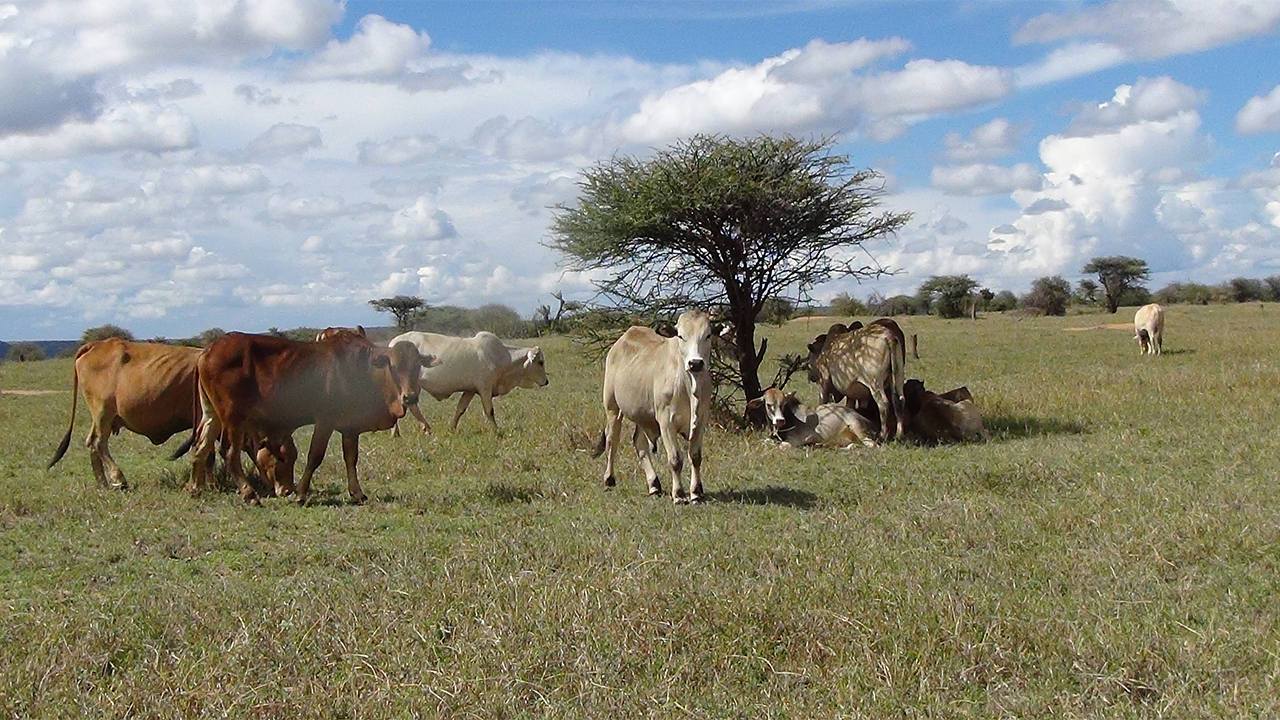
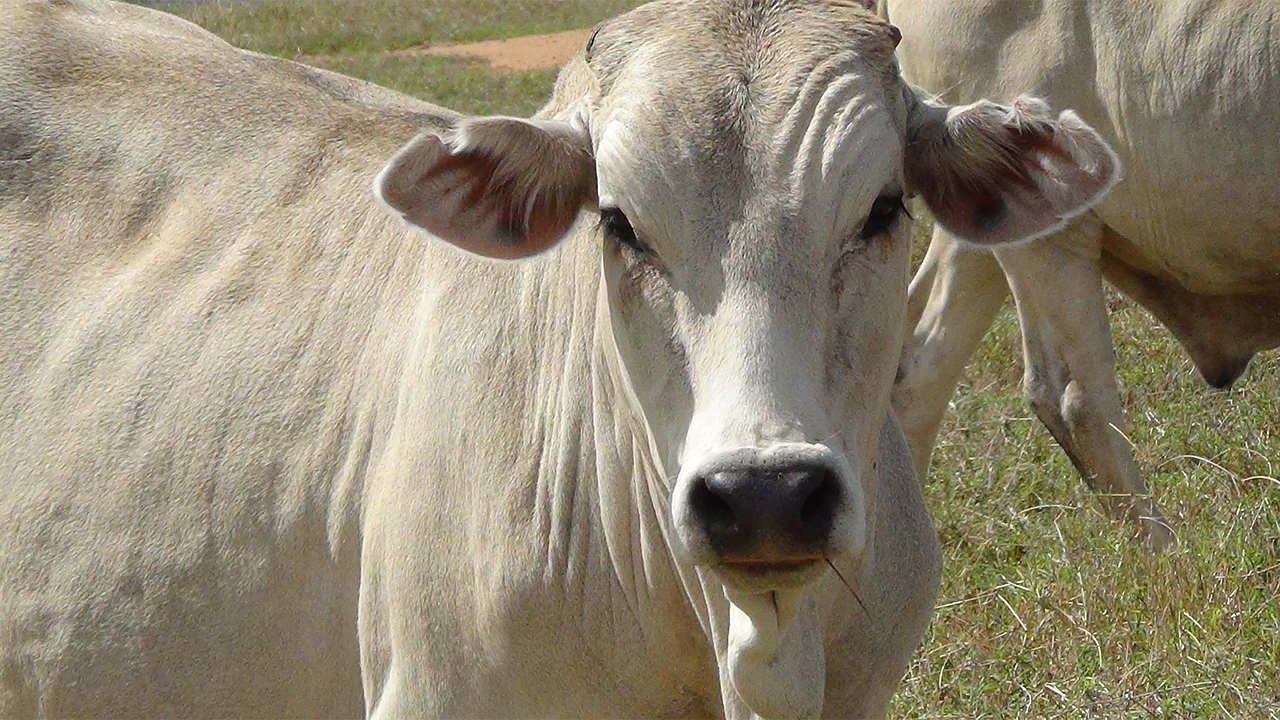
The wild ungulates at Mpala share the landscape with some of their less wild cousins. Mpala raises boran cattle and other domestic livestock alongside elephants, hippos, and lions. Borans look very similar to Brahman, or zebu, cattle, a close relative that was domesticated in South Asia and that is descended from the Indian auroch. Like all zebu cattle, boran have a hump on their back, floppy ears, and a noticeable dewlap. They typically have white, fawn, or gray coats, but colors can vary from brown to red.
Boran cattle have been in Africa for more than a millennium, and the species has adapted to the environment and the heat. Ranchers prize boran cattle for their fertility and mild personalities. Borans originated in Ethiopia and were introduced into Kenya in the early 20th century, where they were bred for beef production. As a result, they now have much stockier, heavier bodies than their Ethiopian ancestors.
Local conservationists work to find ways for wildlife to coexist with livestock. At Mpala, cattle roam the landscape, but herders and innovative conservation solutions protect them from predators. Herders periodically move the cattle to allow plants to recover from grazing and the manure to replenish the soil.
Scrubby plants and other typically low quality vegetation consitute a sufficient diet for boran cattle, which allows them to thrive where other breeds of cattle would not. They have also adapted to endure long periods of drought.
Compared to other cattle breeds, borans mature relatively early and become fertile between 2.5 to 3.3 years of age. Females can calve once every 11 to 14 months and are excellent, protective mothers.
Boran cattle are prized for their resistance to local parasites and diseases that plague other cattle, specifically ticks and eye diseases.
Borans are the foremost breed of beef cattle in Kenya, where more than 10 million of them live.
Previous Next
About 2,200 Boran cattle, a kind of domestic livestock, live at Mpala. Some 7,000 of these cattle, the world’s largest herd, live at the neighboring Ol Pejeta ranch in Laikipia. In this unique area, conservationists strive to combine wildlife conservation with agricultural pursuits.
Boran cattle are well adapted to living on dry savanna and shrubland where water can be scarce.